New York City, September 11, 2001. The morning everything changed.102 minutes passed between the first plane's impact into One World Trade Center, the second plane's attack on Two World Trade Center, and the eventual collapse of both buildings. In that time, people around New York experienced a range of emotions. Despite the horror and the incomprehensibility of what was happening, many knew, somehow, that they had a unique responsibility to record what they saw. They reached for their cameras. This unprecedented documentary special joins hundreds of pieces of their footage and audiotape into a single, seamless historical record. It is an intensely personal perspective of the tragedy, communicating for the first time that morning s events, as they were experienced by people around New York. It is an evocative, authentic and reverential memorial to one of the most cataclysmic events in world history.
Genetic breakthroughs have shed light on how life evolves in real-time. From filling in the missing links to creating a new species, in the last 50 years scientists have solved some of the biggest mysteries of evolution. In this episode, we look at revolutionary discoveries that shook the world and may shape our future.
Rainforests face more threats than ever before, but remain the last stronghold for some truly astonishing animal families. Today we know rainforests are some of the most wondrous and important habitats on Earth. It is the richest habitat on earth, teeming with millions of dramatic plants and animals. From giant landscape gardeners to a whole family supported by a single leaf, there are surprises at every turn.
Spain is found at the crossroads between the Mediterranean and the Atlantic, between Europe and Africa, resulting in diverse landscapes, ancient cultures and magnificent wildlife. It's a hidden Spain missed by many tourists who fail to venture outside the resorts. Worlds within worlds, the medieval towns, to farming communities, desert, mountains and forests with some of the most dramatic and diverse wildlife of the continent.
The fourth episode starts off with the two riding through Santa Cruz, Argentina. The plan is to cross over into Chile and then going up into the Andes. Ewan and Charley head through Argentina’s red rock landscape while a member of their team copes with altitude sickness. The duo are well and truly underway and the first signs of all are well is how well the Harleys hold up in challenging conditions. The roads alternate between unforgiving and pleasant and these e-bikes push through effortlessly. As they ride through Chilean Andes, the audience is shown a picturesque view of the beauty of the countryside, an experience which Boorman calls 'magical.'
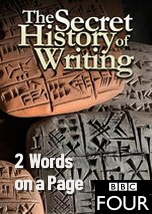
Writing itself is 5,000 years old, and for most of that time words were written by hand using a variety of tools. The Romans were able to run an empire thanks to documents written on papyrus. Scroll books could be made quite cheaply and, as a result, ancient Rome had a thriving written culture. With the fall of the Roman Empire, papyrus became more difficult to obtain. Europeans were forced to turn to a much more expensive surface on which to write: Parchment. Medieval handwritten books could cost as much as a house, they also represent a limitation on literacy and scholarship. No such limitations were felt in China, where paper had been invented in the second century. Paper was the foundation of Chinese culture and power, and for centuries how to make it was kept secret. When the secret was out, paper mills soon sprang up across central Asia. The result was an intellectual flourishing known as the Islamic Golden Age. Muslim scholars made discoveries in biology, geology, astronomy and mathematics. By contrast, Europe was an intellectual backwater. That changed with Gutenberg’s development of movable type printing. The letters of the Latin alphabet have very simple block-like shapes, which made it relatively simple to turn them into type pieces. When printers tried to use movable type to print Arabic texts, they found themselves hampered by the cursive nature of Arabic writing. The success of movable type printing in Europe led to a thousand-fold increase in the availability of information, which produced an explosion of ideas that led directly to the European Scientific Revolution and the Industrial Revolution that followed.



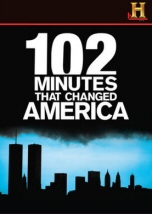



This unprecedented documentary special joins hundreds of pieces of their footage and audiotape into a single, seamless historical record. It is an intensely personal perspective of the tragedy, communicating for the first time that morning s events, as they were experienced by people around New York. It is an evocative, authentic and reverential memorial to one of the most cataclysmic events in world history.