







Last Watched

"Animal"  Sort by

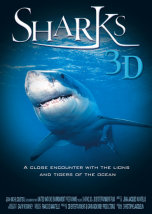
Sharks

       Nature    3D    HD
Jean-Michel Cousteau invites you to embark on a breathtaking underwater voyage to discover the ultimate predator: the shark. Experience an astonishing up-close encounter in 3D with the Lions and Tigers of the Ocean. Come face-to-face with a multitude of shark species, including the Great White, Hammerhead, and Whale Shark. Witness them as they really are: not wicked man-eating creatures, but wild, fascinating and endangered animals that have been in existence a million years before dinosaurs roamed the Earth. Join a team of ocean explorers on a round-the-globe expedition documenting the life of the ultimate predator.
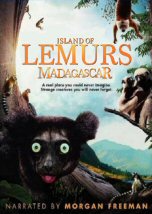
Island of Lemurs Madagascar

   2014    Nature    3D    HD
Morgan Freeman narrates Island of Lemurs: Madagascar, the incredible true story of nature's greatest explorers - lemurs. Scientist Patricia Wright has a passion for preserving the life of one particular creature: the lemur. These lively animals found in Madagascar face all sorts of threats, just like so many other animals in a world in which they are increasingly crowded out by humans. Her passion for the subject is compelling and plainly evident, but it's the silent testimony of the animals themselves that really makes the case. Countless hours of footage are trimmed down to create this tapestry depicting the lives of these creatures of remarkable intelligence and ingenuity. Their daily routines and extraordinary adventures are awesome to behold, as is the way that the community functions. A full immersion into the world of the lemurs means great insights on these unusual animals.

The Power of Flowers

   2012    Science
In the second episode, Professor Iain Stewart discovers how flowers have transformed our planet. He journeys to the remote islands of the South Pacific to track down the earliest flowers. In the deserts of Africa and rainforests of Vietnam, he sees how they brought brilliant colour to the most barren landscapes and sculpted the earth itself. And he learns how they drove the evolution of all animals - kick-starting our human story.
Series: How to Grow a Planet

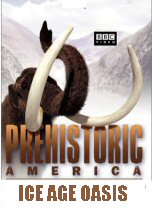
Ice Age Oasis

   2003    Nature
Journey through the long-vanished corners of prehistoric North America, beginning when man first entered the vast, unspoiled continent some 14,000 years ago, in this appealing BBC documentary. Witness ancient beasts, mammoths, mastodons, giant bears, and sabre-toothed cats, and see the legacies each has passed to their modern successors. Computer animation and digital effects bring to life mammoths, saber-toothed cats, giant ground sloths, short-faced bears, glyptodonts, and a plethora of smaller animals in a lush Ice Age mosaic.
Series: Prehistoric America

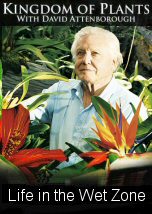
Kingdom of Plants Life in the Wet Zone

   2012    Nature
Written and presented by David Attenborough, who said: 'One of the most wonderful things about filming plants is that you can reveal hidden aspects of their lives, you can capture the moment as one plant strangles another, and as they burst into flower. But whilst time-lapse photography allows you to see things that no human being has ever seen before". David begins his journey inside the magnificent Palm House, a unique global rainforest in London. Here, he explores the extraordinary plants that are so well adapted to wet and humid environments and unravels the intimate relationships between wet zone plants and the animals that depend on them. It was in the wet zones of the world that plants first moved on to land and in the Waterlily House David reveals how flowers first evolved some 140 million years ago. Watching a kaleidoscope of breath-taking time-lapses of these most primitive of flowers swelling and blooming in 3D, he is able to piece together the very first evolutionary steps that plants took to employ a wealth of insects to carry their precious pollen for the first time. David discovers clues to answer a question that even had Charles Darwin stumped: how did flowering plants evolve so fast to go on to colonise the entire planet so successfully?
Series: Kingdom of Plants

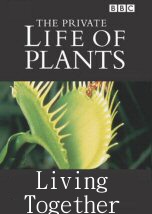
The Private Life of Plants Living Together

   1995    Nature
The fifth programme explores the alliances formed between the animal and plant worlds. Attenborough dives into Australia's Great Barrier Reef and contrasts the nocturnal feeding of coral, on microscopic creatures, with its daytime diet of algae. Some acacias are protected by ants, which will defend their refuge from any predator. Besides accommodation, the guards are rewarded with nectar and, from certain species, protein for their larvae as well. Fungi feed on plants but can also provide essential nutriment to saplings (Mycorrhiza). The connection is never broken throughout a tree's life and a quarter of the sugars and starches produced in its leaves is channelled back to its fungal partners. Meanwhile, fungi that feed on dead wood leave a hollow trunk, which also benefits the tree. Orchids enjoy a similar affiliation. Lichens are the product of a relationship between fungi and a photosynthetic associate, usually algae. They are extremely slow-growing, and a graveyard is the perfect location to discover their exact longevity. Mistletoe is a hemiparasite that obtains its moisture from a host tree, while using own leaves to manufacture food. Its seeds are deposited on another by the mistletoe tyrannulet, following digestion of the fruit. The dodder (Cuscuta) is also parasitic, generally favouring nettles, and siphons its nourishment through periodic 'plugs' along its stem. The rafflesia has no stem or leaves and only emerges from its host in order to bloom — and it produces the largest single flower: one metre across.
Series: The Private Life of Plants
The Hunt

The Hunt

2015  Nature
Cooked

Cooked

2016  Culture
Our Planet

Our Planet

2019  Nature
Planet Earth

Planet Earth

2007  Nature
Modern Masters

Modern Masters

2024  Art
Long Way Up

Long Way Up

2020  Culture