



Last Watched

"The Future"  Sort by

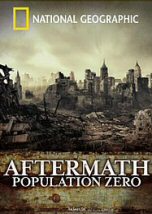
Aftermath Population Zero

   2008    Nature
Imagine if one minute from now, every single person on Earth disappeared. All of us. Human history just stopped. What would happen to the world without us? Aftermath: Population Zero features what scientists and others speculate the earth, animal life, and plant life might be like if humanity no longer existed, as well as the effect that humanity's disappearance would have on the artefacts of civilization. this documentary is inspired by Alan Weisman's The World Without Us.
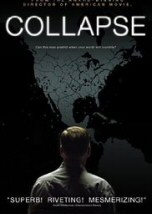
Collapse

   2009    Culture
Michael Ruppert is an independent journalist who has made a minor career out of telling people news that most folks do not want to know. Ruppert, a former police officer, predicted the Wall Street debacle of 2008 several years before the fact, at a time when most analysts were still imagining infinite growth for the stock market and major investment banks. Since then, his vision of the world's future has grown only darker. As Ruppert sees it, civilization and the global economy has yet to wean itself off fossil fuels, and when the world's supply of oil finally runs out, it will lead to a global financial catastrophe that will leave no one unscathed. But while most of what Ruppert has to say bears the ring of truth, there's a small audience for his dire message -- the primary medium for his work is a self-published newsletter, and his most recent book has done so poorly in the marketplace that he faces eviction from his home. Is Ruppert right? And if he is, why doesn't anyone care? Filmmaker Chris Smith profiles Michael Ruppert and gives him a chance to explain his apocalyptic vision of the future at length

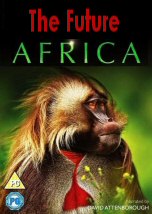
The Future

   2013    Nature
David Attenborough comes face-to-face with a baby rhino and asks what the future holds for this little one. He meets the local people who are standing side-by-side with the wildlife at this pivotal moment in their history. We discover what it takes to save a species, hold back a desert and even resurrect an entire wilderness - revealing what the world was like before modern man.
Series: Africa with David Attenborough

Earth 2100

   2009    Nature
Hosted by ABC journalist Bob Woodruff, this two-hour special explores what a worst-case future might look like if humans do not take action on current or impending problems that could threaten civilization. The problems addressed in the program include climate change, overpopulation, and misuse of energy resources. The events parallel the life of a fictitious storyteller, 'Lucy' as she describes how the events affect her life. The program included predictions of a dystopian Earth in the years 2030, 2050, 2085, and 2100 by scientists, historians, social anthropologists, and economists, including Jared Diamond, Thomas Homer-Dixon, Peter Gleick, James Howard Kunstler, Heidi Cullen, and Joseph Tainter. According to Executive Producer Michael Bicks, "this program was developed to show the worst-case scenario for human civilization. Again, we are not saying that these events will happen — rather, that if we fail to seriously address the complex problems of climate change, resource depletion and overpopulation, they are much more likely to happen.

Stopping Armageddon

   2009    Technology
It sounds like a Hollywood blockbuster: a deadly asteroid is on a collision course with Earth. But in reality, it's only a matter of time before a giant space rock threatens to wipe out civilization. An asteroid took out the dinosaurs sixty-five million years ago. Are we next? This episode analyzes the threat and explores the many ways--from a nuclear bomb to ingenious new technology--that experts are proposing to stop Armageddon
Series: The Universe

Living Together

   2006    Nature
The documentary deals with the future of conservation. It begins by looking at previous efforts. The 'Save The Whales' campaign, which started in the 1960s, is seen to have had a limited effect, as whaling continues and fish stocks also decline. In the 1990s, as head of the Kenya Wildlife Service, Richard Leakey took on the poachers by employing armed units. Although it was successful in saving elephants, the policy was detrimental to the Maasai people, who were forced from their land. The need for "fortress" areas is questioned, and the recently highlighted Raja Ampat coral reef in Indonesia is an example. The more tourism it generates, the greater the potential for damage — and inevitable coastal construction. Sustainable development is viewed as controversial, and one contributor perceives it to currently be a "contradiction in terms". Trophy hunting is also contentious. Those that support it argue that it generates wealth for local economies, while its opponents point to the reducing numbers of species such as the markhor. Ecotourism is shown to be beneficial, as it is in the interests of its providers to protect their environments. However, in some areas, such as the Borneo rainforests, the great diversity of species is being replaced by monocultures. The role of both religion and the media in conservation is argued to be extremely important. Contributors to the programme admit a degree of worry about the future, but also optimism.
The Sky at Night

The Sky at Night

2018  Science
Ancient Apocalypse

Ancient Apocalypse

2024  History
Invisible Worlds

Invisible Worlds

2010  Science
The Putin Interviews

The Putin Interviews

2017  Culture
D-Day

D-Day

2013  History
In the Age of AI

In the Age of AI

2019  Technology