




Last Watched

"Animal"  Sort by

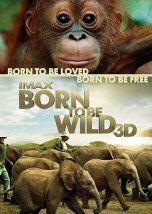
Born to Be Wild

   2011    Nature    3D    HD
Born to be Wild is an inspiring story of love, dedication and the remarkable bond between humans and animals. This film documents orphaned orangutans and elephants and the extraordinary people who rescue and raise them - saving endangered species one life at a time. Stunningly captured in IMAX 3D and Narrated by Academy-Award winner Morgan Freeman, 'Born to be Wild' is a heart-warming adventure transporting moviegoers into the lush rainforests of Borneo with world-renowned primatologist Dr. Birut‚ Mary Galdikas, and across the rugged Kenyan savannah with celebrated elephant authority Dame Daphne M. Sheldrick, as they and their teams rescue, rehabilitate and return these incredible animals back to the wild.
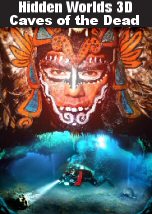
Hidden Worlds 3D Caves of the Dead

   2013    History    3D    HD
In the days of the Mayas, cenotes – deep, natural pits on the Yucatan peninsula - provided the only means of obtaining drinking water. But in the mythology of this advanced civilisation, these waterholes and caves were also the entrance to Xibalba – the underworld. All deceased were obliged to pass through Xibalba and wait there until they were called into heaven. It was a place in which one made sacrifices to the gods – objects of daily life, as well as bloody, human sacrifices. To this day, the relics of these acts are still in place preserved underwater for more than a thousand years. The entrance to the underworld begins at a dirty waterhole in the middle of the Mexican jungle overgrown and barely recognisable. But immediately after entry, a hall of breath-taking dimensions and beauty is revealed. As if they were sculptures, stalactites and stalagmites lend the underwater cave an almost sacred ambience. By now, one has succumbed to the fascination emanated by the world’s largest underwater cave system. We accompany four professional research divers to Yucatan – a team of specialists, able to squeeze their bodies through crevices and holes, barely larger than their bodies and who master dives that would push even the most experienced divers to their limits. With them, we penetrate worlds only a few people have ever ventured into. We encounter the remains of human victims, prehistoric fireplaces and primeval animal skeletons and undertake a dive, which takes us from the primeval forest to the open sea. We then enter Xibalba – the place of myths and the dead. In the days of the Mayas - a voyage of no return. Today, this is one of the greatest challenges one can face as a diver – the hidden world of the underwater caves of Yucatan – all filmed in 3D.

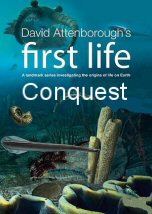
Conquest

   2010    Science
Attenborough's journey continues in Canada's Rocky Mountains, where fossils document an explosion in animal diversity never seen before or since. Travelling from there to North Africa, the rainforests of Australia and the east coast of Scotland, Attenborough discovers how animals evolved to conquer not only the oceans but also the land and air. These remote and fascinating creatures are brought to life as never before with the help of cutting-edge scientific technology and photorealistic visual effects. From the first large predators to the first legs on land, these were creatures that evolved the traits and tools that allow all animals, including ourselves, to survive to this day.
Series: First Life

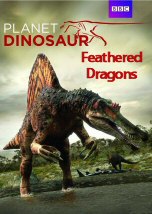
Feathered Dragons

   2011    Culture
In a late Jurassic forest in what is now China, an Epidexipteryx escapes from a juvenile Sinraptor by climbing a tree. It finds a beetle grub in the tree bark, being shown to use its elongated fingers in a similar way to a modern day aye-aye. However, its prey is stolen by another, larger Epidexipteryx, and after a brief bout of posturing, the smaller individual goes to find more food. It drops a second grub to the forest floor, where the other Epidexipteryx retrieves it, only to be killed by the juvenile Sinraptor. The episode then cuts to a desert in late Cretaceous Mongolia, where a Saurornithoides is shown brooding a nest of eggs. When it leaves the nest, an Oviraptor raids it, fleeing when the troodontid returns. The Saurornithoides is suddenly attacked and eaten by a Gigantoraptor, which then heads to compete in a breeding ritual for mates. The males use their feathers for display, a brief fight between two erupting at one point, allowing the females to choose the best suitor. The episode finally cuts to an early Cretaceous forest in China, where a Xianglong is being hunted by a Microraptor, which uses its feathers to pursue the gliding lizard in the air. A Sinornithosaurus attacks it, and after a brief chase the Microraptor manages a lucky escape. The Sinornithosaurus, alongside two other members of its species is then shown hunting a Jeholosaurus and its three young. The group brings down the parent, the narrator explaining that their possibly venomous bite allowed them to tackle animals much larger than themselves. A montage is then shown of the feathered dinosaurs featured in the programme, with the narrator saying that Microraptor not only hints at how flight might have developed, but also that dinosaurs still live amongst us today, as birds.
Series: Planet Dinosaur

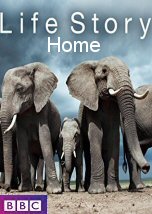
The Home

   2014    Nature
To survive, animals need somewhere to live, a place that provides the necessities of life, shelter from the elements and a refuge from enemies. Good homes are rare and competition can be intense – finding a home is one thing, but defending it is quite another.
Series: Life Story

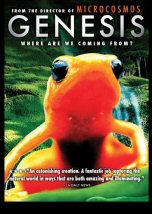
Genesis. Where Are We Coming From

   2005    Nature
The cycle of life of a handful of different animals is captured on film in a whole new way in this documentary. Using special motion-control photography equipment, Genesis allows filmgoers to view animal behaviors which are too small, too slow, or too difficult to normally be seen with the naked eye, including a chick hatching its way out from inside an egg, jellyfish drying into nothing under the heat of the sun, or a snake slowly swallowing prey bigger than itself. This footage is accompanied by narration from Sotigui Kouyate, who uses simple props and easily understandable analogies to explain the science behind what its shown on screen. Genesis was directed by Claude Nuridsany and Marie Perennou, who previously created another acclaimed scientific documentary, Microcosmos.
Mammals

Mammals

2024  Nature
Space Race

Space Race

2005  Technology
Leaving Neverland

Leaving Neverland

2019  Culture
How to Change Your Mind

How to Change Your Mind

2022  Medicine
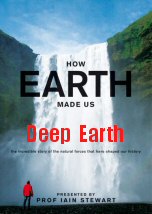
How Earth Made Us

How Earth Made Us

2010  Science
A Perfect Planet

A Perfect Planet

2021  Nature
Secrets of the Universe

Secrets of the Universe

2022  Technology