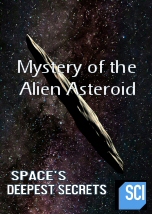
When a mysterious cigar-shaped object is spotted tumbling through our solar system, experts race to uncover it's true nature. The object, nicknamed Oumuamua, meaning 'a messenger that reaches out from the distant past' in Hawaiian, was discovered by the Pan-STARRS 1 telescope in Hawaii. Since its discovery, scientists have been at odds to explain its unusual features and precise origins, with researchers first calling it a comet and then an asteroid before finally deeming it the first of its kind: a new class of 'interstellar objects.' A recent paper by researchers at the Harvard Smithsonian Center for Astrophysics raises the possibility that the elongated dark-red object, which is 10 times as long as it is wide and travelling at speeds of 196,000 mph, might have an 'artificial origin.' The theory is based on the object's 'excess acceleration,' or its unexpected boost in speed as it travelled through and ultimately out of our solar system.
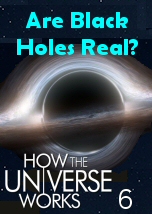
Various eminent scientists explain the current knowledge of Black Holes and try to answer the question, do they really exist? New discoveries are challenging everything we know about black holes -- astronomers are beginning to question if they even exist. The latest science tries to explain how they work & what they look like, despite the fact we've never actually seen one. The two great theories of Einstein's General Relativity and Quantum Mechanics don't work together to explain Black Holes which is a big problem. Other theoretical constructs such as Gravastars and Planck stars have been postulated but proving their existence is just as difficult as that of Black Holes. So where next?
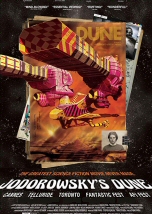
Alejandro Jodorowsky's daring and psychedelic films of the early 1970's, 'El Topo' and 'The Holy Mountain', cemented his status as the Godfather of the Midnight Movie. In 1974, he began work on his next film, possibly the most ambitious film ever attempted. In the pre-Star War era, Jodorowsky’s adaptation of Frank Herbert’s classic sci-fi novel DUNE was poised to change cinema forever. His DUNE would star Brontis Jodorowsky, Alejandro's own 12 year old son, alongside Orson Welles, Mick Jagger, David Carradine and even Salvador Dali. The team of assembled visual artists were some of the most provocative talents of the era, including H.R. Giger, Chris Foss, and Jean ‘Moebius’ Giraud. The groundbreaking special effects were under the control of Dan O'Bannon and the soundtrack would be created by Pink Floyd and the French prog-rock masters, Magma. For two years, Jodorowsky and his team of 'Spiritual Warriors' worked night and day on the massive task of creating the fabulous world of DUNE. In order to secure the necessary Hollywood funding, they created over 3,000 storyboards, numerous paintings, incredible costumes, and an outrageous, moving, and powerful screenplay. In the words of Jodorowsky’s producer, Michel Seydoux, 'It should have been enough. But it wasn’t.' Through intimate and honest conversations with Jodorowsky, filmed over the span of three years, plus interviews with legends and luminaries including H.R. Giger (artist, ALIEN), Gary Kurtz (producer, STAR WARS) and Nicolas Winding Refn (director, DRIVE and THE NEON DEMON), as well as never-before-seen realizations of Jodorowsky’s mind-blowing psychedelic space opera, director Pavich's film finally unearths the full saga of 'THE GREATEST MOVIE NEVER MADE'.
The publication of Salman Rushdie's novel The Satanic Verses in 1988 sparked a culture war in Britain between those in the Muslim community, who considered the book blasphemous and called for the book to be banned, and those defending it as an expression of freedom of speech. Protests, which began in the north of England, soon spread across the UK and to the rest of the Islamic world, culminating in February 1989 with Iran's Ayatollah Khomeini issuing a fatwa - a death sentence on the writer. Now, 30 years on, broadcaster and journalist Mobeen Azhar embarks on a journey, starting in his native Yorkshire where the protest first began, to examine the lasting effect the book has had on the Muslim community and how the events of 1989 continue to have an impact today.
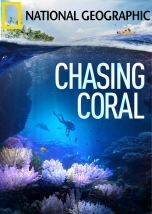
Coral reefs are the nursery for all life in the oceans, a remarkable ecosystem that sustains us. Yet with carbon emissions warming the seas, a phenomenon called 'coral bleaching' -a sign of mass coral death- has been accelerating around the world, and the public has no idea of the scale or implication of the catastrophe silently raging underwater. Chasing Coral taps into the collective will and wisdom of an ad man, a self-proclaimed coral nerd, top-notch camera designers, and renowned marine biologists as they invent the first time-lapse camera to record bleaching events as they happen. Unfortunately, the effort is anything but simple, and the team doggedly battles technical malfunctions and the force of nature in pursuit of their golden fleece: documenting the indisputable and tragic transformation below the waves. With its breathtaking photography, nail-biting suspense, and startling emotion, Chasing Coral is a dramatic revelation that won't have audiences sitting idle for long.
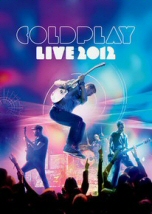
Coldplay Live 2012 was the band's first concert film/live album for nine years. It documents their acclaimed Mylo Xyloto world tour, which has been seen by more than three million people since it began in June 2011. Directed by Paul Dugdale, Live 2012 includes footage from Coldplay's shows at Madrid's Plaza de la Ventas, Montreal's Bell Centre and the band's triumphant Pyramid Stage headline performance at Glastonbury 2011.
















A recent paper by researchers at the Harvard Smithsonian Center for Astrophysics raises the possibility that the elongated dark-red object, which is 10 times as long as it is wide and travelling at speeds of 196,000 mph, might have an 'artificial origin.' The theory is based on the object's 'excess acceleration,' or its unexpected boost in speed as it travelled through and ultimately out of our solar system.