
Last Watched

"Disco"  Sort by

Blue Marble

   2020    Nature
The Blue Marble is an image of Earth taken on 1972, from a distance of about 18,000 miles from the planet's surface. It was taken by the crew of the Apollo 17 spacecraft on its way to the Moon. Before it was photographed from space, our perspective of Earth was fragmented and disconnected. Recent discoveries have revealed a dynamic and rapidly changing planet, above the crust and below.
Series: The Great Acceleration
Exploring The Universe

   2020    Science
This remarkable science-history series investigates the blistering pace of human endeavour in space exploration, computing, energy, resources, Earth science and our understanding of the evolution of life itself. Across the last 50 years, humans have set a blistering pace and scientific discovery. We've crossed the boundaries of our solar system, made machines that can learn harnessed the power of the sun and built life from scratch. It's a period like no other in history, where human endeavour is changing everything: this is The Great Acceleration. As we race toward the future, we must examine the journey.
In the first episode, Dr Shalin Naik explores the ambitious space shuttle mission that began in the '70s plus the future colonization of Mars. Over the past 50 years, space has become central to everything, from communications to entertainment to climate modelling. And as private enterprise enters space exploration, our understanding of the universe will only continue to expand. We will know if we can survive on other objects - the moon, maybe Mars, maybe even some of the moons of Jupiter and Saturn. Deep space is the last and infinite frontier. That's what we do as human beings. We explore, we learn, we make discoveries, from the moment we're born to the moment we die.
Series: The Great Acceleration
Words on a Page

   2020    History
Writing itself is 5,000 years old, and for most of that time words were written by hand using a variety of tools. The Romans were able to run an empire thanks to documents written on papyrus. Scroll books could be made quite cheaply and, as a result, ancient Rome had a thriving written culture. With the fall of the Roman Empire, papyrus became more difficult to obtain. Europeans were forced to turn to a much more expensive surface on which to write: Parchment. Medieval handwritten books could cost as much as a house, they also represent a limitation on literacy and scholarship.
No such limitations were felt in China, where paper had been invented in the second century. Paper was the foundation of Chinese culture and power, and for centuries how to make it was kept secret. When the secret was out, paper mills soon sprang up across central Asia. The result was an intellectual flourishing known as the Islamic Golden Age. Muslim scholars made discoveries in biology, geology, astronomy and mathematics. By contrast, Europe was an intellectual backwater.
That changed with Gutenberg’s development of movable type printing. The letters of the Latin alphabet have very simple block-like shapes, which made it relatively simple to turn them into type pieces. When printers tried to use movable type to print Arabic texts, they found themselves hampered by the cursive nature of Arabic writing. The success of movable type printing in Europe led to a thousand-fold increase in the availability of information, which produced an explosion of ideas that led directly to the European Scientific Revolution and the Industrial Revolution that followed.
Series: The Secret History of Writing

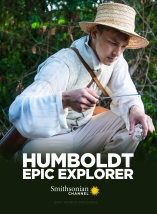
Humboldt Epic Explorer

   2020    History
In 1799, the German scientist Alexander von Humboldt embarked on a perilous journey of discovery across South America. It would take him to the deepest jungle near the Orinoco and to the heights of the Andes. His aim was twofold: to conduct the first scientific survey of South America and to discover how the natural world actually works — at a time when most scientists believed that the world was created less than 6,000 years ago. He later became a leading scientific figure and champion of the abolitionist movement in the US.
This extremely visual docudrama follows Humboldt’s extraordinary path. Travelling in Humboldt’s footsteps is historian Andrea Wulf, whose book on Humboldt became a worldwide bestseller. For good reason, since Humboldt’s ideas on the planet’s fragile web of life are as important today as they were 220 years ago.

Ronnie Coleman: The King

   2018    History
Ronnie Coleman is known as 'The King' and for good reason. He is the 8x Mr. Olympia champion in the world of bodybuilding - sharing the world record for most Olympia wins. Now retired, he has undergone over 6 surgeries leaving him unable to walk without crutches but his desire to train like a pro bodybuilder has not dissipated.
The film explores the history of his career as a bodybuilding legend and following his journey to recovery; for the first time ever discover the true man behind The King.
Series: Generation Iron

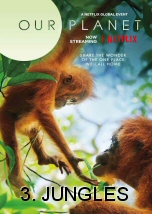
Jungles

   2019    Nature
A rain forest is the richest habitat on Earth. Exactly how many species rain forests contain is unknown, but it runs into millions. And new ones are discovered every week. There are some, like the clouded leopard, we still know virtually nothing about. Although they cover just seven percent of the world's land area, jungles play a vital role in the health of the planet .
Jungles and rainforests are home to an incredible variety of species like preening birds, intelligent orangutans and remarkably ambitious ants.
Series: Our Planet
Space Phenomena

Space Phenomena

2020  Science
The Art of Russia

The Art of Russia

2009  Art
Generation Iron

Generation Iron

2018  History
Blood of the Vikings

Blood of the Vikings

2001  History
Zeitgeist

Zeitgeist

2007  Culture
The Hunt

The Hunt

2015  Nature
Capitalism A Love Story

Capitalism A Love Story

2009  Culture