






Last Watched

" The Universe"  Sort by

Inner Worlds Outer Worlds: 1 Akasha

   2012    Culture    HD
There is one vibratory field that connects all things. It has been called Akasha, Logos, the primordial OM, the music of the spheres, the Higgs field, dark energy, and a thousand other names throughout history. The vibratory field is at the root of all true spiritual experience and scientific investigation". It is the same field of energy that saints, Buddhas, yogis, mystics, priests, shamans and seers, have observed by looking within themselves. Many of history's monumental thinkers, such a Pythagoras, Kepler, Leonardo DaVinci, Tesla, and Einstein, have come to the threshold of this great mystery. It is the common link between all religions, all sciences, and the link between our inner worlds and our outer worlds. Inner Worlds was created by Canadian film maker, musician and meditation teacher Daniel Schmidt. The film could be described as the external reflection of his own adventures in meditation. As Daniel came to meditative insights, he realized that these same insights were discovered over and over in spiritual traditions around the world and that all traditions share a common mystical underpinning. He realized that it is this core experience that connects us not only to the mysterious source of all creation, but to eachother as well.
Series: Inner Worlds Outer Worlds
The Alien Planets

   2007    Science
Have planet hunters finally found proof of other Earth like worlds? Astronomers have now discovered over two hundred alien worlds, beyond our solar system, that were unknown just a decade ago. Discover planets that rage with fiery hurricanes and bizarre planets covered by water so dense that it forms a kind of hot ice. Among these weird worlds, Earth actually seems like the oddball.
Series: The Universe

Through the Wormhole Season 6: Are We Here for a Reason

   2015    Science
Evolution tells us that all life exists for only one purpose: to reproduce. But is that all there is? How could such a simple imperative lead us to create great art and civilizations? A new theory suggests that instead of passing on genes, our ultimate purpose is to process and pass on information. We are the universe figuring itself out. Scientists dig deep into DNA, chemistry, technology and engineering to find the meaning of life. One thing is certain: living is easier if you find a reason for living.
Series: Through the Wormhole Season 6

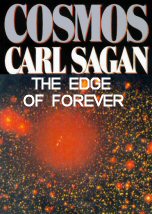
The Edge of Forever

   1980    Science
Beginning with the origins of the universe in the Big Bang, Sagan describes the formation of different types of galaxies and anomalies such as galactic collisions and quasars. The episodes moves further into ideas about the structure of the Universe, such as different dimensions (in the imaginary Flatland and four-dimensional hypercubes), an infinite vs. a finite universe, and the idea of an oscillating Universe (similar to that in Hindu cosmology). The search into other ideas such as dark matter and the multiverse is shown, using tools such as the Very Large Array in New Mexico. Cosmos Update shows new information about the odd, irregular surfaces of galaxies and the Milky Way perhaps being a barred spiral galaxy
Series: Cosmos

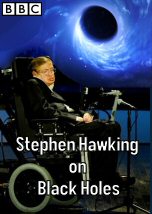
Stephen Hawking on Black Holes

   2016    Science
The film looks at the latest understanding of black holes, featuring an interview with Stephen Hawking. Black holes are one of the greatest mysteries in the universe. They behave in a way that is contrary to laws of physics and one has never actually been seen. However, the recent detection of gravitational waves, as predicted by Einstein, proves that black holes exist and provides a way to investigate their remarkable behaviour and properties.
Series: The Sky at Night

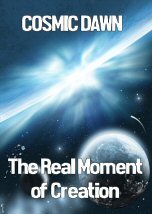
Cosmic Dawn: The Real Moment of Creation

   2015    Science
Forget the Big Bang. The real moment of creation was the Cosmic Dawn - the moment of first light. It's the moment the first stars were born, the moment that lit up the Universe, and made the first structure and the first ingredients of life. This is the scientific version of the story of Genesis. The Big Bang gets all the credit for creating our universe. But in fact, the universe it gave was dark and boring. There were no stars, no galaxies, just a vast, black fog of gas - the cosmic dark ages". But, after a hundred million years of nothing, came a dramatic moment of transformation - the Cosmic Dawn. Astronomers are now trying to witness this cosmic dawn. For the first time they have the tools to explore the very first stars of the universe and to tell the scientific story of our creation.
The Hunt

The Hunt

2015  Nature
Frozen Planet

Frozen Planet

2011  Nature
Ancient Aliens

Ancient Aliens

2014  Culture
Human

Human

2025  History
Prehistoric America

Prehistoric America

2003  Nature
Wild Isles

Wild Isles

2023  Nature