




Last Watched

"Biology"  Sort by

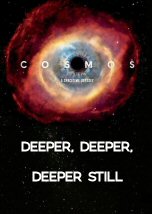
Deeper, Deeper, Deeper Still

   2014    Science
This episodes the nature of the cosmos on the micro and atomic scales, using the Ship of the Imagination to explore these realms. Tyson describes some of the micro-organism that live within a dew drop, demonstrating parameciums and tardigrades. He proceeds to discuss how plants use photosynthesis via their chloroplasts to convert sunlight into chemical reactions that convert carbon dioxide and water into oxygen and energy-rich sugars. Tyson then discusses the nature of molecules and atoms and how they relate to the evolution of species. He uses the example set forth by Charles Darwin postulating the existence of the long-tongued Morgan's sphinx moth based on the nature of the comet orchid with pollen far within the flower. He further demonstrates that scents from flowers are used to trigger olfactory centers in the brain, stimulating the mind to threats as to aid in the survival of the species. Tyson narrates how Greek philosophers Thales and Democritus postulated that all matter was made up of combinations of atoms in a large number of configurations, and describes how carbon forms the basic building block for life on earth due to its unique chemical nature. Tyson explains on the basic atomic structure of protons, neutrons, and electrons, and the nature of nuclear fusion that occurs in most stars. He then discusses the existence of neutrinos that are created by these nuclear processes in stars, and that detecting such sub-atomic particles which normally pass through matter require subterranean facilities like the Super-Kamiokande that were used to detect neutrinos from the supernova SN 1987A in the Large Magellanic Cloud before light from the explosion were observed due to their ability to pass through matter of the dying sun. Tyson compares how neutrinos were postulated by Wolfgang Pauli to account for the conservation of energy from nuclear reactions in the same manner as Darwin's postulate on the long-tongued moth. Tyson concludes by noting that there are neutrinos from the Big Bang still existing in the universe but due to the nature of light, there is a "wall of infinity" that cannot be observed beyond.
Series: Cosmos: A Spacetime Odyssey
A Winning Design

   2002    Nature
A Winning Design clarifies what makes a mammal different from reptiles and birds. No, it isn't egg-laying: both the platypus and the echidna are egg-laying mammals; it's their ability to adapt. And it's this adaptability that becomes the crux of the remainder of the series. From the tiniest bat to the massive blue whale, all mammals share the ability to nurture their young on milk and regulate their own temperatures.
Series: The Life of Mammals

The Cell: The Hidden Kingdom

       Science
Dr Adam Rutherford tells the extraordinary story of the scientific quest to discover the secrets of the cell and of life itself. Every living thing is made of cells, microscopic building blocks of almost unimaginable power and complexity. The first part explores how centuries of scientific and religious dogma were overturned by the earliest discoveries of the existence of cells, and how scientists came to realize that there was, literally, more to life than meets the eye.
Series: The Cell

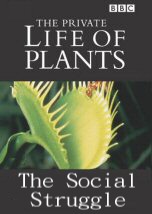
The Social Struggle

   1995    Nature
Fourth episode examines how plants either share environments harmoniously or compete for dominance within them. Attenborough highlights the 1987 hurricane and the devastation it caused. However, for some species, it was that opportunity for which they had lain dormant for many years. The space left by uprooted trees is soon filled by others who move relatively swiftly towards the light. The oak is one of the strongest and longest-lived, and other, lesser plants nearby must wait until the spring to flourish before the light above is extinguished by leaves. Tropical forests are green throughout the year, so brute force is needed for a successful climb to the top of the canopy: the rattan is an example that has the longest stem of any plant. As its name suggests, the strangler fig 'throttles' its host by growing around it and cutting off essential water and light. Some can take advantage of a fallen tree by setting down roots on the now horizontal trunk and getting nutriment from the surrounding moss and the fungi on the dead bark. The mountain ash (eucalyptus regnans) grows so tall, that regeneration becomes a considerable problem. It is easily flammable, so its solution is to shed its seeds during a forest fire and sacrifice itself. It therefore relies on the periodic near-destruction of its surroundings in order to survive. Attenborough observes that catastrophes such as fire and drought, while initially detrimental to wildlife, eventually allow for deserted habitats to be reborn.
Series: The Private Life of Plants

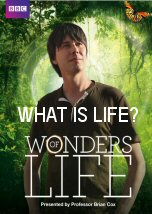
What is Life

   2013    Science
From the Philippines to the US, Madagascar and Mexico, Professor Brian Cox explores the globe to reveal how a few fundamental laws of science gave birth to the most complex and unique feature of the universe - life. In the first episode, Brian journeys to the volcanic landscapes of South-East Asia, seeking to understand how life first began and how that spark has endured to this day.
Series: Wonders of Life

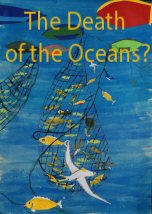
The Death of the Oceans

   2010    Nature
Sir David Attenborough reveals the findings of one of the most ambitious scientific studies of our time - an investigation into what is happening to our oceans. He looks at whether it is too late to save their remarkable biodiversity. Attenborough explores some of the ways in which we are affecting marine life - from over-fishing to the acidification of sea water. The film also uncovers the disturbing story of how shipping noise is deafening whales and dolphins, affecting their survival in the future.
The Story of Science

The Story of Science

2010  History
Leaving Neverland

Leaving Neverland

2019  Culture
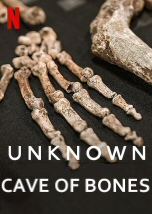
Unknown

Unknown

2023  Science
Apocalypse: World War 1

Apocalypse: World War 1

2014  History
Dirty Money

Dirty Money

2018  Culture