
Last Watched

"US"  Sort by

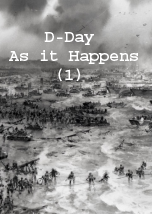
D-Day: As it Happens (1)

   2013    History
D-Day: As It Happens D-Day: As It Happens tells the story of this pivotal event in 20th-century history in a completely new way. Using newly-analysed archive footage, viewers can track the progress of seven people who were there on the day, each of them a real participant in the 1944 invasion. And they can do so moment by moment in real time, encountering the twists and turns of the fighting at the same time as the D-Day seven did, and learning their fate as the action unfolds in parallel with the present, Narrated by Peter Snow, with Channel 4 presenter and former marine Arthur Williams, and experts including former British Army officer Colonel Tim Collins and front-line journalist Lorna Ward. The first programme tells the back stories of the real people that the event is following in real time and sets out their missions over the following 24 hours. The D-Day seven include a paratrooper, a midget submariner, a nurse and a military cameraman.
Series: D-Day

In Search of Beethoven II

   2009    Art
Above all, 'In Search of Beethoven' addresses the central myth of Beethoven's life and work -- that of the heroic, tormented figure battling to overcome the tragic fate of being struck down by deafness in his prime; a man who searched for his elusive, eternal 'immortal beloved,' yet was never to attain lasting happiness.
Series: In Search of Beethoven

Clash of the Gods: Odysseus II

   2009    History
In part 2, we take a look at Odysseus, whom Homer made famous in "The Odyssey," including his adventures in light of astronomical and geographical evidence which bases the story on accurate real events.
Series: Clash of the Gods

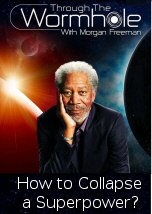
How to Collapse a Superpower

   2014    Technology
With a little imagination, could a few terrorists sabotage a mighty nation? Perhaps even tear down modern civilization? The stability of the US, Europe, China, or any global power depends on high-speed digital communication. Our increasing dependence on digital devices and global interactivity may be placing us in grave danger. Scientists around the world are dealing with new threats such as body hacking, Trojan horse viruses, and brain-damaging Internet addiction. But what if the ultimate threat isn’t an attack on technology, but the technology? Could the final superpower be the disembodied mind of the Internet itself?
Series: Through the Wormhole Season 5

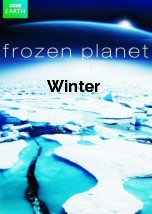
Frozen Planet: Winter

   2011    Nature
There is no greater test for life than winter, as temperatures plummet to 70 below and winds reach 200kph. Darkness and ice extend across the polar regions and only a few remarkable survivors gamble on remaining. We join a female polar bear trekking into the Arctic mountains to give birth as the first blizzards arrive. Out on the frozen ocean, the entire world's population of spectacled eider ducks brave the winter in a giant ice hole kept open by ferocious currents. Arctic forests transform into a wonderland of frost and snow - the scene of a desperate and bloody battle between wolf and bison, but also where a remarkable alliance between raven and wolverine is made. Beneath the snow lies a magical world of winter survivors. Here tiny voles dodge the clutches of the great grey owl, but cannot escape the ultimate under-show predator - the least weasel. Midwinter and a male polar bear wanders alone across the dark, empty icescape. Below the snow, polar bear cubs begin life in an icy den while fantastical auroras light the night skies above. In Antarctica, we join male emperor penguins in their darkest hour, battling to protect precious eggs from fierce polar storms. Weddell seals escape to a hidden world of jewel-coloured corals and alien-looking creatures but frozen devastation follows as sinister ice stalactites reach down with deadly effect.
Series: Frozen Planet

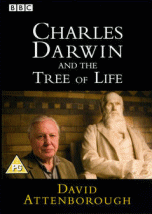
Charles Darwin and the Tree of Life

   2009    Science
David Attenborough asks three key questions: how and why did Darwin come up with his theory of evolution? Why do we think he was right? And why is it more important now than ever before? David starts his journey in Darwin's home at Down House in Kent, where Darwin worried and puzzled over the origins of life. David goes back to his roots in Leicestershire, where he hunted for fossils as a child, and where another schoolboy unearthed a significant find in the 1950s. And he revisits Cambridge University, where both he and Darwin studied, and where many years later the DNA double helix was discovered, providing the foundations for genetics. At the end of his journey in the Natural History Museum in London, David concludes that Darwin's great insight revolutionised the way in which we see the world. We now understand why there are so many different species, and why they are distributed in the way they are. But above all, Darwin has shown us that we are not set apart from the natural world, and do not have dominion over it. We are subject to its laws and processes, as are all other animals on earth to which, indeed, we are related.
Future of Work

Future of Work

2021  Technology
Generation Iron

Generation Iron

2018  History
Top Gear

Top Gear

2012  Technology
Leaving Neverland

Leaving Neverland

2019  Culture
How Earth Made Us

How Earth Made Us

2010  Science