The third episode takes viewers on a riveting journey to some of the world's most extreme and breathtaking deserts and grasslands, where nature puts on its most dramatic show. It begins in the arid landscapes of Central Africa's Guelta d'Archei and the Namib Desert in Southwest Africa, places where water is scarce, and survival is a daily battle. The focus then shifts to the remarkable adaptability of creatures like ostriches, who brave the scorching heat and predators to raise their young and a handful of leopards who learned to hunt from trees on the African plains. In Australia, viewers witness the intricate courtship rituals of the spotted bowerbird, a species facing challenges due to climate change. The narrative then takes us to the vast Eurasian Steppe, home to the unique Saiga antelope, and to Brazil's Cerrado, a biodiverse grassland where the elusive maned wolf plays a crucial role in maintaining the ecosystem. The episode highlights not only the resilience and beauty of these creatures but also the fragility of their habitats, emphasizing the urgent need for conservation efforts.
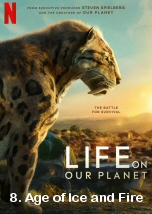
The final episode begins with a description of the extreme cold conditions that characterized the beginning of the Holocene period, and how species like the bison and the wolf adapted to survive in these hostile environments. We will witness the majesty of the woolly mammoth and the fierce cave lion, with a vivid reconstruction of their struggles for survival. We'll see the impact of climate change during this period, from the expansion of the deserts to the transformation of the tropical rainforests of Africa into grasslands, deeply affecting primates and other animals. It highlights how these changes forced primates to adapt to life on the ground, facing new challenges and predators. A crucial turn occurred with the emergence of humans as dominant predators and their influence on the extinction of large mammals. The documentary describes humanity's transition from hunter-gatherers to farmers, a change that radically altered the landscape and biodiversity of the planet. Finally, it poses a reflection on the current challenges of climate change and the sixth mass extinction, inviting viewers to consider humanity's crucial role in shaping the future of the Earth.
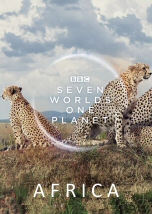
The last episode of the series showcases Africa, home to the greatest wildlife gatherings on earth and vast ecosystems. It delves into the lives of intelligent chimpanzees using tools in Ivory Coast, and the diverse cichlid fish in the Great Rift Valley's lakes. The film also explores the survival strategies of animals in the Namib Desert, including the brown hyena and the aardvark. But even in this land of plenty, wildlife faces huge challenges. Crucially, it is addressed the impact of climate change and human activities, highlighting the plight of endangered species like the northern white rhinoceros and the decreasing populations of elephants and cheetahs due to poaching. However, it also offers hope, illustrating successful conservation efforts like the recovery of the mountain gorilla population in Virunga National Park. The documentary is a vivid reminder of the richness of African wildlife and the urgent need for conservation efforts to preserve our planet's biodiversity.
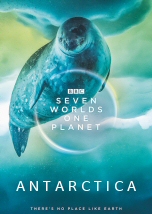
Millions of years ago incredible forces ripped apart the Earth's crust creating our seven continents - each with its own distinct climate, its own distinct terrain and its own unique animal life. From the colourful paradise of South America to the scorching heat of Africa, ‘Seven Worlds, One Planet’ showcases the true character of each continent in turn and reveals just how it has shaped all life there. Be surprised by unexpected stories. Marvel at iconic landscapes. And be awestruck by spectacular wildlife. This series is an eye-opening journey around a world you thought you knew. The snowy shores and icy waters of Antarctica are home to some of the most amazing and unusual wildlife in the world. However, even here, many species face extinction due to rapid climate change and overhunting.
With unprecedented access to the nuclear industry in France, Russia, and the United States, director Oliver Stone delves deep into the groundbreaking technologies that promise a revolution in energy production. But this is not just a story of power and progress; it's a tale of dispelling myths and confronting the fears surrounding nuclear energy. From the passionate voices of those funding their ventures to the illuminating insights of visionaries like Stephen Hawking, 'Nuclear Now' challenges viewers to question their preconceptions. Join this journey to uncover the truths, understand the risks, and judge the possibilities. Imagine a tomorrow that is brighter than today, where humanity harnesses the primordial power of the atom to ensure a future we can all look forward to. Dive into the debate, and decide for yourself.
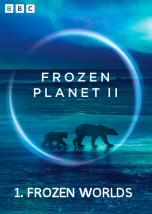
Journeying from pole to pole, The series 'Frozen Planet II' reveals surprising worlds that exist across the planet and the remarkable animals that make them their home. In a fragile world of beauty and hostility, nature finds a way to survive and thrive. David Attenborough explores a planet on the brink of major change. In the first episode, we begin our journey in the far south, in the most hostile place on earth, the frozen continent of Antarctica. After being raised on the ice in winter, emperor penguin chicks find themselves abandoned by their parents in spring. To survive, they must find their own way across the treacherous sea ice to the rich waters of the Southern Ocean. The waters surrounding Antarctica may be the richest of all, but they are also home to an exceptionally sophisticated predator, the killer whale. To reach their favored prey, Weddell seals, a family of killer whales have learnt to generate their own waves, washing the seals off their ice floes. It’s a technique that has been passed down over generations and is coordinated by the family matriarch, who can be over 100 years old. Leaving Antarctica and travelling north, we discover frozen habitats that are created by altitude. The greatest of these is the Himalaya, the tallest mountain range on earth, which contains so much ice and snow it is known as the third pole. In the shadow of the Himalaya lies a vast frozen grassy plain that is home to the fluffiest cat in the world, Pallas’s cat. It may have extremely dense fur, but if it’s to survive the Mongolian winter, it needs to catch lots of gerbils and voles. Easier said than done when you only have short legs and paws that are sensitive to the cold. North of the Great Steppe lies the boreal forest, which encircles the continents of North America, Europe and Asia, and remains frozen for six months of the year. Prowling these forests in the far east of Russia is the Siberian tiger, the largest cat in the world. In winter, it is on the lookout for black bears hibernating in caves, a high-risk strategy that only a cat of this size would attempt. Above the boreal forest, we cross into the Arctic Circle, where conditions become so extreme that trees can no longer grow. This is the tundra. Living here are relics of the last ice age, musk ox. In spring, their calves face a far greater danger than the cold, grizzly bears. Encounters can be brutal, but if just a few calves survive the gauntlet, the herd’s future is secure. To the north of the tundra is the Arctic Ocean, the only ocean that can completely freeze over. Living here is one of the most peculiar animals on earth, the hooded seal. Males have extraordinary inflatable noses, producing a bright red balloon out of their left nostrils. One male hopes this will make him irresistible. All of the frozen habitats share one thing in common: the threat posed by today’s climate change. Travelling to the island of Greenland, home to the largest body of ice in the northern hemisphere, we witness how global warming is melting its ice cap at faster rates than ever before, with profound consequences for global sea levels. Lastly, we visit the Arctic’s most iconic resident, the polar bear, as a mother bear struggles to provide for her cubs in a world of shrinking sea ice.















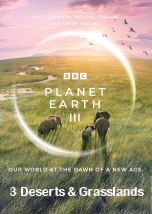






In Australia, viewers witness the intricate courtship rituals of the spotted bowerbird, a species facing challenges due to climate change. The narrative then takes us to the vast Eurasian Steppe, home to the unique Saiga antelope, and to Brazil's Cerrado, a biodiverse grassland where the elusive maned wolf plays a crucial role in maintaining the ecosystem.
The episode highlights not only the resilience and beauty of these creatures but also the fragility of their habitats, emphasizing the urgent need for conservation efforts.