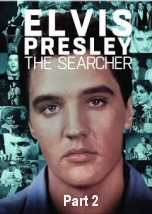
The second part of this series begins with his return home after his discharge from the army, and how he dealt with a rapidly changing pop scene. The picture is more complicated than even a fairly serious Elvis fan may understand. Priscilla Presley, who made some appearances in the first part, offers much more here, helping us understand how being forced into making a string of lousy movies was one kind of artistic prison, and then being ensconced in casino hotels for his famous Las Vegas residency was another. The man who had so carefully created his original persona was now stuck in the shallow roles others forced him to play.
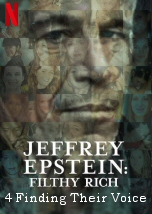
Arrested and charged in 2019 with child sex trafficking, Jeffrey Epstein took his own life while behind bars in a federal prison of New York City in unclear circumstances. Many claim that Epstein had an international sex trafficking ring and he would take a lot of people down. Epstein signed a will two days before he committed suicide to move his money over to the Virgin Islands. It made it much more difficult for the victims to get restitution. Nor would the survivors see him in jail for life. But the judge was going to let some of the victims have their day in court.
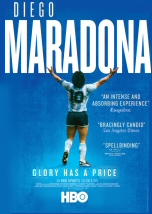
On 5th July 1984, Diego Maradona arrived in Naples for a world-record fee and for seven years. The world's most celebrated football genius and the most dysfunctional city in Europe were a perfect match for each other. Maradona was blessed on the field but cursed off it; the charismatic Argentine, quickly led Naples to their first-ever title. It was the stuff of dreams. But there was a price... Diego could do as he pleased whilst performing miracles on the pitch, but when the magic faded he became almost a prisoner of the city. The film is constructed from over 500 hours of never-before-seen footage from Maradona's personal archive and is a high-end and definitive feature documentary made with the full support of Maradona. In a city where the devil would have needed bodyguards, Maradona became bigger than God himself. This is the wild and unforgettable story of God-given talent, glory, despair and betrayal, of corruption and ultimately redemption.
It all begins as a study on the psychology of prison life led by Stanford psychology professor Dr. Philip Zimbardo. 24 volunteers - 12 guards and 12 prisoners - have agreed to spend the next two weeks recreating life in a correctional facility. Normal people can become monsters, given the right situation, that's the standard narrative of the Stanford Prison Experiment, one of the most famous psychological experiments of all time. But what if the cause of its participants' cruel behavior wasn't what we've always been told?
'It's really about terror and intimidation and people basically fighting for survival and often committing extraordinary violence in order to protect themselves or to stay safe. It's kind of like the weak dog in the pack. If others spot weakness, they're gonna pounce on you for a couple of reasons. You pounce on that guy, that gives you a little more status. So, I had to ask myself, are you gonna be a victim? No, I ain't gonna be a victim. Well, that really only left me one choice in my mind. That means I gotta be the victimizer. At some point, for some reason, might be legitimate, might not be, someone's gonna test you.. Even if you lose, you're gonna have to stand up for yourself. ' 'A guy comes over, and it's your day to get your package, and he tries to take your package from you that your people sent you, if you let him do it, there's gonna be 10 other dudes, oh, yeah, he let that guy take his package, I'm gonna go get his TV, right down the line until somebody's after your ass. But if you stand up that first time and they see you'll stand up for yourself, even if you lose, people will respect that. Oh, don't mess with him. There's easier prey. Why do you have to go and get that guy and get a couple lumps for it when he can go get that guy's stuff over there, don't cost you nothing. It usually only has to happen once or twice but just as importantly that you didn't go to the man for help... you're gonna be all right.'
Following the stories of Bruce Lisker and Reggie Cole who spent year after year in prison for murders they didn't commit - audiences get a harrowing look at how barbaric the US justice system is. The film ultimately asks how we can survive the prison model at all, and looks at better solutions for conflict resolution, harm reduction, crime and more. Hosted by filmmaker Matthew Cooke and guest hosting representatives from the massive range of Americans joining forces to change this broken system.























The picture is more complicated than even a fairly serious Elvis fan may understand. Priscilla Presley, who made some appearances in the first part, offers much more here, helping us understand how being forced into making a string of lousy movies was one kind of artistic prison, and then being ensconced in casino hotels for his famous Las Vegas residency was another. The man who had so carefully created his original persona was now stuck in the shallow roles others forced him to play.