Professor Brian Cox concludes his exploration of our place in the universe by asking what next for the ape that went to space. Our future is far from certain. In Florida, Brian joins the latest efforts to protect Earth from potential catastrophic events. He joins a team of Nasa astronauts who are training for a future mission to an asteroid - should we ever discover one coming our way - under 30 feet of water in a submerged laboratory that simulates space. It is just one example of how, for our long-term survival, space exploration may well be vital. It is a view shared by Apollo 16 astronaut Charlie Duke, who tells Brian what it was like to escape the confines of the planet. It is a dream that both Nasa and now commercial companies share as they race to get humans back into deep space. But space travel, like every leap our civilisation has ever made, requires energy. Here too, scientists are hard at work attempting to safeguard our future. At the National Ignition Facility in California, Brian witnesses the world's most successful fusion experiment in action. He believes that if their mission succeeds, our civilisation will have unlocked a way to the stars that will not destroy the planet in the process. Brian concludes by returning to the top of the world in Svalbard, where he gains access to our civilisation's greatest treasure, locked away in a vault buried deep in the permafrost.
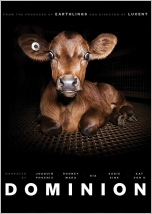
The film uses drones, hidden and handheld cameras to expose the dark underbelly of modern animal agriculture, questioning the morality and validity of humankind's dominion over the animal kingdom. While mainly focusing on animals used for food, it also explores other ways animals are exploited and abused by humans, including clothing, entertainment and research. In words of its writer & director, Chris Delforce, 'Dominion to me is the idea of one group or entity exercising control, power or authority over another, under the belief that they have the right to do so. Often this belief seems to stem from the perception of self-superiority and that might equals right. Through this film I challenge both the notion that animals are inferior, and that we as humans have the right to use and treat them as we please for our own ends – and I briefly examine how this superiority complex has and continues to complement some of humanity's darkest ideologies, asking viewers to consider the similarities between racism, sexism and speciesism.'
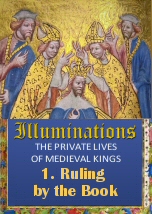
Dr Janina Ramirez unlocks the secrets of illuminated manuscripts that were custom-made for kings and explores the medieval world they reveal. 'Ruling by the Book.' Janina begins her journey with the first Anglo-Saxon rulers to create a united England, encountering books in the British Library's Royal manuscripts collection which are over a thousand years old and a royal family tree which is five metres long. Janina finds out about a king who had a reputation for chasing nuns and reads a book created as a wedding gift for a ten-year-old prince. She roams from Westminster Abbey to other ancient English spiritual sites such as Winchester, St Albans and Malmesbury, and sees for herself how animal skins can be transformed into the finest vellum.
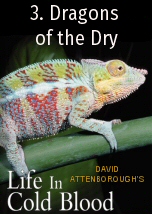
About 340 million years ago a brand new family of animals was evolving in the primeval swamps. They were to go one step further than the amphibians who had emerged onto dry and before them. For they would eventually completely cut their ties with water. They were the ancestors of todays lizards. They evolved scaly impermeable skins and moved up into the forests. They diversified into a multitude of different shapes and sizes. They developed signalling systems to communicate with one another. And they squabbled as animals do. For food they hunted insects that were already well established on the land in great numbers. And here without returning to water they produced their families. They powered their bodies not only with food but with the heat that they drew directly from the sun.
As they diversified so they spread into the harshest of the lands habitats. The baking waterless deserts which eventually they would come to dominate. Discover jacky lizards that wave, wrestling beaded lizards and the the world's smallest chameleon, which is no bigger than his thumbnail, and the biggest lizard in Australia.
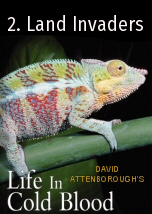
From steamy jungles to dry deserts, amphibians have taken their first footsteps onto land using their bizarre life histories to break their ties with the water and invade the earth. This episode delves into the extraordinary and intimate lives of the soft skinned amphibians. This includes the marsupial frogs, a peculiar species where the father carries his young in pouches and then gives birth. It also features warring giant salamanders over a metre long and show-off newts that offer displays just like underwater birds of paradise.
Scientists around the world are asking themselves the same questions. Over the decades the focus on dolphin research has changed from asking 'how intelligent are dolphins?' to 'how are dolphins intelligent?' and we look at research from the world's foremost dolphin experts for the answers.




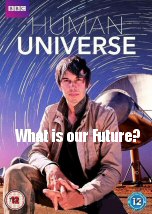





But space travel, like every leap our civilisation has ever made, requires energy. Here too, scientists are hard at work attempting to safeguard our future. At the National Ignition Facility in California, Brian witnesses the world's most successful fusion experiment in action. He believes that if their mission succeeds, our civilisation will have unlocked a way to the stars that will not destroy the planet in the process. Brian concludes by returning to the top of the world in Svalbard, where he gains access to our civilisation's greatest treasure, locked away in a vault buried deep in the permafrost.