Last Watched

"Bot"  Sort by

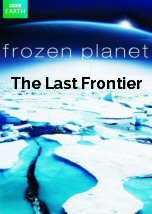
Frozen Planet: The Last Frontier

   2011    Culture
The documentary series reveals the extraordinary riches and wonders of the Polar Regions that have kept people visiting them for thousands of years. Today, their survival relies on a combination of ancient wisdom and cutting-edge science. Most Arctic people live in Siberia, either in cities like Norilsk - the coldest city on earth - or out on the tundra, where tribes like the Dogan survive by herding reindeer, using them to drag their homes behind them. On the coast, traditional people still hunt walrus from open boats - it is dangerous work, but one big walrus will feed a family for weeks. Settlers are drawn to the Arctic by its abundant minerals; the Danish Armed Forces maintain their claim to Greenland's mineral wealth with an epic dog sled patrol, covering 2,000 miles through the winter. Above, the spectacular northern lights can disrupt power supplies so scientists monitor it constantly, firing rockets into it to release a cloud of glowing smoke 100 kilometres high. In contrast, Antarctica is so remote and cold that it was only a century ago that the first people explored the continent. Captain Scott's hut still stands as a memorial to these men. Science is now the only significant human activity allowed; robot submarines are sent deep beneath the ice in search of new life-forms, which may also be found in a labyrinth of ice caves high up on an active volcano. Above, colossal balloons are launched into the purest air on earth to detect cosmic rays. At the South Pole there is a research base designed to withstand the world's most extreme winters. Cut off from the outside world for six months, the base is totally self-sufficient, even boasting a greenhouse.
Series: Frozen Planet
In the Shadow of the Moon

       History
In the 1960s, US President John F Kennedy proposed landing a man on the moon before the decade was finished. This film has interviews with most of the surviving astronauts of the Apollo program who were making ready to make that great voyage with an army of experts determined to make the endeavour possible. Through training, tragedy and triumph, we follow the greatest moments of one of Humanity's great achievements. The documentary reviews both the footage and media available to the public at the time of the missions, as well as NASA films and materials which had not been opened in over 30 years.

Trapped

   2016    Technology
The Internet promises us escape from reality. We can go places we never thought possible and express ourselves as never before. But as we sit in our homes surrounded by screens, are we free... and safe? In this episode meet a woman pulled into an online cult from the safety of her bedroom; a former pilot who suffers from Electromagnetic Hypersensitivity and can only find relief in the absence of electricity and wifi; plus, a quadriplegic who uses cutting-edge adaptive robotics and virtual reality to transcend his body's limitations.
Series: Dark Net

The Art of Russia: Out of the Forest

   2009    Art
Art critic Andrew Graham-Dixon tells the incredible story of Russian art, its mystery and magnificence and until now a story untold. He explores the origins of the Russian icon from its roots in Byzantium and the first great Russian icon, Our Lady of Vladimir to the masterpieces of the country's most famous icon painter, Andrei Rublev. Both epic and awe-inspiring, and producing brilliant art", nevertheless medieval Russia could be a terrifying place. Criss-crossing the epic landscape, Andrew visits the monastery founded by Ivan the Terrible, where his favourite forms of torture found inspiration in religious art. One man would shine a light into Russia's 'dark' ages - Peter the Great who, surprisingly, took as his inspiration Deptford in South London.
Series: The Art of Russia

Dirty Wars

   2013    Culture
Investigative journalist Jeremy Scahill travels to Afghanistan, Yemen, Somalia, and other countries where the United States has taken military action in the War on Terror. In Afghanistan, he investigates the United States military and government cover-up of the deaths of five civilians, including two pregnant women killed by US soldiers from the Joint Special Operations Command. After investigating the attack, Scahill travels to other sites of JSOC intervention, interviewing both proponents and opponents, and the survivors, of such raids,including U.S. Senator Ron Wyden. Scahill also investigates the assassinations of American citizens Anwar al-Awlaki and his son Abdulrahman al-Awlaki, meeting with their family at their home in Yemen. Scahill suggests that the War on Terror is in fact a "self-fulfilling prophecy" and causes the radicalization of Muslims. He also discusses the case of Yemeni investigative journalist Abdulelah Haider Shaye who was detained, tried and sentenced on terrorism-related charges after reporting on American drone strikes.

Solving the Secrets

   2012    Nature
Bladderwort utricularia is a pond-dweller that is among the fastest known, its traps snapping shut in less than a millisecond. As the seasons change, David demonstrates how plants operate on a different time scale to us; how they modify their lives according to the time of year. We discover insects’ hidden links with plants, both as pests and pollinators. UV-sensitive 3D cameras reveal the invisible alter-ego of plants and their flowers’ mesmerizing patterns; a parallel-dimension of strange colours and stunning patterns through which plants communicate with them. With the aid of visual effects, David steps among the swirling vortices of plant scent; communication signals with which plants are inextricably plugged in to the natural world. And using a tuning fork, he demonstrates how plants and insects can even communicate with music. As autumn envelopes the Gardens, fungi reveal themselves not as the enemies of plants but their vital allies. In Kew’s atmospheric Fungarium, David discovers a specimen that has the power of mind control and another that lives underground where it has grown to be so big it can be counted as the largest single organism on the planet. It is 6 times bigger than Kew Gardens itself.
Series: Kingdom of Plants