








Last Watched

"USA"  Sort by

Deserts

   2007    Nature
Around 30% of the land's surface is desert, the most varied of our ecosystems despite the lack of rain. Unravel the secrets of desert survival and experience the ephemeral nature of this dynamic environment. Watch Saharan sandstorms nearly a mile high and desert rivers that run for a single day. In the Gobi Desert, rare Bactrian camels get moisture from the snow. In the Atacama, guanacos survive by licking dew off cactus spines. In the USA, the brief blooming of Death Valley triggers a plague of locusts 65km wide and 160km long. A unique aerial voyage over the Namibian desert reveals elephants on a long trek for food and desert lions searching for wandering oryx.
Series: Planet Earth

Conquistadors: The Search for El Dorado

   2002    History
Francisco de Orellana failed to find El Dorado, but discovered the Amazon. Early in 1541, a rumor swept Quito that beyond the mountains, there lay a land richer than Mexico, or even Peru - a land of gold. The ruler of this land was so rich that he covered himself with gold dust every day and washed it off every evening. He was "the golden man", El Dorado. They had tree goals: to find La Canela, the land of cinnamon: to assess new lands for colonization; and to find El Dorado. On march 1541, They marched eastwards with more that 200 Spanish troops and thousands of native servants.
Series: Conquistadors

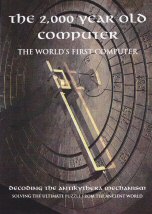
The Two Thousand Year Old Computer

   2012    History
In 1901, a group of divers excavating an ancient Roman shipwreck near the island of Antikythera, off the southern coast of Greece, found a mysterious object - a lump of calcified stone that contained within it several gearwheels welded together after years under the sea. The 2,000-year-old object, no bigger than a modern laptop, is now regarded as the world's oldest computer, devised to predict solar eclipses and, according to recent findings, calculate the timing of the ancient Olympics. Following the efforts of an international team of scientists, the mysteries of the Antikythera Mechanism are uncovered, revealing surprising and awe-inspiring details of the object that continues to mystify

Escaping ISIS

   2015    Culture
In August 2014, ISIS militants raided a Yazidi village in Syria, kidnapping thousands of men, women and children. Hundreds of the kidnapped men were killed or forced to convert to Islam; the women and children were sold as sex slaves or to marry ISIS fighters. Many were raped or became victims of other forms of sexual violence. Escaping ISIS depicts 34 of those captured by militants last year — mostly women and young children — reuniting with their families as they escape to freedom". Some victims were brought to freedom through underground networks, guides inside ISIS and resistance fighters. Women contacted the resistance fighters, begging for rescue; some said the alternative is committing suicide. Many escapees walk for several days with little food and water, often barefoot, risking getting recaptured and killed. One resistance fighter was shot in the back of the head in ISIS territory after they found out that he was working against them. The documentary shows parts of this treacherous journey to freedom.

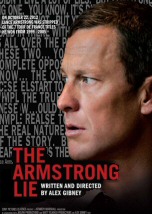
The Armstrong Lie

   2013    Culture
Academy Award-winning director Alex Gibney (Taxi to the Dark Side) masterfully explores the fall of the disgraced cycling champion following the 2009 Tour de France, making use of his extraordinary access to attain rare interviews with former teammates, alleged doping mastermind Dr. Michele Ferrari, and Armstrong himself. What was Lance Armstrong thinking? For years, after seizing international fame as the cancer survivor who won seven Tour de France titles, he fiercely denied accusations that he used performance-enhancing drugs. He used his power to aggressively litigate journalists and publicly humiliate former friends who claimed otherwise. His deceit finally cracked in January 2013, when he admitted guilt to Oprah Winfrey in a television interview that critics decried for only scratching the surface. Academy Award-winning director Alex Gibney approaches Armstrong with unique and extraordinary access. In 2009, Gibney was commissioned to make a film about Armstrong's return to the Tour de France, four years after the racing champion had declared retirement. That race would later stir up devastating evidence in the case against Armstrong. But Gibney came away from the experience unable to reconcile the discrepancy between doping allegations and Armstrong's emphatic denials. Then, post-Oprah, Gibney went back to Armstrong for new interviews to extract a more detailed account of his double life. In The Armstrong Lie, Gibney masterfully explores the complexities of the case, interweaving the dramatic action of the 2009 Tour de France, when Armstrong found himself unexpectedly competing against his own teammate Alberto Contador. Gibney attains rare interviews with Armstrong's former teammates and alleged doping mastermind Dr. Michele Ferrari. The film also raises troubling questions about the process of doping regulation. Recently, when asked to give advice to documentary filmmakers, Gibney responded with a motto exemplified by this film: "Embrace contradictions."

Human Planet: The Oceans

   2011    Culture
Human Planet is a majestic portrait of humankind and the power of nature in extraordinary symbiosis, struggle and strife. For the first time, the camera has turned on ourselves. In doing so, we see how amazing human beings can be and how we adapt to any habitat, anywhere. Human Planet is epic in ambition, extreme in content, intimate in effect. It explores how we have devised ways of surviving in every corner of Earth – from the remotest deserts to the busiest urban metropolis. Each episode focuses on an iconic environment and reveals how we have adapted to the challenges of the landscape and the endless diversity of animals and plants we live with. Discover how our remarkable intelligence, tool use, and close-knit social lives have enabled us to cope with just about anything nature can throw at us". As an air-breathing animal, the human is not built to survive in water. But people have found ways to live an almost aquatic life so they can exploit the sea's riches. From a 'shark-whisperer' in the Pacific to Brazilian fishermen collaborating with dolphins to catch mullet, this journey into the blue reveals astonishing tales of ingenuity and bravery. Daredevil Galician barnacle-collectors defy death on the rocks for a catch worth 200 pounds per kilo. In Indonesia an epic whale-hunt, using traditional hand-made boats and harpoons, brings in a sperm whale. The Bajau 'sea gypsies' of the Sulu Sea spend so much time on water they get 'land sick' when they set foot on the land! We dive 40 metres down to the dangerous world of the Pa-aling fishermen, where dozens of young men, breathing air through a tangled web of pipes attached to a diesel engine, capture thousands of fish in a vast net. We see how surfing has its origins in the ancient beliefs of the ocean-loving Polynesians, and we join a Borneo free-diving spear-fisherman on a breath-taking journey 20 metres down in search of supper.
Series: Human Planet
Through the Wormhole

Through the Wormhole

2011  Science
Ancient Apocalypse

Ancient Apocalypse

2024  History
Dark Net

Dark Net

2016  Technology
The Crime of the Century

The Crime of the Century

2021  Medicine
Breakthrough

Breakthrough

2019  Medicine