







Last Watched

"Ants"  Sort by

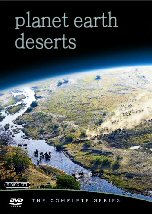
Deserts

   2007    Nature
Around 30% of the land's surface is desert, the most varied of our ecosystems despite the lack of rain. Unravel the secrets of desert survival and experience the ephemeral nature of this dynamic environment. Watch Saharan sandstorms nearly a mile high and desert rivers that run for a single day. In the Gobi Desert, rare Bactrian camels get moisture from the snow. In the Atacama, guanacos survive by licking dew off cactus spines. In the USA, the brief blooming of Death Valley triggers a plague of locusts 65km wide and 160km long. A unique aerial voyage over the Namibian desert reveals elephants on a long trek for food and desert lions searching for wandering oryx.
Series: Planet Earth
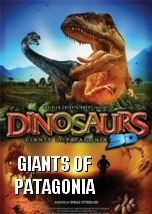

Dinosaurs Giants of Patagonia

   2007    Science    3D    HD
'Dinosaurs: Giants of Patagonia' Following Pr Rodolfo Coria, a world-reknown Argentinian paleontologist, we visit sites of major discoveries he has contributed to in Patagonia and travel back in time to see these amazing beasts come to life in 3D. Patagonia has given us the largest living animal to ever walk the Earth: the titanesque plant-eating Argentinosaur, and its nemesis, the Giganotosaur, a bipedal carnivore that could easily challenge the famous T-Rex.

Conquistadors: The Search for El Dorado

   2002    History
Francisco de Orellana failed to find El Dorado, but discovered the Amazon. Early in 1541, a rumor swept Quito that beyond the mountains, there lay a land richer than Mexico, or even Peru - a land of gold. The ruler of this land was so rich that he covered himself with gold dust every day and washed it off every evening. He was "the golden man", El Dorado. They had tree goals: to find La Canela, the land of cinnamon: to assess new lands for colonization; and to find El Dorado. On march 1541, They marched eastwards with more that 200 Spanish troops and thousands of native servants.
Series: Conquistadors

Merchants of Doubt

   2014    Culture
Merchants of Doubt takes audiences on a satirically comedic, yet illuminating ride into the heart of conjuring American spin. Filmmaker Robert Kenner lifts the curtain on a secretive group of highly charismatic, silver-tongued pundits-for-hire who present themselves in the media as scientific authorities - yet have the contrary aim of spreading maximum confusion about well-studied public threats ranging from toxic chemicals to pharmaceuticals to climate change. Inspired by the acclaimed book by Naomi Oreskes and Erik Conway

The Private Life of Plants: Travelling

   1994    Nature
Sir David Attenborough reveals plants as they have never been seen before - on the move and dangerously devious. About the major problems of life - growing, finding food, reproduction - and the varied ways plants have evolved to solve it. Filmed from the plant's point of view, using computer animations, fibre-optics and unique time-lapse photography. The first episode looks at how plants are able to move". The bramble is an aggressive example: it advances forcefully from side to side and, once settled on its course, there is little that can stand in its way. An altogether faster species is the birdcage plant, which inhabits Californian sand dunes. When its location becomes exposed, it shifts at great speed to another one with the assistance of wind — and it is this that allows many forms of vegetation to distribute their seeds. While not strictly a plant, the spores of fungi are also spread in a similar fashion. One of the most successful (and intricate) flowers to use the wind is the dandelion, whose seeds travel with the aid of 'parachutes'. They are needed to travel miles away from their parents, who are too densely packed to allow any new arrivals. Trees have the advantage of height to send their seeds further, and the cottonwood is shown as a specialist in this regard. The humidity of the tropical rainforest creates transportation problems, and the liana-species Alsomitra macrocarpa is one plant whose seeds are aerodynamic 'gliders'. Some, such as those of the sycamore, take the form of 'helicopters', while others, such as the squirting cucumber release their seeds by 'exploding'. Water is also a widely used method of propulsion. The tropical sea bean Entada gigas has one of the biggest fruits of all plants and is dispersed by water streams. However, most plants use living couriers, whether they be dogs, humans and other primates, ants or birds, etc., and to that end, they use colour and smell to signify when they are ripe for picking.
Series: The Private Life of Plants

Lord of Asia

   1997    History
Michael crosses Iran towards the Caspian Sea. He meets nomads who tell of Alexander's tryst with an Amazon queen, and the living descendants of Alexander's Persian enemies, who have their own tales of `Alexander the Accursed'.
Series: In the Footsteps of Alexander the Great