






Last Watched

"Biology"  Sort by

2015 Year In Sci-Tech

   2015    Technology
Explore the latest science behind the headlines and the coolest scientific developments that impact our lives. Technology catapults to new heights in 2015, going faster and further than ever before. We have canvassed the world in search of the best and most fascinating science and tech stories of the year for 2015 YEAR IN SCI-TECH". This action-packed hour of fun and intrigue revisits the world’s first glimpse of Pluto and images of water on Mars while exploring what this all could mean for intelligent life in the universe – all while earthling’s inch closer to becoming actual space tourists. Throughout the hour, we revisit the year’s most amazing techological feats and scientific discoveries, including new and elusive animal species discovered deep under the ocean, as well as the hottest tech trends – from hover boards to driverless cars and trucks, and the newest advances in mind-blowing virtual reality.
Size Matters

   2013    Science
Brian explores the physics of the size of life through some close encounters with Australia's wildlife. From swimming with great white sharks to tracking red kangaroos, he discovers that the size you are profoundly affects the life you lead and, ultimately, how long you have to enjoy it.
Series: Wonders of Life

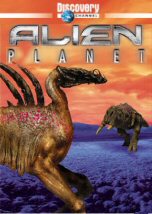
Alien Planet

   2005    Nature
The computer animated drama takes place on Darwin IV, a planet 6.5 light years from earth, with 2 suns and 60% of Earth's gravity. Earth sends a pilot mission with three probes. This robotic fleet is responsible for finding and assessing any life forms on Darwin IV. The probes soon find themselves in the middle of a developed ecosystem teeming with diversity of life of all sizes. "Alien Planet" is motivated by real science missions, such as the NASA Origins Program and the NASA / JPL Planet-Finder Mission, as well as the European Space Agency's Darwin Project. It is a cosmic expedition along side Stephen Hawking, Michio Kaku, Jack Horner, Craig Venter, and George Lucas, and NASA's Chief Scientist Jim Garvin. No longer just the domain of science fiction, "Alien Planet" dramatizes an exciting and possible answer to what alien life really looks like and when we'll find it.

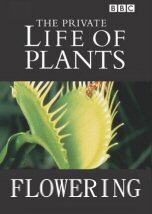
Flowering

   1995    Nature
The third episode is devoted to the ways in which plants reproduce. Pollen and a stigma are the two components needed for fertilisation. Most plants carry both these within their flowers and rely on animals to transport the pollen from one to the stigma of another. To do this, they attract their couriers with colour, scent and nectar. It isn't just birds that help pollination: some mammals and reptiles also do so. However, it is mostly insects that are recruited to carry out the task. To ensure that pollen is not wasted by being delivered to the wrong flower, some species of plant have developed exclusive relationships with their visitors, and the gentian and its attendant carpenter bees is one example. Since pollen can be expensive to produce in terms of calories, some plants, such as orchids, ration it by means of pollinia and a strategically placed landing platform. Other orchids offer no reward for pollination, but instead mislead their guests by mimicking their markings and aroma, thus enticing males to 'mate' with them (Pseudocopulation). The most extreme fertilisation method is one of imprisonment, and one plant that uses it is the dead horse arum. It is often found near gull colonies, and mimics the appearance and smell of rotting flesh. Blow-flies are attracted to it, and are forced to stay the night before being allowed to depart in the morning, laden with pollen. Finally, Attenborough introduces the world's largest inflorescence: that of the titan arum.
Series: The Private Life of Plants

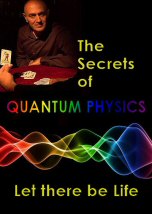
Let there be Life

   2014    Science
Professor of physics Jim Al-Khalili investigates the most accurate and yet perplexing scientific theory ever - quantum physics, the perplexing theory of sub-atomic particles. Turning his attention to the world of nature, can quantum mechanics explain the greatest mysteries in biology? The European robin navigates using one of the most bizarre effects in physics - quantum entanglement, a process which seems to defy common sense. Jim finds that even the most personal of human experiences - our sense of smell - is touched by ethereal quantum vibrations. According to new experiments it seems that our quantum noses are listening to smells. Jim discovers that the most famous law of quantum physics - the uncertainty principle - is obeyed by plants and trees as they capture sunlight during the vital process of photosynthesis. Jim wonders if the strange laws of the sub-atomic world, which allow objects to tunnel through impassable barriers in defiance of common sense, could effect the mechanism by which living species evolve?
Series: The Secrets of Quantum Physics
Frozen Planet

Frozen Planet

2011  Nature
Leaving Neverland

Leaving Neverland

2019  Culture
The Human Body

The Human Body

1998  Medicine
Welcome to Earth

Welcome to Earth

2021  Nature
The Keepers

The Keepers

2017  Culture