





Last Watched

"US"  Sort by

2015 Year In Sci-Tech

   2015    Technology
Explore the latest science behind the headlines and the coolest scientific developments that impact our lives. Technology catapults to new heights in 2015, going faster and further than ever before. We have canvassed the world in search of the best and most fascinating science and tech stories of the year for 2015 YEAR IN SCI-TECH". This action-packed hour of fun and intrigue revisits the world’s first glimpse of Pluto and images of water on Mars while exploring what this all could mean for intelligent life in the universe – all while earthling’s inch closer to becoming actual space tourists. Throughout the hour, we revisit the year’s most amazing techological feats and scientific discoveries, including new and elusive animal species discovered deep under the ocean, as well as the hottest tech trends – from hover boards to driverless cars and trucks, and the newest advances in mind-blowing virtual reality.
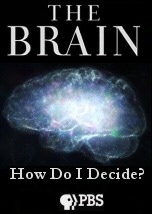
How Do I Decide

   2015    Medicine
The human brain is the most complex object we’ve discovered in the universe, and every day much of its neural circuitry is taken up with the tens of thousands of decisions we need to make. ‘How do I decide?’ is a journey through the unseen world of decisions, and how they get made. Decisión-making is what allows us to navigate a course through life. Discover how important emotions are in making decissions and, as we learn more about our own brains, we can break away from slavery to our impulses. Neuroscience shows that you're made up of multiple competing drives and by understanding how choices battle it out in the brain, we can learn how to make better decisions.
Series: The Brain with David Eagleman

Why Do I Need You

   2015    Medicine
In ‘Why Do I Need You?’ Dr. David Eagleman explores how the human brain relies on other brains to thrive and survive. Our fundamentally social nature can hold the key to our sucdess as a species. Our brains are so fundamentally wired to interact that we are something more like a single vast super-organism. In this age of digital connection, we desperately need to understand how human brains interact if we want our civilization to have a future, if we want to avoid fanaticism and to embrace cooperation. This neural interdependence begins at birth. Dr. David Eagleman invites a group of babies to a puppet show to showcase their ability to discern who is trustworthy, and who isn’t.
Series: The Brain with David Eagleman

Edge Of The Ice

   2003    Nature
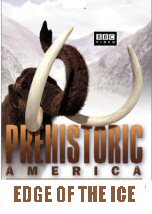
Journey through the long-vanished corners of prehistoric North America, beginning when man first entered the vast, unspoiled continent some 14,000 years ago, in this appealing BBC documentary. Witness ancient beasts, mammoths, mastodons, giant bears, and sabre-toothed cats, and see the legacies each has passed to their modern successors. Computer animation and digital effects bring to life mammoths, saber-toothed cats, giant ground sloths, short-faced bears, glyptodonts, and a plethora of smaller animals in a lush Ice Age mosaic. Discoveries from sites across America are the basis for the reconstructions.
Series: Prehistoric America

When Did Time Begin

   2014    Science
We float along the river of time. But does that river have a source? Where did time come from? Some believe time and space are one thing, and the Big Bang started the cosmic clock. Others believe the universe existed for almost half a million "years" before light could move and time began. Still others say time is older than our universe. But what if time itself is an illusion? Incredible new experiments may hold the answer. One groundbreaking experiment gives us the power to punch holes in time…and another may create a machine that operates outside time’s boundaries!
Series: Through the Wormhole Season 5

Harmony of the Worlds

   1980    Science
Beginning with the separation of the fuzzy thinking and pious fraud of astrology from the careful observations of astronomy, Sagan follows the development of astronomical observation. Beginning with constellations and ceremonial calendars (such as those of the Anasazi), the story moves to the debate between Earth and Sun-centered models: Ptolemy and the geocentric worldview, Copernicus' theory, the data-gathering of Tycho Brahe, and the achievements of Johannes Kepler (Kepler's laws of planetary motion and the first science-fiction novel).
Series: Cosmos
Cooked

Cooked

2016  Culture
Our Planet

Our Planet

2019  Nature
Planet Earth

Planet Earth

2007  Nature
Modern Masters

Modern Masters

2024  Art
Long Way Up

Long Way Up

2020  Culture
Chased by Sea Monsters

Chased by Sea Monsters

2003  Science