







Last Watched

"Ape"  Sort by

Building the Sun The 250 Million Degree Problem

   2017    Technology
Scientists investigate the way the Sun builds its power -- through fusion -- hoping to find a way to use fusion as a less dangerous and less radioactive waste-producing path to energy than fission. But there are some major difficulties along the way. Fusion really is the perfect way to make energy. We have millions of years worth of fuel. It produces no long-lived radioactive waste. If we can solve the engineering challenges, energy will become cheaper, more available for everybody.
Series: Catalyst

Nothing

   2011    Science
The second part, Nothing, explores science at the very limits of human perception, where we now understand the deepest mysteries of the universe lie. Professor Jim Al-Khalili sets out to answer one very simple question - what is nothing? His journey ends with perhaps the most profound insight about reality that humanity has ever made. Everything came from nothing. The quantum world of the super small shaped the vast universe we inhabit today, and Jim can prove it.
Series: Everything and Nothing

Everything

       Science
This series deals with two of the deepest questions there are - what is everything, and what is nothing? In two epic, surreal and mind-expanding films, Professor Jim Al-Khalili searches for an answer to these questions as he explores the true size and shape of the universe and delves into the amazing science behind apparent nothingness.
he first part, Everything, sees Professor Al-Khalili set out to discover what the universe might actually look like. The journey takes him from the distant past to the boundaries of the known universe. Along the way he charts the remarkable stories of the men and women who discovered the truth about the cosmos and investigates how our understanding of space has been shaped by both mathematics and astronomy.
Series: Everything and Nothing

Adaptation

   2013    Nature    3D    HD
Once life arrived in the Galapagos, it exploded into unique and spectacular forms. David Attenborough investigates the driving forces behind such evolutionary innovations. We learn that life must be able to adapt quickly in these ever-changing volcanic landscapes. It has resulted in species found nowhere else in the world, such as giant whale sharks and marine iguanas that can spit sea-salt from their noses, dandelion seeds that grow into tree-sized plants and spiders that can blend perfectly into the darkness. Adaptation has been the key to survival in these islands so far, but the story of life in the Galapagos doesn’t end here. The catalyst that triggers these explosions of life remains in place.
Series: Galapagos with David Attenborough

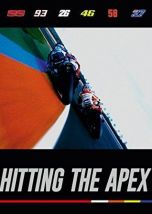
Hitting the Apex

   2015    Culture
The combustion of fuel and air in the engine and the fire in the heart of a rider willing to risk everything to win. Time is the enemy. The fractions of a second lost or gained in every corner which add up to defeat or victory. And the few years that you have to make it to the top. 'Hitting the Apex' is the story of six fighters - six of the fastest motorcycle racers the world has ever seen - and of the fates that awaited them at the peak of the sport.

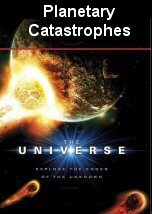
Catastrophes that Changed the Planets

   2011    Science
The planets of our solar system have experienced epic catastrophes throughout their long history, both raining down from outside and bubbling up from within. We'll voyage back in time to investigate the violent events that profoundly shaped the planets, including earth itself. We'll witness stunning revelations about what transformed Mars into a barren, hostile desert... The disaster that changed Venus from temperate to hellish... The impact that blew away Mercury's mantle, turning it into a planetary core... A colossal disturbance that rearranged the orbits of the gas giants... Titanic impacts on Jupiter... And how a lost moon may finally explain Saturn's rings.
Series: The Universe