

Last Watched

"Allen"  Sort by

The Insatiable Appetite

   1998    Nature
The next instalment focuses on dietary needs and how different species have evolved beaks to suit their individual requirements. The latter come in a multitude of forms. Blue tits and goldfinches have beaks akin to tweezers, with which to extract seeds, while the hawfinch's razor-like bill can deal with a cherry-stone. However, the crossbill is the only finch that can twist its mandibles in opposite directions. Jays store acorns for winter by burying them in the ground, whereas woodpeckers can keep up to 60,000 of them in one tree trunk. Sap is also desirable, and there are a variety of methods used to obtain it. The hoatzin is the only specialised leaf-eater, and accordingly has a digestive system more akin to that of cattle. Plants recruit birds to aid pollination, and offer nectar as a reward. Hummingbirds eat little else, and the sword-bill's beak is the longest of any bird in relation to its body. Insects are also highly prized, and Galapagos finches are shown to possess some ingenuity as they not only strip bark, but also use 'tools' to reach their prey. Crows are hailed as being among the most intelligent birds, and one is shown using a twig to spear a grub within a fallen log. The robin is an opportunist, and Sir Attenborough observes one seizing morsels as he digs a patch of earth. In South America, a cattle tyrant sits atop an obliging capybara and uses its vantage point to spot passing food that may be dislodged by its grazing partner.
Series: The Life of Birds
When Knowledge Conquered Fear

   2014    Science
The episode begins with Tyson describing how pattern recognition manifested in early civilization as using astronomy and astrology to predict the passing of the seasons, including how the passage of a comet was often taken as an omen. Tyson continues to explain that the origin of comets only became known in the 20th century due to the work of Jan Oort and his hypothesis of the Oort cloud. Tyson then continues to relate the collaboration between Edmond Halley and Isaac Newton in the last part of the 17th century in Cambridge. The collaboration would result in the publication of Philosophiæ Naturalis Principia Mathematica, the first major work to describe the laws of physics in mathematical terms, despite objections and claims of plagiarism from Robert Hooke and financial difficulties of the Royal Society of London. Tyson explains how this work challenged the prevailing notion that God had planned out the heavens, but would end up influencing many factors of modern life, including space flight. Tyson further describes Halley's contributions including determining Earth's distance to the sun, the motion of stars and predicting the orbit of then-unnamed Halley's Comet using Newton's laws. Tyson contrasts these scientific approaches to understanding the galaxy compared to what earlier civilizations had done, and considers this advancement as mankind's first steps into exploring the universe. The episode ends with an animation of the Milky Way and Andromeda galaxies' merging based on the principles of Newton's laws.
Series: Cosmos: A Spacetime Odyssey

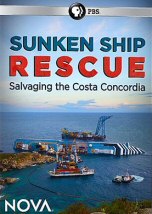
Sunken Ship Rescue

   2015    Culture
Follows the epic operation to secure, raise, and salvage the Costa Concordia cruise ship, which ran aground and tragically capsized off the coast of Italy on January 13th 2012, killing 32 people. The wreck stretches the length of three football fields, weighs 45,000 tons, and lies half submerged on the site of a protected reef, with a 160-foot-long hole in its hull. Moving it from its precarious perch on the edge of an underwater cliff will be a huge technical and logistical challenge. Joins a team of more than 500 divers and engineers working around the clock as they attempt the biggest ship recovery project in history.

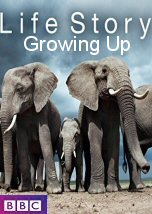
Growing Up

   2014    Nature
David Attenborough brings us the universal story that unites each of us with every animal on the planet, the story of the greatest of all adventures - the journey through life. For animals there is just one goal in life - to continue their bloodline in the form of offspring, the next best thing to immortality. The series shows how animals attempt to overcome the challenges that face them at each of the six crucial stages of life as they strive towards ultimate success." In the journey towards adulthood, a moment comes for all animals when they must strike out on their own. With their parents absent they must learn to survive in a dangerous world. At this stage of life every small success may mean the difference between life and death.
Series: Life Story

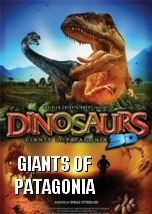
Dinosaurs Giants of Patagonia

   2007    Science    3D    HD
'Dinosaurs: Giants of Patagonia' Following Pr Rodolfo Coria, a world-reknown Argentinian paleontologist, we visit sites of major discoveries he has contributed to in Patagonia and travel back in time to see these amazing beasts come to life in 3D. Patagonia has given us the largest living animal to ever walk the Earth: the titanesque plant-eating Argentinosaur, and its nemesis, the Giganotosaur, a bipedal carnivore that could easily challenge the famous T-Rex.

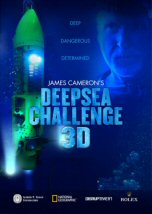
Deepsea Challenge

   2014    Nature    3D    HD
Now in HD, plus a 3D version available. As a boy, filmmaker James Cameron dreamed of a journey to the deepest part of the ocean. This film is the dramatic fulfillment of that dream. It chronicles Cameron's solo dive to the depths of the Mariana Trench-nearly seven miles beneath the ocean's surface-piloting a submersible he designed himself. The risks were astounding. The footage is breathtaking. DEEPSEA CHALLENGE is a celebration of science, courage, and extraordinary human aspiration.