










Last Watched

" The Universe"  Sort by

When Will Time End

   2012    Science
Discover the Eras of the Universe and the answer to this big question: When Will Time End? Once the notion that the universe started with a rapid inflation nicknamed the Big Bang became accepted by the majority of scientists, many possible fates are predicted by rival scientific hypotheses, including futures of both finite and infinite duration. The ultimate fate of the universe is dependent on the shape of the universe and what role Dark energy will play as the universe ages.
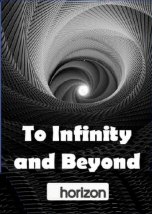
To Infinity and Beyond

   2010    Science
By our third year, most of us will have learned to count. Once we know how, it seems as if there would be nothing to stop us counting forever. But, while infinity might seem like an perfectly innocent idea, keep counting and you enter a paradoxical world where nothing is as it seems. Mathematicians have discovered there are infinitely many infinities, each one infinitely bigger than the last. And if the universe goes on forever, the consequences are even more bizarre. In an infinite universe, there are infinitely many copies of the Earth and infinitely many copies of you. Older than time, bigger than the universe and stranger than fiction. This is the story of infinity.

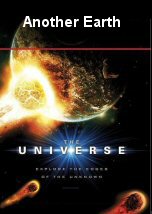
Another Earth

   2009    Science
Could we be unique in the universe or is there another planet similar to earth somewhere in the cosmos? Is it possible that Alpha Centauri, our nearest star, is home to another earth-like planet? Earth sized planets have been hard to find, but indirect methods are coming on line to give scientists a good survey of how many such bodies may be in the universe. How rare would it be to find life on another earth-like planet?
Series: The Universe

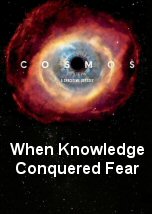
When Knowledge Conquered Fear

   2014    Science
The episode begins with Tyson describing how pattern recognition manifested in early civilization as using astronomy and astrology to predict the passing of the seasons, including how the passage of a comet was often taken as an omen. Tyson continues to explain that the origin of comets only became known in the 20th century due to the work of Jan Oort and his hypothesis of the Oort cloud. Tyson then continues to relate the collaboration between Edmond Halley and Isaac Newton in the last part of the 17th century in Cambridge. The collaboration would result in the publication of Philosophiæ Naturalis Principia Mathematica, the first major work to describe the laws of physics in mathematical terms, despite objections and claims of plagiarism from Robert Hooke and financial difficulties of the Royal Society of London. Tyson explains how this work challenged the prevailing notion that God had planned out the heavens, but would end up influencing many factors of modern life, including space flight. Tyson further describes Halley's contributions including determining Earth's distance to the sun, the motion of stars and predicting the orbit of then-unnamed Halley's Comet using Newton's laws. Tyson contrasts these scientific approaches to understanding the galaxy compared to what earlier civilizations had done, and considers this advancement as mankind's first steps into exploring the universe. The episode ends with an animation of the Milky Way and Andromeda galaxies' merging based on the principles of Newton's laws.
Series: Cosmos: A Spacetime Odyssey

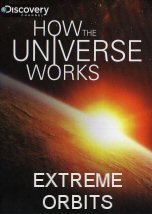
Extreme Orbits - Clockwork and Creation

   2012    Science
Orbits are the dynamics that drive the universe. From the smallest asteroid to the largest super-cluster, everything in the universe is in orbit. We owe our very existence to the stability of earth's orbit — it gave us life and keeps us safe. But we are the freaks. Everywhere else we look we find orbits are chaotic, unstable, and violent. Beyond our solar system we find planets that are blow-torched, stars that eat each other, and black holes that destroy everything in their path. Yet on the very largest scale, orbits are also a creative force. clashing galaxies give birth to new stars and new worlds. on the galactic scale orbits even construct the fabric of the universe itself.
Series: How the Universe Works

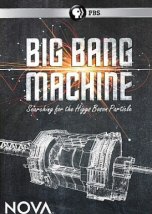
Big Bang Machine

   2015    Technology
On July 4, 2012, scientists at the giant atom smashing facility at CERN announced the discovery of a subatomic particle that seems like a tantalizingly close match to the elusive Higgs Boson, thought to be responsible for giving all the stuff in the universe its mass. Since it was first proposed nearly fifty years ago, the Higgs has been the holy grail of particle physicists: finding it completes the 'standard model" that underlies all of modern particle physics. Now CERN's scientists are preparing for the Large Hadron Collider's second act, when they restart the history-making collider, running at higher energy--hoping to find the next great discovery that will change what we know about the particles and forces that make up our universe.
Modern Masters

Modern Masters

2024  Art
Unknown

Unknown

2023  Technology
The Art of Russia

The Art of Russia

2009  Art
Dark Net

Dark Net

2016  Technology
Inside the Medieval Mind

Inside the Medieval Mind

2008  History