The series examines Rev Jim Jones' transformation from charismatic preacher and champion of civil rights into egomaniacal demagogue who led the biggest mass suicide in American history. On the 40th anniversary of the deaths of more than 900 people in the Peoples Temple in Guyana, the film hears from the handful who made it out alive. The first episode shows how Jim Jones forms the Peoples Temple after an unusual childhood. Members are captivated; his lust for power becomes unstoppable. The press exposes the dark side of Jim Jones, causing a mass exodus to Jonestown. His followers soon realize it's not the utopia their leader promised.
The idea that there is a possibility of many worlds or multi universal theory is very new even though you may have learned about it in movies and comic books. Explore how this thinking was developed in the world of quantum mechanics and philosophy.
Widespread dietary changes are needed if we’re to combat the range of health problems associated with obesity and the environmental damage caused by industrial farming. Switching to a vegan diet is a potential solution, but selling the idea to the meat-eaters around the world is a tricky proposition.
From fears about work and privacy to a rivalry between the U.S. and China, the series explores the promise and perils of AI. It traces a new industrial revolution that will reshape and disrupt our lives, our jobs and our world, and allow the emergence of the surveillance society. Today, China leads the world in e-commerce and is a society that bypassed credit cards. Now shops in stores are without cashiers, where the currency is facial recognition. No country has ever moved that fast. And in a short two-and-a-half years, China's A.I. implementation really went from minimal amount to probably about 17 or 18 unicorns, that is, billion-dollar companies. The progress was powered by a new generation of ambitious young techs pouring out of Chinese universities, competing with each other for new ideas, and financed by a new cadre of Chinese venture capitalists.
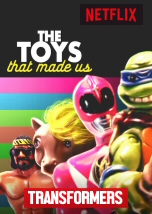
In 1983 Hasbro bought the license of the Diaclone and Micro Change toys from Takara, then commissioned Marvel Comics to come up with a story-line and character names for the toys. The result: Transformers. Despite Tonka releasing the cheaper Gobots line six months earlier, Hasbro's Transformers took the toy market by storm in 1984, raking in US$150 million that year. At the peak of the toy line's popularity, The Transformers: The Movie hit theaters to further capitalize on its success, but the film polarized fans and collectors with the death of Optimus Prime and majority of the original characters. As Hasbro took full control of Transformers from Takara by the late 1980s, sales declined until the toy line was discontinued in 1991. After the failed Generation 2 reboot, Beast Wars rejuvenated the franchise in 1995. In 2007, the live-action Transformers film solidified Transformers' position as Hasbro's flagship toy line.
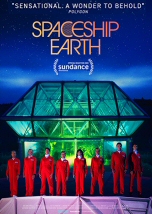
The true, stranger-than-fiction, adventure of eight visionaries who in 1991 spent two years quarantined inside of a self-engineered replica of Earth's ecosystem called Biosphere 2. The experiment was a worldwide phenomenon, chronicling daily existence in the face of life threatening ecological disaster and a growing criticism that it was nothing more than a cult. The bizarre story is both a cautionary tale and a hopeful lesson of how a small group of dreamers can potentially re-imagine a new world.






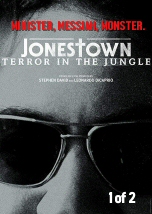



The first episode shows how Jim Jones forms the Peoples Temple after an unusual childhood. Members are captivated; his lust for power becomes unstoppable. The press exposes the dark side of Jim Jones, causing a mass exodus to Jonestown. His followers soon realize it's not the utopia their leader promised.