





Last Watched

"Bot"  Sort by

When Will Time End

   2012    Science
Discover the Eras of the Universe and the answer to this big question: When Will Time End? Once the notion that the universe started with a rapid inflation nicknamed the Big Bang became accepted by the majority of scientists, many possible fates are predicted by rival scientific hypotheses, including futures of both finite and infinite duration. The ultimate fate of the universe is dependent on the shape of the universe and what role Dark energy will play as the universe ages.
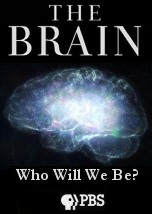
Who Will We Be

   2015    Medicine
In ‘Who will we be?’ Dr. David Eagleman journeys into the future, and asks what’s next for the human brain, and for our species. We stand at a major turning point, one where we might take control of our own development. We face a future of uncharted possibilities in which our relationship with our own body, our relationship with the world, the very basic nature of who we are is set to be transformed. For thousands of generations, humans have lived the same life cycle over and over. We are born, we control a fragile body, we experience a limited reality, and we die. But science and technology are giving us tools to transcend that evolutionary story. Our brains don't have to remain as we have inherited them. We are capable of extending our reality, of inhabiting new bodies, and possibly shedding our physical forms altogether. And we are discovering the tools to shape our own destiny. Who we become is up to us.
Series: The Brain with David Eagleman

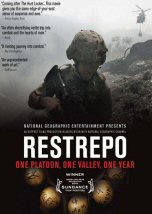
Restrepo

   2010    History
It is fairly extraordinary that this film exists. The level of access attained by Tim Hetherington and Sebastian Junger over their 15-month period embedded with the Second Platoon, Battle Company, 173rd Airborne Brigade allows for an incredibly unvarnished account -- including footage of deaths both civilian and military. It's perhaps the most intimate and unflinching examination yet of the processes of modern warfare -- and an exhilarating, heartrending, profoundly moving film in its own right.

Frozen Planet: On Thin Ice

   2011    Science
Sir David Attenborough journeys to both Polar Regions to investigate what rising temperatures will mean for the people and wildlife that live there and for the rest of the planet. David starts out at the North Pole, standing on sea ice several metres thick, but which scientists predict could be Open Ocean within the next few decades. The Arctic has been warming at twice the global average, so David heads out with a Norwegian team to see what this means for polar bears. He comes face-to-face with a tranquilised female, and discovers that mothers and cubs are going hungry as the sea ice on which they hunt disappears. In Canada, Inuit hunters have seen with their own eyes what scientists have seen from space; the Arctic Ocean has lost 30% of its summer ice cover over the last 30 years. For some, the melting sea ice will allow access to trillions of dollars worth of oil, gas and minerals. For the rest of us, it means the planet will get warmer, as sea ice is important to reflect back the sun's energy. Next David travels to see what's happening to the ice on land: in Greenland, we follow intrepid ice scientists as they study giant waterfalls of meltwater, which are accelerating iceberg calving events, and ultimately leading to a rise in global sea level. Temperatures have also risen in the Antarctic - David returns to glaciers photographed by the Shackleton expedition and reveals a dramatic retreat over the past century. It's not just the ice that is changing - ice-loving adelie penguins are disappearing, and more temperate gentoo penguins are moving in. Finally, we see the first ever images of the largest recent natural event on our planet - the break up of the Wilkins Ice Shelf, an ice sheet the size of Jamaica, which shattered into hundreds of icebergs in 2009.
Series: Frozen Planet

Hiroshima 2 of 2

   2005    Technology
It was the defining moment of the 20th Century - the scientific, technological, military, and political gamble of the world's first atomic attack. This drama-documentary attempts to do what no other film has done before - to show what it is like to live through a nuclear explosion, millisecond by millisecond. Set in the three weeks from the first test explosion in New Mexico to the eventual dropping of the bomb, the action takes viewers into the room where the crucial political decisions are made; on board the Enola Gay on her fateful voyage; inside the bomb as it explodes; and on the streets of Hiroshima when disaster strikes. Parallel storylines interweave, unfolding the action from both US and Japanese perspectives, and revealing the tensions and conflicts in the actions and minds of people who were making history. Special effects recreate the reality of the mission - even going inside the workings of the bomb - and archive film replays the horrific aftermath.
Series: Hiroshima

Turner

   2006    Art
One of Britain's most celebrated artists, Turner showed exceptional artistic talent from an early age and entered the Royal Academy aged fourteen. His English landscapes made his name but there was a darker side to his paintings that was difficult for the critics to swallow, both in the increasingly informal use of paint and the subject matter that was critical of the romanticised vision of Britain in the late nineteenth century.
Series: Power of Art
Cosmos

Cosmos

1980  Science
History of the Eagles

History of the Eagles

2013  History
The Germanic Tribes

The Germanic Tribes

2007  History
The Planets

The Planets

2000  Science
P.U.L.S.E

P.U.L.S.E

2006  Art
Future of Work

Future of Work

2021  Technology
Ancient Aliens

Ancient Aliens

  History
Nature Great Events

Nature Great Events

2009  Nature