




Last Watched

"ISS"  Sort by

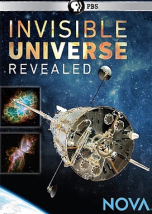
Invisible Universe Revealed 25 years of Hubble

   2015    Technology
25 years ago, NASA launched one of the most ambitious experiments in the history of astronomy: the Hubble Space Telescope. In honor of Hubble's landmark anniversary, know the remarkable story of the telescope that forever changed our understanding of the cosmos and our place in it". But amazingly, when the telescope first sent images back to earth, it seemed that the entire project was a massive failure; a one-millimeter engineering blunder had turned the billion-dollar telescope into an object of ridicule. It fell to five heroic astronauts in a daring mission to return Hubble to the cutting edge of science. Hear from the scientists and engineers on the front line who tell the amazing Hubble story as never before. This single telescope has helped astronomers pinpoint the age of the universe, revealed the birthplace of stars and planets, advanced our understanding of dark energy and cosmic expansion, and uncovered black holes lurking at the heart of galaxies. For more than a generation, Hubble's stunning images have brought the beauty of the heavens to millions, revealing a cosmos richer and more wondrous than we ever imagined. Join us for the story of this magnificent machine and its astonishing discoveries.
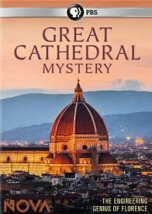
Great Cathedral Mystery

   2014    Art
The dome that crowns Florence's great cathedral of Santa Maria del Fiore, the Duomo, is a masterpiece of Renaissance ingenuity and an enduring source of mystery. Still the largest masonry dome on earth, it is taller than the Statue of Liberty and weighs as much as an average cruise ship. Historians and engineers have long debated how its architect, Filippo Brunelleschi, kept the dome perfectly aligned and symmetrical as the sides rose and converged toward the center." More than four million bricks could collapse at any moment -- and we still don't understand how Brunelleschi prevented it. To test the latest theories, a team of U.S. bricklayers will help build an experimental "mini-Duomo" using period tools and techniques.

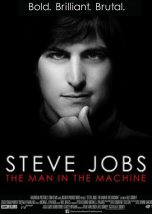
Steve Jobs Man in the Machine

   2015    History
Directed by Alex Gibney, it follows the life and work of ex-Apple CEO Steve Jobs. Gibney starts the doc by showing how much people around the world worship Steve Jobs as if he were an idol. He then provides you with a wealth of background information about Jobs' childhood, teenage and college years including how he formed Apple Inc. Fortunately, not all of the doc is hagiography because Gibney does briefly delve into the darker side of Jobs, particularly how selfish he was and mistreated those around him including his ex-wife. Jobs comes across as a charming, intelligent narcissist who knows how to captivate an audience whenever he speaks. In other words, like all great narcissists, he's a very good actor. Gibney certainly knows how to choose the right subject because Jobs' complexity makes him all the more captivating and worthy of a feature-length film. As is usually the case with Gibney's docs, this one is slickly-edited and has just the right amount of comic relief, mostly in the brief video of an young boy joyfully lists all of Apple's technological devices that Steve Jobs created. You'll catch a glimpse of what makes Jobs fallible, and find a little mildly provocative food for thought about the advancement of modern technology, i.e. how technology helps to connect us to one another yet alienates us at the same time.

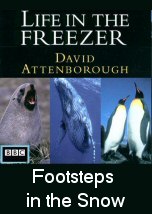
Footsteps in the Snow

   1993    History
This episode discusses the human exploration of Antarctica, in particular the mission led by Captain Robert Falcon Scott, whose team died on the way back from the South Pole. It shows the scientific work in the modern human bases in Antarctica, especially Mawson Base and its observation of Adelie Penguins (partially through tracking devices). The second half of the episode describes how the series was made. Most crucial was of course the camera work. To get access to the wildlife of the sea, for example, boats, divers, suspended capsules and remotely controlled cameras mounted on inflatables were used. Particularly dangerous to divers were Leopard Seals and other predators. The film concludes that although working in Antarctica is now much easier than during the early days of exploration, human footsteps on the continent are still exceedingly rare in part because of international treaties prohibiting industrial exploitation.
Series: Life in the Freezer

The Crimes

   2007    History
Soldiers and officers continually came into conflict with their consciences. How much freedom did individuals have? Were they executing Hitler's criminal plans, or was it the Wehrmacht's war? There were crimes against humanity, against civilians, prisoners of war, and there was the Holocaust itself. The Trent Park records discovered and analysed by historian Sönke Neitzel, author of Tapping Hitler's Generals, show that the 84 German generals who were interned at Trent Park were aware of the severity of the war crimes they had been involved in and that some discussed them almost compulsively. They included the Commissar Order, to kill any Soviet commissar, and Rathenau's order to kill the Jews, including children.
Series: The Wehrmacht

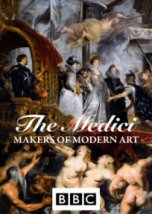
The Medici: Makers of Modern Art

   2008    Art
Andrew Graham-Dixon reveals how the Medici family transformed Florence through sculpture, painting and architecture and created a world where masterpieces fetch millions today. Without the money and patronage of the Medici we might never have heard of artists such as Donatello, Michelangelo or Botticelli, and Graham-Dixon examines how a family of shadowy, corrupt businessmen, driven by greed and ambition, became the financial engine behind the Italian Renaissance.