












Last Watched

"Migration"  Sort by

The Story of India: Beginnings

   2007    History
Through ancient manuscripts and oral tales Michael Wood charts the first human migrations out of Africa. He travels from the tropical backwaters of South India through lost ancient cities in Pakistan to the vibrant landscapes of the Ganges plain. In Turkmenistan dramatic archaeological discoveries cast new light on India’s past.
Series: The Story of India

Empire of Dreams

   2013    History
Widespread immigration to the U.S. from Latin countries begins – first with a small group from Cuba, then a larger one from Mexico. Both flee chaos and violence in their home country and are attracted by opportunities in the United States. In 1898, the U.S. helps liberate Cuba and Puerto Rico from Spain but then seizes Puerto Rico as its colony. The first Puerto Rican arrivals (now U.S. citizens) establish a network in New York.
Series: Latino Americans

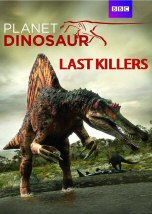
Last Killers

   2011    Science
In late Cretaceous Canada, in what will be known as Dinosaur Provincial Park, a Daspletosaurus stalks a Chasmosaurus in a forest, but loses the element of surprise and is forced to retreat. The Chasmosaurus comes across a younger Daspletosaurus, before being ambushed by a group of the tyrannosaurids. The episode then cuts to the high Arctic, where Edmontosaurus are hunted by a large species of Troodon. The theropods attack at night, separating a juvenile from the herd and severely wounding it, only to be driven away by an adult. In the morning, they return to eat the carcass of the juvenile, which died during the night. The episode returns to the Daspletosaurus, who chase and bring down the Chasmosaurus. The larger adults bully the youngsters off the carcass, forcing them to wait until they have finished. The episode then cuts to Madagascar, where a mother Majungasaurus (an Abelisaurid) and her two offspring chase a group of Rahonavis off a carcass. However, they are temporarily driven off themselves by a male Majungasaurus. But, after he steals some food from one of the young, the female attacks him, before she and her young cannibalise his body. The episode returns once again to North America, where the Daspletosaurus are waiting for the annual migration of Centrosaurus. They attack during a rainstorm, killing some of the ceratopsians. The Centrosaurus make it to a flooded river and begin to swim across, and although many make it to the other side, some are caught by giant crocodilians or are severely wounded by floating debris and thus drown, or drown for unseen reasons. In the morning, the carcasses attract scavengers, including the Daspletosaurus. A montage is then shown of Daspletosaurus and Majungasaurus, the narrator saying that together, the tyrannosaurids and abelisaurids were the last of the killer dinosaurs.
Series: Planet Dinosaur

Great Plains

   2007    Nature
After filming for three years, Planet Earth finally captures the shy Mongolian gazelle. Only a handful of people have witnessed its annual migration. Don't miss the bizarre-looking Tibetan fox, captured on film for the first time. Over six weeks the team follow a pride of 30 lions as they attempt to hunt elephants. Using the latest night vision equipment, the crew film the chaotic battles that ensue at close quarters.
Series: Planet Earth

Is Poverty Genetic

   2014    Culture
Are the wealthy just born in the right place at the right time? Are the poor victims of a system designed to keep them down? Or do physics and biology determine who is rich and who is poor? Throughout history, distribution of wealth is governed by hidden forces: DNA, environmental stress, patterns of human migration and even the laws of thermodynamics! Nature seems to demand winners and losers in life. But does this mean greed is king, and the rich can take what they want? Or is cooperation – between microorganisms, monkeys, and humans – more essential to survival of a species?
Series: Through the Wormhole Season 5

From Pole to Pole

   2007    Nature
Planet Earth is quite simply the greatest nature/wildlife series ever produced. The ultimate portrait of our planet looks at the key factors that shape our natural history. The sun and fresh water dominate the lives of all animals and plants on Earth and trigger seasonal migrations, small and large.
Series: Planet Earth
D-Day

D-Day

2013  History
Prehistoric Planet

Prehistoric Planet

2022  Science
The Life of Birds

The Life of Birds

1998  Nature
Earth at Night in Color

Earth at Night in Color

2020  Nature
Chef's Table

Chef's Table

2017  Art
Racism: A History

Racism: A History

2007  Culture