

Last Watched

"ISS"  Sort by

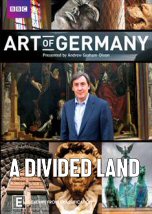
The Art of Germany: A Divided Land

   2010    Art
Andrew Graham-Dixon begins his exploration of German art by looking at the rich and often neglected art of the German middle ages and Renaissance. He visits the towering cathedral of Cologne, a place which encapsulates the varied and often contradictory character of German art. In Munch he gets to grips with the earliest paintings of the Northern Renaissance, the woodcuts of Albrecht Durer and the cosmic visions of the painter Albrecht Altdorfer. Andrew also embarks on a tour of the Bavarian countryside, discovering some of the little-known treasures of German limewood sculpture.
Series: The Art of Germany
D-Day: As it Happens (1)

   2013    History
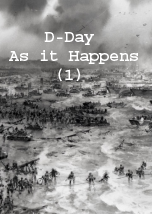
D-Day: As It Happens D-Day: As It Happens tells the story of this pivotal event in 20th-century history in a completely new way. Using newly-analysed archive footage, viewers can track the progress of seven people who were there on the day, each of them a real participant in the 1944 invasion. And they can do so moment by moment in real time, encountering the twists and turns of the fighting at the same time as the D-Day seven did, and learning their fate as the action unfolds in parallel with the present, Narrated by Peter Snow, with Channel 4 presenter and former marine Arthur Williams, and experts including former British Army officer Colonel Tim Collins and front-line journalist Lorna Ward. The first programme tells the back stories of the real people that the event is following in real time and sets out their missions over the following 24 hours. The D-Day seven include a paratrooper, a midget submariner, a nurse and a military cameraman.
Series: D-Day

The Lost Pyramids of Caral

   2002    History
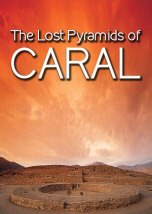
The magnificent ancient city of pyramids at Caral in Peru is a thousand years older than the earliest known civilisation in the Americas and, at 2,627 BC, is as old as the pyramids of Egypt. Many now believe it is the fabled missing link of archaeology - a 'mother city'. If so, then these extraordinary findings could finally answer one of the great questions of archaeology: why did humans become civilised?" For over a century, archaeologists have been searching for what they call a mother city. Civilisation began in only six areas of the world: Egypt, Mesopotamia, India, China, Peru and Central America. In each of these regions people moved from small family units to build cities of thousands of people. They crossed the historic divide, one of the great moments in human history. Why? To find the answer archaeologists needed to find a mother city - the first stage of city-building. Caral, is so much older than anything else in South America that it is a clear candidate to be the mother city. It also is in pristine condition. Nothing has been built on it at all. Instead laid out before the world is an elaborate complex of pyramids, temples, an amphitheatre and ordinary houses. Scientists developed a number of theories. Some said it was because of the development of trade, others that it was irrigation. Some even today believe it was all because of aliens. Gradually an uneasy consensus emerged. The key force common to all civilisations was warfare. Crucially, there is not the faintest trace of warfare at Caral; no battlements, no weapons, no mutilated bodies. Instead, Ruth's findings suggest it was a gentle society, built on commerce and pleasure. In one of the pyramids they uncovered beautiful flutes made from condor and pelican bones. They have also found evidence of a culture that took drugs and perhaps aphrodisiacs. Most stunning of all, they have found the remains of a baby, lovingly wrapped and buried with a precious necklace made of stone beads.

Travels with Vasari 1

   2009    Art
On a spectacular journey through Renaissance Italy, Andrew Graham-Dixon searches for the shadowy figure who wrote one of the most important books on art and looks at some dazzling works, including masterpieces of the early Renaissance by Giotto, Masaccio and Donatello. Giorgio Vasari was the grandaddy of all art critics, travelling Italy in the 16th century for his definitive Lives of the Artists. It was a time of miracles that he named 'the Renaissance'.
Series: Travels with Vasari

Blues for a Red Planet

   1980    Science
The episode, devoted to the planet Mars, begins with scientific and fictional speculation about the Red Planet during the late nineteenth and early twentieth centuries (H. G. Wells' The War of the Worlds, Edgar Rice Burroughs' science fiction books, and Percival Lowell's false vision of canals on Mars). It then moves to Robert Goddard's early experiments in rocket-building, inspired by reading science fiction, and the work by Mars probes, including the Viking, searching for life on Mars. The episode ends with the possibility of the terraforming and colonization of Mars and a Cosmos Update on the relevance of Mars' environment to Earth's and the possibility of a manned mission to Mars.
Series: Cosmos

Great Plains

   2007    Nature
After filming for three years, Planet Earth finally captures the shy Mongolian gazelle. Only a handful of people have witnessed its annual migration. Don't miss the bizarre-looking Tibetan fox, captured on film for the first time. Over six weeks the team follow a pride of 30 lions as they attempt to hunt elephants. Using the latest night vision equipment, the crew film the chaotic battles that ensue at close quarters.
Series: Planet Earth
Invisible Worlds

Invisible Worlds

2010  Science
The Putin Interviews

The Putin Interviews

2017  Culture
D-Day

D-Day

2013  History
In the Age of AI

In the Age of AI

2019  Technology
Seven Ages of Rock

Seven Ages of Rock

2007  Art
The Human Body

The Human Body

1998  Medicine