







Last Watched

"Wildlife"  Sort by

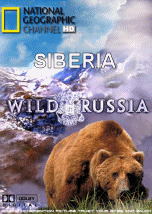
Wild Russia: Siberia

   2009    Nature
From east to west, via mountains, volcanoes, deserts, lakes and Arctic ice, this breathtaking series uses stunning cinematography to chart the dazzling natural wonders of this vast country. Accounting for around 10 per cent of the world’s dry land, Siberia is famous as a brutally cold place. Yet it is home to a diverse range of habitats and animal life – including musk deer, camels, gazelles and the extraordinary Siberian salamander, which can spend years encased in -40°C ice and still survive.
Series: Wild Russia
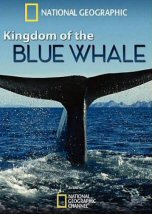

Kingdom of the Blue Whale

   2009    Nature
Blue whales are the largest animals to ever live on earth, yet they are difficult to find or track. Even some of the locations where they birth their young are great secrets. Join some of the world's eminent blue whale scientists as they embark on a revolutionary mission to identify and tag California blue whales as they migrate to a spot known as the Costa Rica Dome. This incredible voyage yields unforgettable new footage and insight into these amazing creatures' lives. Scientists use DNA analysis, recordings of whale songs, homing devices, and sea dives to shed light on the blue whale's breeding and birthing habits

Solving the Secrets

   2012    Nature
Bladderwort utricularia is a pond-dweller that is among the fastest known, its traps snapping shut in less than a millisecond. As the seasons change, David demonstrates how plants operate on a different time scale to us; how they modify their lives according to the time of year. We discover insects’ hidden links with plants, both as pests and pollinators. UV-sensitive 3D cameras reveal the invisible alter-ego of plants and their flowers’ mesmerizing patterns; a parallel-dimension of strange colours and stunning patterns through which plants communicate with them. With the aid of visual effects, David steps among the swirling vortices of plant scent; communication signals with which plants are inextricably plugged in to the natural world. And using a tuning fork, he demonstrates how plants and insects can even communicate with music. As autumn envelopes the Gardens, fungi reveal themselves not as the enemies of plants but their vital allies. In Kew’s atmospheric Fungarium, David discovers a specimen that has the power of mind control and another that lives underground where it has grown to be so big it can be counted as the largest single organism on the planet. It is 6 times bigger than Kew Gardens itself.
Series: Kingdom of Plants

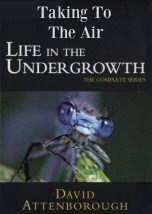
Taking To The Air

   2005    Nature
As the early June sun begins to set over a calm river in Central Hungary, masses of ghostly shapes emerge from their larval cases to take to the air for the first time. They are mayflies and in a spectacular display, thousands of them demonstrate how the very first wings were used. From the stunning aerobatics of hoverflies in an English garden to the mass migration of purple crow butterflies in the valleys of Taiwan, this episode tells the tale of the first animals ever to take to the air. Unique footage reveals the lightning fast reactions of bluebottles and hoverflies, filmed with one of the world's fastest cameras, and Sir David Attenborough handles the world's largest (and perhaps most ferocious) insect - the Titan beetle.
Series: Life in the Undergrowth

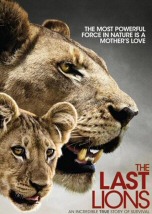
The Last Lions

   2011    Nature
Fifty years ago there were close to half-a-million lions in Africa. Today there are around 20,000. To make matters worse, lions, unlike elephants, which are far more numerous, have virtually no protection under government mandate or through international accords. This is the jumping-off point for a disturbing, well-researched and beautifully made cri de coeur from husband and wife team Dereck and Beverly Joubert, award-winning filmmakers from Botswana who have been Explorers-in-Residence at National Geographic for more than four years. Pointing to poaching as a primary threat while noting the lion's pride of place on the list for eco-tourists-an industry that brings in 200 billion dollars per year worldwide-the Jouberts build a solid case for both the moral duty we have to protect lions (as well as other threatened "big cats," tigers among them) and the economic sense such protection would make. And when one takes into account the fact that big cats are at the very top of the food chain-and that their elimination would wreak havoc on all species below them, causing a complete ecosystem collapse-the need takes on a supreme urgency.

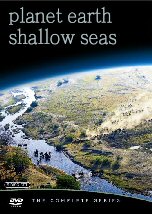
Shallow Seas

   2007    Nature
A humpback whale mother and calf embark on an epic journey from tropical coral paradises to storm ravaged polar seas. Newly discovered coral reefs in Indonesia reveal head-butting pygmy seahorses, flashing 'electric' clams and bands of sea kraits, 30-strong, which hunt in packs. Elsewhere plagues of sea urchins fell forests of giant kelp. Huge bull fur seals attack king penguins, who despite their weight disadvantage, put up a spirited defence.
Series: Planet Earth
The Story of Science

The Story of Science

2010  History
Leaving Neverland

Leaving Neverland

2019  Culture
Unknown

Unknown

2023  Science
Apocalypse: World War 1

Apocalypse: World War 1

2014  History
Dirty Money

Dirty Money

2018  Culture
Planet Earth

Planet Earth

2007  Nature