



Last Watched

"Ape"  Sort by

The Normans: Conquest

   2010    History
Professor Robert Bartlett explores the impact of the Norman conquest of Britain and Ireland. Bartlett shows how William the Conqueror imposed a new aristocracy, savagely cut down opposition and built scores of castles and cathedrals to intimidate and control. He also commissioned the Domesday Book, the greatest national survey of England that had ever been attempted. England adapted to its new masters and both the language and culture were transformed as the Normans and the English intermarried. Bartlett shows how the political and cultural landscape of Scotland, Wales and Ireland were also forged by the Normans and argues that the Normans created the blueprint for colonialism in the modern world.
Series: The Normans
The Untold History of the United States: World War Two

   2012    History
This series, narrated and written by Oliver Stone and co-author Peter Kuznick, will focus on human events that at the time went under reported, but crucially shaped America’s unique and complex history over the 20th and 21st century. The series is a re-examination of some of the under-reported and darkest parts of American modern history using little known documents and newly uncovered archival material. The series looks beyond official versions of events to the deeper causes and implications and explores how events from the past still have resonant themes for the present day." The fist episode examines World War II. It offers special attention to the Spanish Civil War, Roosevelt's desire to enter the war on the side of the allies, the strategic Japanese decisions that lead up to Pearl Harbor Attack, and the often overlooked role that the Soviet Union had in winning the war.
Series: The Untold History of the United States

The Genius of Charles Darwin: The Fifth Ape

   2008    Culture
Richard Dawkins deals with some of the philosophical and social ramifications of the theory of evolution. Dawkins starts out in Kenya, speaking with palaeontologist Richard Leakey. He then visits Christ is the Answer Ministries, Kenya's largest Pentecostal church, to interview Bishop Bonifes Adoyo. Adoyo has led the movement to press Kenya's national museum to sideline its collection of hominid bones pointing to man's evolution from ape to human.[5] The collection includes the Turkana Boy discovered by Kamoya Kimeu, a member of a team led by Richard Leakey in 1984. Dawkins discusses social darwinism and eugenics, explaining how these are not versions of natural selection, and that 'Darwin has been wrongly tainted'. He then meets with evolutionary psychologist Steven Pinker to discuss how morals can be compatible with natural selection. He goes on to explaining sexual selection, with peafowls as an example. To find out whether sexual selection plays a role for altruism and kindness among humans, he visits women who are looking for sperm donors, as well as a sperm bank manager. Dawkins also explains kin selection and selfish genes.

The Story of India: Beginnings

   2007    History
Through ancient manuscripts and oral tales Michael Wood charts the first human migrations out of Africa. He travels from the tropical backwaters of South India through lost ancient cities in Pakistan to the vibrant landscapes of the Ganges plain. In Turkmenistan dramatic archaeological discoveries cast new light on India’s past.
Series: The Story of India

History of the World: Survival

   2012    History
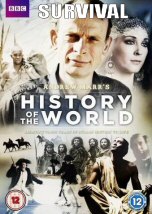
Andrew Marr sets off on an epic journey through 70,000 years of human history. Using dramatic reconstructions, documentary filming around the world and cutting-edge computer graphics, he reveals the decisive moments that shaped the world we live in today, telling stories we thought we knew and others we were never told." Starting with our earliest beginnings in Africa, Marr traces the story of our nomadic ancestors as they spread out around the world and settled down to become the first farmers and townspeople. He uncovers extraordinary hand-prints left in European caves nearly 30,000 years ago and shows how human ingenuity led to inventions which are still with us today. He also discovers how the first civilisations were driven to extremes to try to overcome the forces of nature, adapting and surviving against the odds, and reveals how everyday life in ancient Egypt had more in common with today's soap operas than might be imagined.
Series: History of the World

Goya: Crazy Like A Genius

   2007    Art
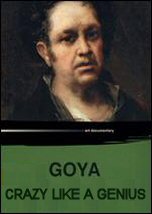
Written and presented by Robert Hughes, one of the world’s most prominent art commentators, this program explores the life and work of Francisco Goya—focusing on the painter’s subversive, often gruesome outlook. The video provides in-depth visual and intellectual analysis of dark Goya masterpieces, including The Dream of Reason, Witches in the Air, and The Third of May, as well as examples of his portraiture and early work—such as The Duchess of Alba, both Majas, and a gratuitously violent tapestry painting. Links between Goya’s work, deafness, and political stance are explored in detail, while observations from painter Leon Golub highlight Goya’s continuing relevance.
The Story of Science

The Story of Science

2010  History
Wild Isles

Wild Isles

2023  Nature
Clash of the Gods

Clash of the Gods

2009  History
Top Gear

Top Gear

2012  Technology
Clarkson Farm

Clarkson Farm

2021  Nature
Nature Great Events

Nature Great Events

2009  Nature