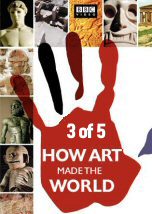
This episode tells the tale of what's broadly considered China's most creative dynasty - the Song (960-1279). Michael Wood heads to the city of Kaifeng, the greatest city in the world before the 19th century. Here in Twin Dragon Alley, locals tell him the legend of the baby boys who became emperors. He explores the ideas and inventions that made the Song one of greatest eras in world culture, helped by China's most famous work of art, the Kaifeng scroll, which shows the life of the city in around 1120. A chef makes Michael a recipe from a Song cookbook, while a guide to 'how to live happy, healthy lives for old people', published in 1085 and still in print, is discussed with local women doing their morning exercises. The Song was also a great era for scientific advance in China. Michael steers a huge working replica of an astronomical clock, made by China's Leonardo da Vinci. Then at a crunch Chinese Premier League match, Michael tells us the Chinese invented football! The golden age of the northern Song ended in 1127, when invaders sacked Kaifeng, but they survived in the south. At their new capital, Hangzhou, Wood joins locals dancing by the West Lake, while in the countryside he meets Mr Xie with his records of 40 generations of ancestors. The final defeat of the Song took place in a naval battle in the estuary of the Pearl River in 1279. When all was lost, rather than surrender to the Mongols, a loyal minister jumped into the sea with the young boy emperor in his arms. 'So ended the glory of the Song', Wood concludes, 'but a new age would arise... as in China, it always has!'.
Even though his wife and children are avenged by the Erastes killing, Lucius Vorenus keeps mourning for over a month till Pullo gets Marc Antony who scolds him for Caesar's death and the continuing bloody Aventine gang riots that have resulted in the gangs wanting to fill the void left by Erastes sudden demise. Octavian is loosing patience with Mark Antony for payment of Caesar's inheritance. Meanwhile, Queen Cleopatra of Egypt arrives in Rome to pay her respects to Caesar and she also negotiates with Antony's military protection for her Pharaonic throne.
The Spirit Molecule investigates dimethyltryptamine (DMT), a naturally occurring psychoactive compound, which exists in humans, and potentially every living organism. Utilizing Dr. Rick Strassman's government-sanctioned, human DMT research as the documentary's backbone, the study's potential impact and its inconceivable revelations emerge. A closer examination of DMT's effects through two traditionally opposed concepts, science and spirituality, The Spirit Molecule unravels the connections between cutting-edge neuroscience, quantum mechanics and human spirituality. The Spirit Molecule, a simple molecule with enormous implications. The subtle combination of science, spirituality, and philosophy results in an abundance of incredible ideas and theories that could alter the way we understand the nature of reality and our relationship to it.
Heart disease is the number one cause of deaths worldwide, killing more than eight million people each year. Cardiac infarction, more commonly known as a heart attack, can happen without warning, killing heart muscle cells immediately. Even if the patient recovers, the damage to their heart may not. But there are researchers frantically working to change that. Meet the people inventing the future of cardiac health, from new ways of imaging the body, to the possibility of 3D printing a functioning heart.
In this historical drama, the turbulent transition from Roman republic to autocratic empire, which changed world history through civil war and wars of conquest, is sketched both from the aristocratic viewpoint of Julius Caesar, his family, his adopted successor Octavian Augustus, and their political allies and adversaries, and from the politically naive viewpoint of a few ordinary Romans, notably the soldiers Lucius Vorenus and Titus Pullo and their families. 'The Stolen Eagle.' In Gaul in 52 B.C., two Roman soldiers, Legionary Titus Pullo and Centurion Lucius Vorenus, are tasked with recovering Julius Caesar's personal Eagle, stolen from his camp in the dead of night. With his campaign in Gaul coming to a successful conclusion, Caesar's popularity is continuing to grow. He's saddened however when he receives news from his good friend Pompey Magnus that his daughter, Pompey's wife, has died in childbirth. In the Senate, Pompey must defend the prolonged absence of his friend and co-Consul Caesar against charges of corruption.
Zachary Quinto explores the unpredictable and terrifying phenomenon of sinkholes to determine just what causes them. He visits a Florida man whose brother was killed when their family home was literally swallowed whole by the Earth as well as a series of sinkholes that are forming a series of caves right below the houses of a quaint suburban neighbourhood. Whether they be a part of some biblical prophecy or further evidence of mankind's effect on our planet, he's alarmed to discover that all the same, they can strike anywhere in the world, at any time.




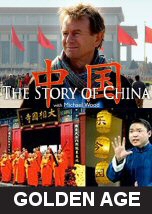





He explores the ideas and inventions that made the Song one of greatest eras in world culture, helped by China's most famous work of art, the Kaifeng scroll, which shows the life of the city in around 1120. A chef makes Michael a recipe from a Song cookbook, while a guide to 'how to live happy, healthy lives for old people', published in 1085 and still in print, is discussed with local women doing their morning exercises. The Song was also a great era for scientific advance in China. Michael steers a huge working replica of an astronomical clock, made by China's Leonardo da Vinci.
Then at a crunch Chinese Premier League match, Michael tells us the Chinese invented football! The golden age of the northern Song ended in 1127, when invaders sacked Kaifeng, but they survived in the south. At their new capital, Hangzhou, Wood joins locals dancing by the West Lake, while in the countryside he meets Mr Xie with his records of 40 generations of ancestors. The final defeat of the Song took place in a naval battle in the estuary of the Pearl River in 1279. When all was lost, rather than surrender to the Mongols, a loyal minister jumped into the sea with the young boy emperor in his arms. 'So ended the glory of the Song', Wood concludes, 'but a new age would arise... as in China, it always has!'.