











Last Watched

"Wildlife"  Sort by

Urban Jungles

   2014    Nature
This is the ultimate hidden kingdom - the urban jungle. In the colourful and chaotic streets of Rio, a young marmoset is separated from his street gang and forced to confront of the dangers of the city alone. In the futuristic metropolis of Tokyo, a rhinoceros beetle escapes his captors and begins an extraordinary journey through this alien world to find sanctuary.
Series: Hidden Kingdoms
Life: Insects

   2009    Nature
There are 200 million insects for each of us. They are the most successful animal group ever. Their key is an armoured covering that takes on almost any shape. Darwin's stag beetle fights in the tree tops with huge curved jaws. The camera flies with millions of monarch butterflies which migrate 2000 miles, navigating by the sun. Super slow motion shows a bombardier beetle firing boiling liquid at enemies through a rotating nozzle. A honey bee army stings a raiding bear into submission. Grass cutter ants march like a Roman army, harvesting grass they cannot actually eat. They cultivate a fungus that breaks the grass down for them. Their giant colony is the closest thing in nature to the complexity of a human city.
Series: Life

The Jungles

   2006    Nature
Jungles cover roughly three per cent of our planet yet contain 50 per cent of the world's species. High-definition cameras enable unprecedented views of animals living on the dark jungle floor. In the Ngogo forest the largest chimpanzee group in the world defends its territory from neighbouring groups. Other jungle specialists include parasitic fungi which infiltrate an insect host, feed on it, and then burst out of its body.
Series: Planet Earth

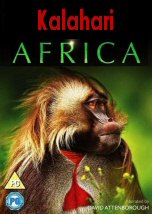
Kalahari

   2013    Nature
In Africa's ancient south west corner, two extraordinary deserts sit side by side. Water is in short supply, yet these deserts are somehow full of life because the creatures that live here have turned the rules of survival on their head. This film celebrates nature's ingenuity, no matter how tough it gets. In the Kalahari scrublands, clever meerkats are outsmarted by a wily bird, solitary and belligerent black rhinos get together to party and giant insects stalk huge flocks of birds. Rain almost never falls in the Namib - instead it must make do with vaporous, vanishing fog. The creatures in this, the world's oldest desert, have gone to the extremes, as spiders wheel to escape and a desert giraffe fights to defend his scant resources in the greatest giraffe battle ever filmed.
Series: Africa with David Attenborough

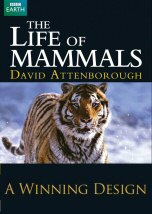
A Winning Design

   2002    Nature
A Winning Design clarifies what makes a mammal different from reptiles and birds. No, it isn't egg-laying: both the platypus and the echidna are egg-laying mammals; it's their ability to adapt. And it's this adaptability that becomes the crux of the remainder of the series. From the tiniest bat to the massive blue whale, all mammals share the ability to nurture their young on milk and regulate their own temperatures.
Series: The Life of Mammals

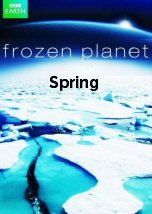
Frozen Planet: Spring

   2011    Nature
Spring arrives in the polar regions, and the sun appears after an absence of five months; warmth and life return to these magical ice worlds - the greatest seasonal transformation on our planet is underway. Male Adelie penguins arrive in Antarctica to build their nests - it takes a good property to attract the best mates and the males will stop at nothing to better their rivals! But these early birds face the fiercest storms on the planet. In the Arctic, a polar bear mother is hunting with her cubs. Inland, the frozen rivers start to break up and billions of tons of ice are swept downstream in the greatest of polar spectacles. This melt-water fertilizes the Arctic Ocean, feeding vast shoals of Arctic cod and narwhal. The influx of freshwater accelerates the breakup of the sea-ice - an area of ice the size of Australia will soon vanish from the Arctic. On land, a woolly bear caterpillar emerges from the snow having spent the winter frozen solid. Caterpillars normally become moths within months of hatching, but life is so harsh here that the woolly bear takes 14 years to reach adulthood. Once mature it has only days to find a mate before it dies! Alongside the caterpillars white Arctic wolves race to raise their adorable cubs before the cold returns.
Series: Frozen Planet