The last chapter explains how the 2010s became another lost decade in the fight against climate change – as the move to natural gas delayed a transition to more renewable sources of energy. Engineer Tony Ingraffea, in the 1980s, helped develop a new technique for extracting gas and oil from shale rock, which ultimately became known as 'Fracking'. It was to unleash vast new reserves of fossil fuels and was promoted as a cleaner energy source. But Ingraffea explains how he later came to regret his work when he realized that gas could be even worse for climate change than coal and oil. Dar-Lon Chang, a former ExxonMobil engineer, speaks for the first time on camera alleging that as the company increased its natural gas operations, it was not sufficiently monitoring methane leaks that were contributing to climate change. Now, after a year of unprecedented wildfires, drought and other climate-related disasters, multiple lawsuits are being brought in US courts in efforts to hold Big Oil legally accountable for the climate crisis.
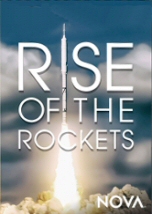
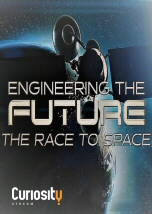
A new era of space is dawning where small satellites no bigger than a shoebox will be deployed not in one or twos, but in their thousands - referred to as satellite swarms. It's been described as the democratization of space. What was once the preserve of governments and superpowers is evolving into a truly global industry. The catalyst for this dramatic change is this new generation of satellites.
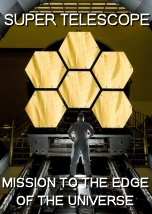
As NASA releases the first images from the James Webb Space Telescope, this film tells the inside story of the telescope's construction and the astronomers taking its first picture of distant stars and galaxies. Will it be the deepest image of our universe ever taken? The successor to Hubble, and 100 times more powerful, the James Webb is the most technically advanced telescope ever built. It will look further back in time than Hubble to an era around 200 million years after the Big Bang, when the first stars and galaxies appeared. Webb's primary mission is to capture the faint light from these objects on the edge of our visible universe so that scientists can learn how they formed, but its instruments are so sensitive it could also be the first telescope to detect signs of life on a distant planet. The James Webb Telescope is an £8 billion gamble on the skills of its engineering team. It’s the first telescope designed to unfold in space – a complicated two-week operation in which 178 release devices must all work - 107 of them on the telescope's sun shield alone. If just one fails, the expensive telescope could become a giant piece of space junk. From its conception in the late 1980s, the construction of Webb has posed a huge technical challenge. The team must build a mirror six times larger than Hubble’s and construct a vast sun shield the size of a tennis court, fold them up so they fit into an Ariane 5 rocket, then find a way to unfold them in space. This film tells the inside story of the James Webb Space Telescope in the words of the engineers who built it and the astronomers who will use it.
(click CC for subtitles) 'a-ha' is Norway's only international pop band and their hit 'Take On Me' is still one of the most-played songs of the last millennium. The film follows the band over a period of four years, telling the full story of how three young men followed their impossible dream of becoming Norwegian pop stars. When 'Take On Me' reached number 1 on Billboard in the US in 1985, the dream came true. Or did it? Almost 35 years after their breakthrough, a-ha still creates magic on stage with their melancholic and timeless music. They tour the world but drive in separate cars and stay in separate hotel rooms. They only meet on stage, doing the one thing they love. The film closely portrays the challenging creative and personal dynamics of a group of three strong individuals who have grown up together, but in different directions. What does success do to friendship? Why are they not capable of creating new music together anymore? This is a story of great music, big ambitions, broken friendship--and maybe forgiveness.
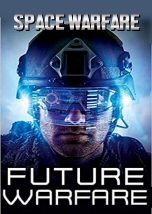
Space. Gone are the bayonets and pistols, the bows and arrows, the slingshots and stones of past warfare. Now, we have pushed into the outer limits, into a vast frontier, well beyond earth's atmosphere. Human beings have long contested the domains of air, land, and sea. Now we are racing toward a new domain. How we use space will decide our Earthly fate, a future determined not by any previous war.
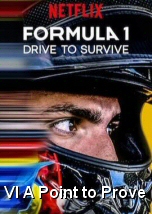
This episode is all about Williams Racing. After over forty years in F1, the family from which the team is named has sold up, and the not-ominous-sounding-at-all Dorilton Capital has moved in and is ringing the changes. They have got a motor sport man through and through to run it though: former Volkswagen WRC principal Jost Capito. The new boss soon starts scything through the team with ruthless German efficiency. George Russell soon gets in the mood also, like a prefect joining in with the teacher grassing someone up, saying some team members need to be given the shove. The team does come through to score a valiant eighth and ninth in Budapest. The new regime is rocking and rolling.



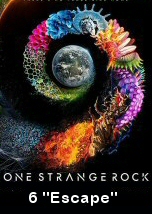




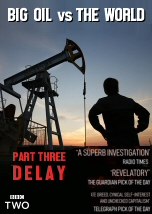





Engineer Tony Ingraffea, in the 1980s, helped develop a new technique for extracting gas and oil from shale rock, which ultimately became known as 'Fracking'. It was to unleash vast new reserves of fossil fuels and was promoted as a cleaner energy source. But Ingraffea explains how he later came to regret his work when he realized that gas could be even worse for climate change than coal and oil.
Dar-Lon Chang, a former ExxonMobil engineer, speaks for the first time on camera alleging that as the company increased its natural gas operations, it was not sufficiently monitoring methane leaks that were contributing to climate change. Now, after a year of unprecedented wildfires, drought and other climate-related disasters, multiple lawsuits are being brought in US courts in efforts to hold Big Oil legally accountable for the climate crisis.