












Last Watched

"Whales"  Sort by

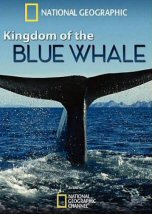
Kingdom of the Blue Whale

   2009    Nature
Blue whales are the largest animals to ever live on earth, yet they are difficult to find or track. Even some of the locations where they birth their young are great secrets. Join some of the world's eminent blue whale scientists as they embark on a revolutionary mission to identify and tag California blue whales as they migrate to a spot known as the Costa Rica Dome. This incredible voyage yields unforgettable new footage and insight into these amazing creatures' lives. Scientists use DNA analysis, recordings of whale songs, homing devices, and sea dives to shed light on the blue whale's breeding and birthing habits
Life: Mammals

   2009    Nature
Mammals dominate the planet. They do it through having warm blood and by the care they lavish on their young. Weeks of filming in the bitter Antarctic winter reveal how a mother Weddell seal wears her teeth down keeping open a hole in the ice so she can catch fish for her pup. A powered hot air balloon produces stunning images of millions of migrating bats as they converge on fruiting trees in Zambia, and slow-motion cameras reveal how a mother rufous sengi exhausts a chasing lizard. A gyroscopically stabilised camera moves alongside migrating caribou, and a diving team swim among the planet's biggest fight as male humpback whales battle for a female.
Series: Life

Living with Predators. Conservation

   2015    Nature
The final episode of the series visits the frontline of the conflict with the world's top predators, meeting the scientists fighting to save them. Crossing five continents and combining landmark natural history footage with real-life human drama, it checks the pulse of the earth's iconic animals, including lions, tigers, polar bears and blue whales. With three-quarters of the planet's carnivores now in decline, can people find ways to live with predators before they disappear forever?
Series: The Hunt

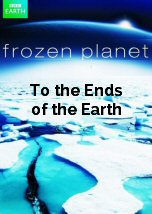
Frozen Planet: To the Ends of the Earth

   2011    Nature
Our journey begins with David Attenborough at the North Pole, as the sun returns after six months of darkness. We follow a pair of courting polar bears, which reveal a surprisingly tender side. Next stop is the giant Greenland ice cap, where waterfalls plunge into the heart of the ice and a colossal iceberg carves into the sea. Humpback whales join the largest gathering of seabirds on earth to feast in rich Alaskan waters. Further south, the tree line marks the start of the Taiga forest, containing one third of all trees on earth. Here, 25 of the world's largest wolves take on formidable bison prey. At the other end of our planet, the Antarctic begins in the Southern Ocean where surfing penguins struggle to escape a hungry sea-lion and teams of orcas create giant waves to wash seals from ice floes -a filming first. Diving below the ice, we discover prehistoric giants, including terrifying sea spiders and woodlice the size of dinner plates. Above ground, crystal caverns ring the summit of Erebus, the most southerly volcano on earth. From here we retrace the routes of early explorers across the formidable Antarctic ice-cap - the largest expanse of ice on our planet. Finally, we rejoin David at the South Pole, exactly one hundred years after Amundsen then Scott were the first humans to stand there
Series: Frozen Planet

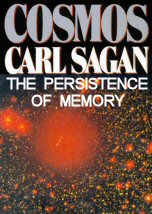
The Persistence of Memory

   1980    Science
The idea of intelligence is explored in the concepts of computers (using bits as their basic units of information), whales (in their songs and their disruptions by human activities), DNA, the human brain (the evolution of the brain stem, frontal lobes, neurons, cerebral hemispheres, and corpus callosum under the Triune Brain Model), and man-made structures for collective intelligence (cities, libraries, books, computers, and satellites). The episode ends with speculation on alien intelligence and the information conveyed on the Voyager Golden Record.
Series: Cosmos

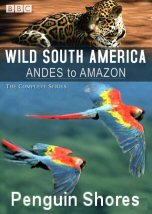
Penguin Shores

   2005    Nature
A dramatic journey along the coasts of South America, from the Falklands to the tropical Galapagos. The cold currents create rich fisheries, and support such diverse marine life as dolphins, killer whales, sea lions and albatross. But the most biquitous creatures are the penguins, which inhabit surprising locations - lush forest, arid desert and even equatorial areas.
Series: Wild South America
Arnold

Arnold

2023  History
Senna

Senna

2010  Culture
Vietnam in HD

Vietnam in HD

2011  History
The Universe

The Universe

2010  Science
Life In Cold Blood

Life In Cold Blood

2008  Nature
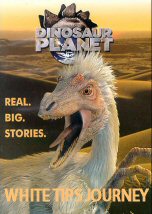
Dinosaur Planet

Dinosaur Planet

2003  Science
Prehistoric Planet

Prehistoric Planet

2022  Science