


Last Watched

"Lion"  Sort by

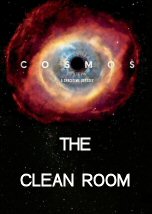
The Clean Room

   2014    Science
This episode is centered around how science, in particular the work of Clair Patterson (voiced in animated sequences by Richard Gere[33]) in the middle of the 20th century, has been able to determine the age of the Earth. Tyson first describes how the Earth was formed from the coalescence of matter some millions of years after the formation of the Sun, and while scientists can examine the formations in rock stratum to date some geological events, these can only trace back millions of years. Instead, scientists have used the debris from meteor impacts, such as the Meteor Crater in Arizona, knowing that the material from such meteors coming from the asteroid belt would have been made at the same time as the Earth. Patterson also examined the levels of lead in the common environment and in deeper parts of the oceans and Antarctic ice, showing that lead had only been brought to the surface in recent times. He would discover that the higher levels of lead were from the use of tetraethyllead in leaded gasoline resulting in government-mandated restrictions on the use of lead.
Series: Cosmos: A Spacetime Odyssey
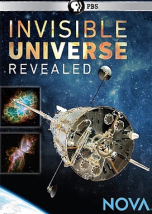
Invisible Universe Revealed 25 years of Hubble

   2015    Technology
25 years ago, NASA launched one of the most ambitious experiments in the history of astronomy: the Hubble Space Telescope. In honor of Hubble's landmark anniversary, know the remarkable story of the telescope that forever changed our understanding of the cosmos and our place in it". But amazingly, when the telescope first sent images back to earth, it seemed that the entire project was a massive failure; a one-millimeter engineering blunder had turned the billion-dollar telescope into an object of ridicule. It fell to five heroic astronauts in a daring mission to return Hubble to the cutting edge of science. Hear from the scientists and engineers on the front line who tell the amazing Hubble story as never before. This single telescope has helped astronomers pinpoint the age of the universe, revealed the birthplace of stars and planets, advanced our understanding of dark energy and cosmic expansion, and uncovered black holes lurking at the heart of galaxies. For more than a generation, Hubble's stunning images have brought the beauty of the heavens to millions, revealing a cosmos richer and more wondrous than we ever imagined. Join us for the story of this magnificent machine and its astonishing discoveries.

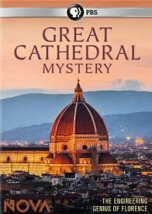
Great Cathedral Mystery

   2014    Art
The dome that crowns Florence's great cathedral of Santa Maria del Fiore, the Duomo, is a masterpiece of Renaissance ingenuity and an enduring source of mystery. Still the largest masonry dome on earth, it is taller than the Statue of Liberty and weighs as much as an average cruise ship. Historians and engineers have long debated how its architect, Filippo Brunelleschi, kept the dome perfectly aligned and symmetrical as the sides rose and converged toward the center." More than four million bricks could collapse at any moment -- and we still don't understand how Brunelleschi prevented it. To test the latest theories, a team of U.S. bricklayers will help build an experimental "mini-Duomo" using period tools and techniques.

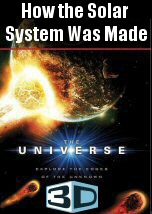
How the Solar System was Made

   2011    Science    3D    HD
At 4.6 billion years old, the Solar System is our solid, secure home in the Universe. But how did it come to be? In this episode we trace the system's birth from a thin cloud of dust and gas. Shocked by a nearby supernova, the pull of gravity and natural rotation spun it into a flat disc from which the Sun and planets coalesced. It all happened in the space of 700 million years, during which the planets jockeyed for position, dodging the Late Heavy Bombardment of deadly asteroids and setting into the neat, stable system that we now realize might be a rarity in the universe.
Series: The Universe

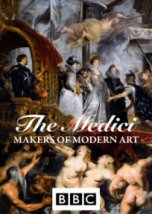
The Medici: Makers of Modern Art

   2008    Art
Andrew Graham-Dixon reveals how the Medici family transformed Florence through sculpture, painting and architecture and created a world where masterpieces fetch millions today. Without the money and patronage of the Medici we might never have heard of artists such as Donatello, Michelangelo or Botticelli, and Graham-Dixon examines how a family of shadowy, corrupt businessmen, driven by greed and ambition, became the financial engine behind the Italian Renaissance.

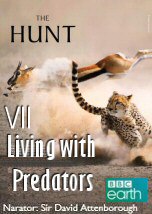
Living with Predators. Conservation

   2015    Nature
The final episode of the series visits the frontline of the conflict with the world's top predators, meeting the scientists fighting to save them. Crossing five continents and combining landmark natural history footage with real-life human drama, it checks the pulse of the earth's iconic animals, including lions, tigers, polar bears and blue whales. With three-quarters of the planet's carnivores now in decline, can people find ways to live with predators before they disappear forever?
Series: The Hunt