



Last Watched

"cat"  Sort by

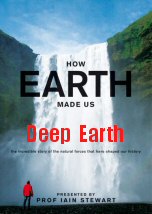
Deep Earth

   2010    Science
Our planet has amazing power, and yet that's rarely mentioned in our history books. This series tells the story of how the Earth has influenced human history, from the dawn of civilisation to the modern industrial age. It reveals how geology, geography and climate have been a far more powerful influence on the human story than has previously been acknowledged. A combination of epic story telling, visually stunning camerawork, extraordinary locations and passionate presenting combine to form a highly original version of human history" In the first episode professor Iain Stewart explores the relationship between the deep Earth and the development of human civilisation. He visits an extraordinary crystal cave in Mexico, drops down a hole in the Iranian desert and crawls through seven-thousand-year-old tunnels in Israel. His exploration reveals that throughout history, our ancestors were strangely drawn to fault lines, areas which connect the surface with the deep interior of the planet. These fault lines gave access to important resources, but also brought with them great danger.
Series: How Earth Made Us
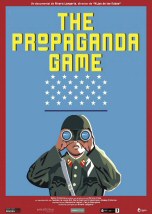
The Propaganda Game

   2015    Culture
North Korea, formerly known as the hermit kingdom, is perhaps the largest source of instability as regards world peace. Its border is one of the most militarized in the world. The lack of impartial information, both inside and coming out of the country, is the perfect setting for a propaganda war, which will be analysed in the film through numerous examples of the surprising way in which information is manipulated, in and about North Korea. Alejandro Cao de Benos, the sole foreigner who works for the People's Republic of Korea Government, and many locals will show us their vision of the reality in North Korea. The other side of the story will be reflected through interviews to South Korean citizens, human rights advocates, diplomats, propaganda experts, etc.

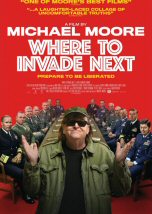
Where to Invade Next

   2015    Culture
To show what the USA can learn from rest of the world, director Michael Moore playfully visits various nations in Europe and Africa as a one-man "invader" to take their ideas and practices for America. Whether it is Italy with its generous vacation time allotments, France with its gourmet school lunches, German with its industrial policy, Norway and its prison system, Tunisia and its strongly progressive women's policy and Iceland and its strong female presence in government and business among others, Michael Moore discovers there is much that American should emulate

Hunger at Sea

   2015    Nature
Hunger at Sea follows blue whales, sharks, sea lions, frigatebirds, dolphins and albatrosses to reveal the strategies they use to hunt for prey in the big blue. The open ocean is an immense wilderness that covers more than half the surface of our planet, yet for the most part it's a watery desert, largely devoid of life. Predators face an endless search to find and catch food, yet these great tracts of ocean are home to some of the most remarkable hunters on the planet.
Series: The Hunt

The Private Life of Plants Living Together

   1995    Nature
The fifth programme explores the alliances formed between the animal and plant worlds. Attenborough dives into Australia's Great Barrier Reef and contrasts the nocturnal feeding of coral, on microscopic creatures, with its daytime diet of algae. Some acacias are protected by ants, which will defend their refuge from any predator. Besides accommodation, the guards are rewarded with nectar and, from certain species, protein for their larvae as well. Fungi feed on plants but can also provide essential nutriment to saplings (Mycorrhiza). The connection is never broken throughout a tree's life and a quarter of the sugars and starches produced in its leaves is channelled back to its fungal partners. Meanwhile, fungi that feed on dead wood leave a hollow trunk, which also benefits the tree. Orchids enjoy a similar affiliation. Lichens are the product of a relationship between fungi and a photosynthetic associate, usually algae. They are extremely slow-growing, and a graveyard is the perfect location to discover their exact longevity. Mistletoe is a hemiparasite that obtains its moisture from a host tree, while using own leaves to manufacture food. Its seeds are deposited on another by the mistletoe tyrannulet, following digestion of the fruit. The dodder (Cuscuta) is also parasitic, generally favouring nettles, and siphons its nourishment through periodic 'plugs' along its stem. The rafflesia has no stem or leaves and only emerges from its host in order to bloom — and it produces the largest single flower: one metre across.
Series: The Private Life of Plants

The Virus of Faith

   2006    Culture
Dawkins opines that the moral framework of religions is warped, and argues against the religious indoctrination of children. He discusses specifically the idea of religion seen as a virus in the sense of a meme. He begins by explaining how a child is genetically programmed to believe without questioning the word of authority figures, especially parents – the evolutionary imperative being that no child would survive by adopting a sceptical attitude towards everything their elders said. But this same imperative, he claims, leaves children open to infection by religion.
Series: The Root of All Evil