Documentary about progressive music and the generation of bands that were involved, from the international success stories of Yes, Genesis, ELP, King Crimson and Jethro Tull to the trials and tribulations of lesser-known bands such as Caravan and Egg. The film is structured in three parts, charting the birth, rise and decline of a movement famed for complex musical structures, weird time signatures, technical virtuosity and strange, and quintessentially English, literary influences. It looks at the psychedelic pop scene that gave birth to progressive rock in the late 1960s, the golden age of progressive music in the early 1970s, complete with drum solos and gatefold record sleeves, and the over-ambition, commercialisation and eventual fall from grace of this rarefied musical experiment at the hands of punk in 1977. Contributors include Robert Wyatt, Mike Oldfield, Pete Sinfield, Rick Wakeman, Phil Collins, Arthur Brown, Carl Palmer and Ian Anderson.
The film intends to illustrate the birth and death of an undiscovered universe, with powerful images, from the Big Bang to the Mesozoic era and through the present and beyond. Based on a project conceived decades ago, the documentary is highly experimental and perhaps Terrence Malick's most ambitious film, described by the director himself as 'one of my greatest dreams.'
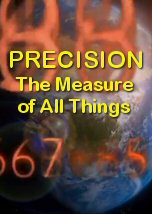
Professor Marcus du Sautoy explores why we are driven to measure and quantify the world around us and why we have reduced the universe to just a handful of fundamental units of measurement. He tells the story of the metre and the second - how an astonishing journey across revolutionary France gave birth to the metre, and how scientists today are continuing to redefine the measurement of time and length, with extraordinary results.
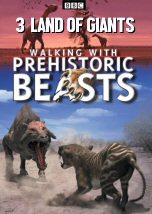
25 million years ago the biggest land mammals of all time, the indricotheres, stalked the Earth. Up to seven metres tall and weighing 15 tonnes, adults were too big to be eaten by any predator of the time. Only in the first few years of its life was indricotheres vulnerable. The programme follows the fate of a calf from his traumatic birth to see whether it can survive droughts, killer hogs and hyaenodon - a predator the size of a rhino with jaws that could crush a rock.
In the fourth part of the series, Diarmaid MacCulloch makes sense of the Reformation, and of how a faith based on obedience and authority gave birth to one based on individual conscience. He shows how Martin Luther wrote hymns to teach people the message of the Bible, and how a tasty sausage became the rallying cry for Swiss Reformer Ulrich Zwingli to tear down statues of saints, allow married clergy and deny that communion bread and wine were the body and blood of Christ.
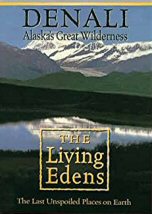
The Indians called the frozen peak of this great Alaskan mountain range Denali, or 'the high one.' Most know it as Mount McKinley. This preserved wilderness comes to life with the thaw of spring and wildlife abounds during the brief summer, only to succumb to the grip of the long winter. Watch as 5-week-old grizzly cubs play, a moose gives birth to her calf, and a wood frog survives the deep freeze of winter. Breath-taking shots of dazzling northern lights over vast and lush wilderness make this an unforgettable Eden.




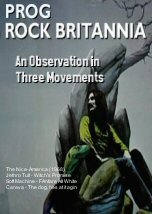



It looks at the psychedelic pop scene that gave birth to progressive rock in the late 1960s, the golden age of progressive music in the early 1970s, complete with drum solos and gatefold record sleeves, and the over-ambition, commercialisation and eventual fall from grace of this rarefied musical experiment at the hands of punk in 1977. Contributors include Robert Wyatt, Mike Oldfield, Pete Sinfield, Rick Wakeman, Phil Collins, Arthur Brown, Carl Palmer and Ian Anderson.