This remarkable science-history series investigates the blistering pace of human endeavour in space exploration, computing, energy, resources, Earth science and our understanding of the evolution of life itself. Across the last 50 years, humans have set a blistering pace and scientific discovery. We've crossed the boundaries of our solar system, made machines that can learn harnessed the power of the sun and built life from scratch. It's a period like no other in history, where human endeavour is changing everything: this is The Great Acceleration. As we race toward the future, we must examine the journey. In the first episode, Dr Shalin Naik explores the ambitious space shuttle mission that began in the '70s plus the future colonization of Mars. Over the past 50 years, space has become central to everything, from communications to entertainment to climate modelling. And as private enterprise enters space exploration, our understanding of the universe will only continue to expand. We will know if we can survive on other objects - the moon, maybe Mars, maybe even some of the moons of Jupiter and Saturn. Deep space is the last and infinite frontier. That's what we do as human beings. We explore, we learn, we make discoveries, from the moment we're born to the moment we die.
Yep, the Dennis Rodman episode. The eccentric forward shows his worth on the floor while stirring up drama away from it, including a wild midseason trip to Las Vegas. Rodman's attitude and energy help the team win. The Bulls struggle to push past the 'Bad Boy' Pistons, losing to Detroit in the 1988, 1989 and 1990 playoffs. There is no love lost between the Eastern Conference rivals.
The search for climate change solutions requires passion, resources and a sense of urgency -- three qualities Bill Gates clearly possesses. Bill has founded a start-up called TerraPower. After extensive computer modelling, the idea showed promise. Its new reactor greatly reduced the chance of human error. Fuelled by depleted uranium, the travelling wave reactor functions like a slow-burning candle and requires refuelling only once every decade. Bill and his team believed they had finally developed the ideal energy source, a reactor that was clean, efficient, and most importantly, safe.
Inside the heart of the atom, its nucleus houses energy. This hidden treasure was forged billions of years ago in distant stellar furnaces. The secret of starlight is nothing to fool with. It can bring a civilization to life and it can burn it to the ground. Two atoms from different parts of the universe meet on a small planet. A deadly embrace between science and state altered the fate of the world and a gripping cautionary tale of others who grew used to living in the shadow of grave danger until it killed them all except one.
The sun gives us warmth and light. It is the fuel of life. Without the energy of the sun almost nothing grows, thrives or lives. But the sun was not put there for our benefit. It is not this big jolly ball of nice smiling down on us, wishing us all a good day. It is not our friend. The sun is a monster. A planet killer. And we don't see that side of the sun down here. But eight astronauts, with over 1,000 days in space between them, can show us how being up there helped them understand the suns bright fury.
The film is a first of its kind that will transform how we think about engineering. From the Great Wall of China and the world's tallest buildings to underwater robots, solar cars and smart, sustainable cities, DREAM BIG celebrates the human ingenuity behind engineering marvels big and small, and shows how engineers push the limits of innovation in unexpected and amazing ways. With its inspiring stories of human grit and aspiration, and extraordinary visuals, the film reveals the compassion and creativity that drive engineers to create better lives for people and a more sustainable future for us all. Narrated by Jeff Bridges.











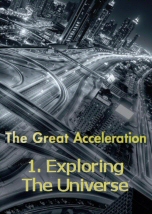





In the first episode, Dr Shalin Naik explores the ambitious space shuttle mission that began in the '70s plus the future colonization of Mars. Over the past 50 years, space has become central to everything, from communications to entertainment to climate modelling. And as private enterprise enters space exploration, our understanding of the universe will only continue to expand. We will know if we can survive on other objects - the moon, maybe Mars, maybe even some of the moons of Jupiter and Saturn. Deep space is the last and infinite frontier. That's what we do as human beings. We explore, we learn, we make discoveries, from the moment we're born to the moment we die.