


Last Watched

"London"  Sort by

The Art of Russia: Out of the Forest

   2009    Art
Art critic Andrew Graham-Dixon tells the incredible story of Russian art, its mystery and magnificence and until now a story untold. He explores the origins of the Russian icon from its roots in Byzantium and the first great Russian icon, Our Lady of Vladimir to the masterpieces of the country's most famous icon painter, Andrei Rublev. Both epic and awe-inspiring, and producing brilliant art", nevertheless medieval Russia could be a terrifying place. Criss-crossing the epic landscape, Andrew visits the monastery founded by Ivan the Terrible, where his favourite forms of torture found inspiration in religious art. One man would shine a light into Russia's 'dark' ages - Peter the Great who, surprisingly, took as his inspiration Deptford in South London.
Series: The Art of Russia
The Sound and the Fury: A Century of Modern Music. Wrecking Ball

   2013    Art
It begins by examining the shift in the language and sound of music from the melodies and harmonies of giants such as Mozart, Haydn and Brahms into the fragmented, abstract, discordant sound of the most radical composers of the new century - Schoenberg, Webern, Stravinsky and beyond. It examines how this new music was a response to the huge upheaval in the world at the start of the 20th century, with its developments in technology, science, modern art and the tumult of the First World War. Featuring performances of some of the key works of the period, performed by the London Sinfonietta, members of the Aurora Orchestra and composer and pianist Timothy Andres, the story of this episode in music history is brought to life through the contributions of the biggest names in modern classical music, among them Steve Reich, John Adams, Michael Tilson Thomas, Pierre Boulez, George Benjamin and Alex Ross, music critic of the New Yorker.
Series: The Sound and the Fury

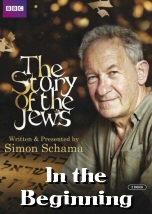
The Story of the Jews: In the Beginning

   2013    History
With optional Hebrew subtitles. Simon Schama explores the history of the Jewish experience from ancient times to the present day. This programme begins the tale 3,000 years ago, with the emergence of a tribal people in a contested land and their extraordinary book, the Hebrew Bible, a chronicle of their stormy relationship with a faceless, formless, jealous God. It was loyalty to this 'God of Words' that defined the distinct identity of the ancient Jews and preserved it despite all that history could throw their way". The story unfolds with a dazzling cast of historical characters: Sigmund Freud dying in exile in London; Victorian evangelicals and explorers following 'in the footsteps' of Moses; Jewish mercenaries living, prospering and intermarrying in the pagan land of Egypt; Messianic Jews dreaming of the Apocalypse; and a Jewish historian, Josephus, who witnessed first-hand the moment when the apocalypse finally came and the Romans destroyed the Jewish High Temple in Jerusalem.
Series: The Story of the Jews

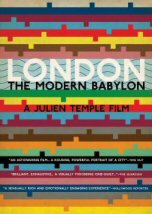
London: The Modern Babylon

   2012    Culture
Julien Temple's epic time-travelling voyage to the heart of his hometown. From musicians, writers and artists to dangerous thinkers, political radicals and above all ordinary people, this is the story of London's immigrants, its bohemians and how together they changed the city forever. Reaching back to the dawn of film in London at the start of the 20th century, the story unfolds through film archive, voices of Londoners past and present and the flow of popular music across the century; a stream of urban consciousness, like the river which flows through its heart. It ends now, as London prepares to welcome the world to the 2012 Olympics.

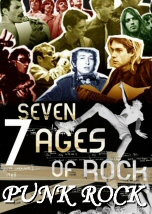
Punk Rock

   2007    Art
London and New York and the birth of punk. Each city created a bastard child that marked the biggest and fundamental shift in popular music since Elvis walked into Sun Studios. We explore the music of The Sex Pistols, The Clash, Ramones, Television, Patti Smith, The Damned and Buzzcocks.
Series: Seven Ages of Rock

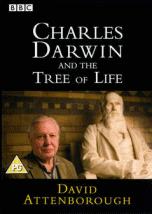
Charles Darwin and the Tree of Life

   2009    Science
David Attenborough asks three key questions: how and why did Darwin come up with his theory of evolution? Why do we think he was right? And why is it more important now than ever before? David starts his journey in Darwin's home at Down House in Kent, where Darwin worried and puzzled over the origins of life. David goes back to his roots in Leicestershire, where he hunted for fossils as a child, and where another schoolboy unearthed a significant find in the 1950s. And he revisits Cambridge University, where both he and Darwin studied, and where many years later the DNA double helix was discovered, providing the foundations for genetics. At the end of his journey in the Natural History Museum in London, David concludes that Darwin's great insight revolutionised the way in which we see the world. We now understand why there are so many different species, and why they are distributed in the way they are. But above all, Darwin has shown us that we are not set apart from the natural world, and do not have dominion over it. We are subject to its laws and processes, as are all other animals on earth to which, indeed, we are related.