Writing itself is 5,000 years old, and for most of that time words were written by hand using a variety of tools. The Romans were able to run an empire thanks to documents written on papyrus. Scroll books could be made quite cheaply and, as a result, ancient Rome had a thriving written culture. With the fall of the Roman Empire, papyrus became more difficult to obtain. Europeans were forced to turn to a much more expensive surface on which to write: Parchment. Medieval handwritten books could cost as much as a house, they also represent a limitation on literacy and scholarship. No such limitations were felt in China, where paper had been invented in the second century. Paper was the foundation of Chinese culture and power, and for centuries how to make it was kept secret. When the secret was out, paper mills soon sprang up across central Asia. The result was an intellectual flourishing known as the Islamic Golden Age. Muslim scholars made discoveries in biology, geology, astronomy and mathematics. By contrast, Europe was an intellectual backwater. That changed with Gutenberg’s development of movable type printing. The letters of the Latin alphabet have very simple block-like shapes, which made it relatively simple to turn them into type pieces. When printers tried to use movable type to print Arabic texts, they found themselves hampered by the cursive nature of Arabic writing. The success of movable type printing in Europe led to a thousand-fold increase in the availability of information, which produced an explosion of ideas that led directly to the European Scientific Revolution and the Industrial Revolution that followed.
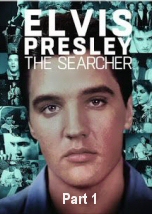
Elvis Presley grew up to become the biggest star in music, thanks to a staggering range of influences that created a revolutionary sound in his lifelong search for self-expression. This two-part documentary reveals his creative journey from childhood through his final recording sessions in 1976. It features more than 20 new, primary source interviews with session players, producers, engineers, directors and other artists who knew him or who were profoundly influenced by him. It also features never-before-seen photos and footage from private collections worldwide, and an original score by Pearl Jam lead guitarist Mike McCready. The first part begins with his early life in Tupelo, Mississippi, and his unprecedented rise to fame over a single year.
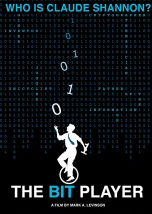
The film tells the story of an overlooked genius: Claude Shannon. In a blockbuster paper in 1948, Claude Shannon introduced the notion of a 'bit' and laid the foundation for the information age. His ideas ripple through nearly every aspect of modern life, influencing such diverse fields as communication, computing, cryptography, neuroscience, artificial intelligence, cosmology, linguistics, and genetics. But when interviewed in the 1980s, Shannon was more interested in showing off the gadgets he'd constructed -- juggling robots, a Rubik's Cube solving machine, a wearable computer to win at roulette, a unicycle without pedals, a flame-throwing trumpet -- than rehashing the past. Mixing contemporary interviews, archival film, animation and dialogue drawn from interviews conducted with Shannon himself, The Bit Player tells the story of an overlooked genius who revolutionized the world, but never lost his childlike curiosity.
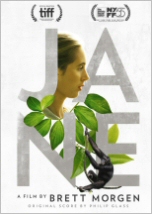
Drawing from over 100 hours of never-before-seen footage that has been tucked away in the National Geographic archives for over 50 years, award-winning director Brett Morgen tells the story of Jane Goodall, a woman whose chimpanzee research challenged the male-dominated scientific consensus of her time and revolutionized our understanding of the natural world. Set to a rich orchestral score from legendary composer Philip Glass, the film offers an unprecedented, intimate portrait of Jane Goodall - a trailblazer who defied the odds to become one of the world's most admired conservationists, her early explorations and research in Tanzania, the relationship with her cameraman and husband Hugo Van Lawick, and the chimpanzees that were the subject of her study.
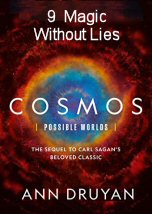
We inhabit a cosmos of undiscovered dimensions and paradoxical realities. We live on one level of perception, but there are others. Every once in a while, a searcher happens upon the doorway to one of these other levels. One of them discovered a paradox about reality that proved to be so profound, we have yet to understand how it could be possible. The universe, or perhaps we should say, universes have never been the same. In the counterintuitive realm of quantum mechanics, light can be two contradictory things, and somehow - no one knows how - an unseen observer can alter the nature of reality. The man who stumbled on this hole in reality and the still- unfolding technological revolution that it made possible.
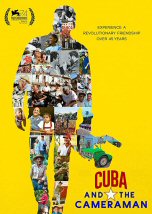
For the past 42 years Director Jon Alpert has been following Fidel Castro and three Cuban families affected by his policies. Their lives put us right in the roller coaster of the Cuban Revolution. Because of Alpert's unique access to the island, and the trust and friendships earned over decades, this film is a candid and revealing never-before-seen portrait of Cuba.




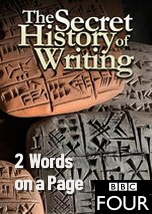


No such limitations were felt in China, where paper had been invented in the second century. Paper was the foundation of Chinese culture and power, and for centuries how to make it was kept secret. When the secret was out, paper mills soon sprang up across central Asia. The result was an intellectual flourishing known as the Islamic Golden Age. Muslim scholars made discoveries in biology, geology, astronomy and mathematics. By contrast, Europe was an intellectual backwater.
That changed with Gutenberg’s development of movable type printing. The letters of the Latin alphabet have very simple block-like shapes, which made it relatively simple to turn them into type pieces. When printers tried to use movable type to print Arabic texts, they found themselves hampered by the cursive nature of Arabic writing. The success of movable type printing in Europe led to a thousand-fold increase in the availability of information, which produced an explosion of ideas that led directly to the European Scientific Revolution and the Industrial Revolution that followed.