A powerful depiction of Vladimir Mukhin's struggle to resuscitate an almost forgotten russian cuisine, going against the established tradition. Be prepared for stunning images of culinary creations at White Rabbit, some will leave you uneased. A fifth-generation chef, Mukhin worked in his father’s kitchen as a young man, preparing Soviet-era classics. So, like generations of youths before him, Mukhin had to rebel against the old man. He left his small hometown of Essentuki for Moscow and became obsessed with modern techniques and food from across Europe. It wasn’t until he worked as a sous chef in France, when he collaborated on a menu with chef Christian Etienne, that Mukhin realized Russian cuisine could exist within modern cooking. 'His French clients who ate it were amazed,' he says. ¡They loved his Russian cooking.'
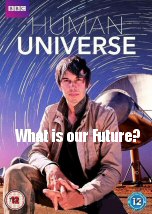
Professor Brian Cox concludes his exploration of our place in the universe by asking what next for the ape that went to space. Our future is far from certain. In Florida, Brian joins the latest efforts to protect Earth from potential catastrophic events. He joins a team of Nasa astronauts who are training for a future mission to an asteroid - should we ever discover one coming our way - under 30 feet of water in a submerged laboratory that simulates space. It is just one example of how, for our long-term survival, space exploration may well be vital. It is a view shared by Apollo 16 astronaut Charlie Duke, who tells Brian what it was like to escape the confines of the planet. It is a dream that both Nasa and now commercial companies share as they race to get humans back into deep space. But space travel, like every leap our civilisation has ever made, requires energy. Here too, scientists are hard at work attempting to safeguard our future. At the National Ignition Facility in California, Brian witnesses the world's most successful fusion experiment in action. He believes that if their mission succeeds, our civilisation will have unlocked a way to the stars that will not destroy the planet in the process. Brian concludes by returning to the top of the world in Svalbard, where he gains access to our civilisation's greatest treasure, locked away in a vault buried deep in the permafrost.
Their quest is to discover whether the items we throw away today have any value for tomorrow's world. In a unique science experiment, Dr George McGavin and Dr Zoe Laughlin chronicle the history of rubbish and explore how what we throw away tells us about the way we live our lives. With unprecedented access to one of the UK's largest landfill sites, the team of experts spend three days carrying out tests all over the site, revealing the secret world of rubbish. They also carry out three other 'archaeological' digs into historic landfills to chart the evolution of our throwaway society. Is mining trash for something valuable really viable? McGavin concluded: 'The idea of landfill mining is a pretty compelling vision of the future.'
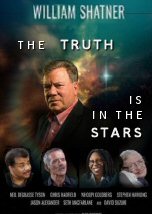
Join the original Captain Kirk, William Shatner, as he interviews renowned scientists and celebrities about the enduring influence of Star Trek on popular culture, innovation, and creativity. The film chronicles Shatner’s journey around the world interviewing scientists and film industry people about how Star Trek inspired them. Along the way he collects questions to ask and learns a bit about physics. Discover how Star Trek’s optimistic vision for the future has influenced leading minds including Prof. Stephen Hawking, Neil deGrasse Tyson, Chris Hadfield, David Suzuki, and many more.
Episode three explores the mind of one of the most fanatical of all Nazis and the insight that gives into the psychology of dictatorship. Hess is brought to Nuremberg from the UK where he had flown 4 years earlier much to the bemusement of the British. Overy explains that they must have quickly realised he was not normal. In the intervening time Hess’s mental state has further deteriorated and when interviewed by Chief Interrogator Colonel John Amen proclaims amnesia. Chief Interpreter Richard Sonnenfeldt explains that they brought in Göring to confront Hess but that he too failed to make an impression. Psychopathologist Prof. Edgar Jones proposes Hess’s behaviour patterns may be his way of escaping reality as he is forced to face the extent of the atrocities and choose between accepting his part of the blame or forsaking his Führer. However, as history Professor Robert Gellatel explains it is difficult to construct a case against Hess as he was imprisoned in England when the worst of the atrocities were carried out so British Prosecutor Mervyn Griffith-Jones must argue a conspiracy charge linking the pre-1939 persecutions to the post-1939 atrocities and a crimes against peace charge proving the flight to Scotland was merely a ruse.
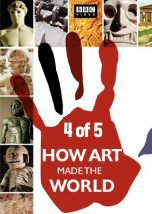
The power of visual storytelling is not a modern phenomenon, feature films today are using techniques developed way back in the distant past. For thousands of years, artists grappled with ways to bring their stories alive, to engage their audience. This is the story of how our ancient ancestors made the discoveries that have given films such a hold over our imaginations.















A fifth-generation chef, Mukhin worked in his father’s kitchen as a young man, preparing Soviet-era classics. So, like generations of youths before him, Mukhin had to rebel against the old man. He left his small hometown of Essentuki for Moscow and became obsessed with modern techniques and food from across Europe. It wasn’t until he worked as a sous chef in France, when he collaborated on a menu with chef Christian Etienne, that Mukhin realized Russian cuisine could exist within modern cooking. 'His French clients who ate it were amazed,' he says. ¡They loved his Russian cooking.'