




Last Watched

"Disco"  Sort by

The Secret Life of Chaos

   2010    Science
Chaos theory has a bad name, conjuring up images of unpredictable weather, economic crashes and science gone wrong. But there is a fascinating and hidden side to Chaos, one that scientists are only now beginning to understand. It turns out that chaos theory answers a question that mankind has asked for millennia - how did we get here? In this documentary, Professor Jim Al-Khalili sets out to uncover one of the great mysteries of science - how does a universe that starts off as dust end up with intelligent life? How does order emerge from disorder? It's a mindbending, counterintuitive and for many people a deeply troubling idea. But Professor Al-Khalili reveals the science behind much of beauty and structure in the natural world and discovers that far from it being magic or an act of God, it is in fact an intrinsic part of the laws of physics. Amazingly, it turns out that the mathematics of chaos can explain how and why the universe creates exquisite order and pattern. And the best thing is that one doesn't need to be a scientist to understand it. The natural world is full of awe-inspiring examples of the way nature transforms simplicity into complexity. From trees to clouds to humans - after watching this film you'll never be able to look at the world in the same way again.
Eat Fast and Live Longer

   2012    Medicine
Michael Mosley has set himself a truly ambitious goal: he wants to live longer, stay younger and lose weight in the bargain. And he wants to make as few changes to his life as possible along the way. He discovers the powerful new science behind the ancient idea of fasting, and he thinks he's found a way of doing it that still allows him to enjoy his food. Michael tests out the science of fasting on himself - with life-changing results.

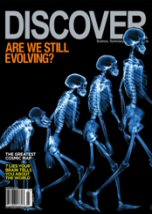
Are We Still Evolving

   2011    Science
Dr Alice Roberts asks one of the great questions about our species: are we still evolving? There's no doubt that we're a product of millions of years of evolution. But thanks to modern technology and medicine, did we escape Darwin's law of the survival of the fittest? Alice follows a trail of clues from ancient human bones to studies of remarkable people living in the most inhospitable parts of the planet and the frontiers of genetic research, to discover if we are still evolving - and where we might be heading.

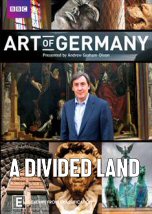
The Art of Germany: A Divided Land

   2010    Art
Andrew Graham-Dixon begins his exploration of German art by looking at the rich and often neglected art of the German middle ages and Renaissance. He visits the towering cathedral of Cologne, a place which encapsulates the varied and often contradictory character of German art. In Munch he gets to grips with the earliest paintings of the Northern Renaissance, the woodcuts of Albrecht Durer and the cosmic visions of the painter Albrecht Altdorfer. Andrew also embarks on a tour of the Bavarian countryside, discovering some of the little-known treasures of German limewood sculpture.
Series: The Art of Germany

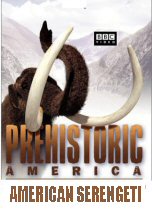
American Serengeti

   2003    Nature
Journey through the long-vanished corners of prehistoric North America, beginning when man first entered the vast, unspoiled continent some 14,000 years ago, in this appealing BBC documentary. Witness ancient beasts, mammoths, mastodons, giant bears, and sabre-toothed cats, and see the legacies each has passed to their modern successors. Computer animation and digital effects bring to life mammoths, saber-toothed cats, giant ground sloths, short-faced bears, glyptodonts, and a plethora of smaller animals in a lush Ice Age mosaic. Discoveries from sites across America are the basis for the reconstructions.
Series: Prehistoric America

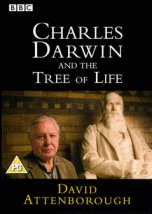
Charles Darwin and the Tree of Life

   2009    Science
David Attenborough asks three key questions: how and why did Darwin come up with his theory of evolution? Why do we think he was right? And why is it more important now than ever before? David starts his journey in Darwin's home at Down House in Kent, where Darwin worried and puzzled over the origins of life. David goes back to his roots in Leicestershire, where he hunted for fossils as a child, and where another schoolboy unearthed a significant find in the 1950s. And he revisits Cambridge University, where both he and Darwin studied, and where many years later the DNA double helix was discovered, providing the foundations for genetics. At the end of his journey in the Natural History Museum in London, David concludes that Darwin's great insight revolutionised the way in which we see the world. We now understand why there are so many different species, and why they are distributed in the way they are. But above all, Darwin has shown us that we are not set apart from the natural world, and do not have dominion over it. We are subject to its laws and processes, as are all other animals on earth to which, indeed, we are related.
Clash of the Gods

Clash of the Gods

2009  History
Art of Eternity

Art of Eternity

2007  Art
Walking with Cavemen

Walking with Cavemen

2003  History
Get Gotti

Get Gotti

2023  History
The Great Acceleration

The Great Acceleration

2020  Technology