





Last Watched

"Cell"  Sort by

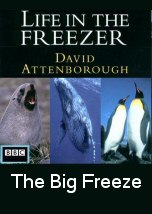
The Big Freeze

   1993    Nature
As almost all animal inhabitants of Antarctica are forced to migrate north, the sea underneath the frozen ice still provides a home to many specially adapted fish whose cells are protected from freezing through an 'antifreeze' liquid. Many of them feed on the faeces of other animals. The most notable larger animal that does not migrate north is perhaps the Weddell Seal, which can be found as close as 1300 kilometres to the pole. Groups of seals tear holes into the ice to dive for food and come up to breathe. The females come back to the ice to give birth. This episode also describes primitive plant life such as lichen, which can still be found on the continent in winter, even in the extremely dry and permanently frozen valleys conditions under which dead animals can lie frozen for many centuries without decomposing. It details the life of the Emperor Penguin, 'the only birds to lay their eggs directly on ice'. While other animals retreat, Emperors migrate not just to the ice, but into the Antarctic continent. The females lay eggs which are incubated by the males under the harshest conditions on Earth (huddling closely together for warmth), while the females return to the sea.
Series: Life in the Freezer
Some of the Things That Molecules Do

   2014    Science    HD
The story begins with Tyson sitting at a campfire, and telling how the wolf changed through artificial selection, and selective breeding into the dog breeds around today. He then enters the Ship of Imagination, and explains natural selection with the process that helped to create the polar bears. Along the way he talks about DNA, genes and mutation. Next he goes to a forest and describes the Tree of life, this leads him to discussing the evolution of the eye. He then discusses extinction, by going to a monument called the Halls of Extinction, dedicated to the broken branches of the tree of life. Explaining the five great Extinction events. He then tells how some life has survived, and then focuses on the tardigrade. From there he talks about what other kinds of life might have been created on other worlds. He then goes to Saturn's moon Titan. From there he speculates about life and how it first began. He then returns to Earth and tells about abiogenesis and how life changed and evolved. The show ends with an animated sequence from the original series of life's evolution from one cell to humans.
Series: Cosmos: A Spacetime Odyssey

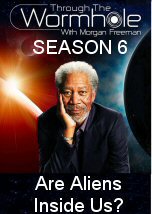
Are Aliens Inside Us

   2015    Culture
Odds are excellent that extraterrestrial life exists. So why haven’t we found aliens out in the galaxy? Are we looking in the wrong places? New research shows we should look closer to home, even inside our bodies. It turns out that a lot of our DNA is from a mysterious, nonhuman source. Theoretically, alien microbial life can make the journey to Earth from distant worlds, and scientists are finding some unearthly microbes in our upper atmosphere. Could it be from outer space? Could we be part alien? It’s even possible alien life is already here as digital life forms, hiding inside our technology.
Series: Through the Wormhole Season 6

The Spark of Life

       Science
The final part reveals how our knowledge of cells has brought us to the brink of one of the most important moments in history. Scientists are close to repeating what has happened only once in four billion years - the creation of a new life form.
Series: The Cell
Natural World

Natural World

2009  Nature
History of the Eagles

History of the Eagles

2013  History
Wild South America

Wild South America

2005  Nature
The Art of Russia

The Art of Russia

2009  Art
Planet Earth

Planet Earth

2007  Nature
Cosmos

Cosmos

1980  Science
The Germanic Tribes

The Germanic Tribes

2007  History
The Planets

The Planets

2000  Science