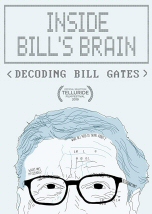
The series about the man, myth and legend - founder of Microsoft and co-founder of the Bill and Melinda Gates Foundation - reflects on his trailblazing work with computer software, starting the largest private philanthropic foundation. Bill Gates opens up about his childhood, business career and passion for improving the lives of people in the developing world. When Bill Gates stepped down from Microsoft in 2008, he was worth more than 58 billion dollars. He built that fortune thinking about computer software, operating systems, spreadsheets and the Internet. What was on his mind?
April 1453. Sultan Mehmed II unleashes an artillery attack on Constantinople unlike any the world has ever known. It's the largest concentration of cannons that the world had seen in one place. The monumental task of keeping the Ottomans out of Constantinople falls on the shoulders of Genoese soldier of fortune Giovanni Giustiniani. He and his men must defend 14 miles of city walls. Mehmed launches his ambitious plans to break through the walls of Constantinople, but Giustiniani's mercenaries manage to forestall the attacks.
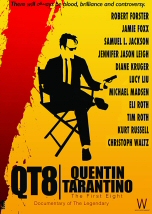
The film chronicles the life of Quentin Tarantino, from his start at Video Archives up to the releasing of Once Upon a Time in Hollywood. The documentary features interviews from his frequent collaborators of his films. The filmmaker Richard Linklater explores Quentin Tarantino from his trendsetting work on Reservoir Dogs and examines how his films have changed the movie making landscape forever.
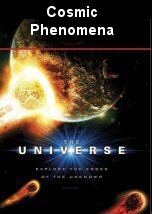
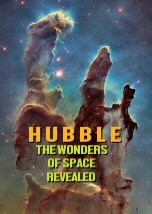
To celebrate the 30th anniversary of its launch, this film tells the remarkable story of how the Hubble Space Telescope revealed the awe and wonder of our universe and how a team of daring astronauts risked their lives to keep it working. Additionally, a team led by Greg Bacon and Dr Frank Summers has transformed many of Hubble's most awe-inspiring images into visualisations - from the spectacular Orion Nebula to the fabulous Whirlpool Galaxy and ethereal Horsehead Nebula. One of the most mind-blowing of the visualizations takes the viewer on a remarkable journey, flying across the Universe to witness almost 13 billion years of cosmic evolution. It's called the 'Hubble Ultra Deep Field' and was created when Hubble stared at a small patch of sky for the equivalent of more than 11 days to see some of the most distant galaxies ever observed.
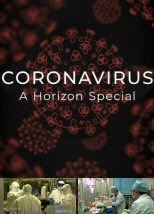
Dr Chris van Tulleken, Dr Hannah Fry and Michael Mosley examine the latest research and explore some of the big questions about Covid-19 and the pandemic it has created. Michael visits the UK government's high-security laboratory Porton Down, where vaccines are being tested. He also uncovers what the experience of the 2002 SARs epidemic reveals about this one. Both were caused by coronaviruses, but certain key changes to today's virus have allowed it to infect the world, where SARs was contained.
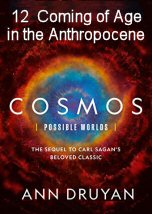
At 11 o'clock on New Year's Eve of the Cosmic Calendar, Homo erectus stood up for the first time, freeing its hands and earning the species its name. They began to move around, to explore, daring to risk everything to get to unknown places. Our Neanderthal relatives lived much as we did and did many of the things we consider to be 'human.' More restless than their cousins the Neanderthals and Denisovans, our Homo sapiens ancestors crossed seas and unforgiving landscapes, changing the land, ocean and atmosphere, leading to mass extinction. The scientific community gave our age a new name, 'Anthropocene.' Since the first civilizations we've wondered if there's something about human nature that contains the seeds of our destruction. Syukuro Manabe was born in rural Japan and took an intense interest in Earth's average global temperature. In the 1960's, he would assemble the evidence he needed to predict the increase of Earth's temperature due to greenhouse gases until it becomes an uninhabitable and toxic environment, leading to our extinction. 'This doesn't have to be,' says Neil deGrasse Tyson, 'it's not too late. There's another hallway, another future we can still have; we'll find a way.'





When Bill Gates stepped down from Microsoft in 2008, he was worth more than 58 billion dollars. He built that fortune thinking about computer software, operating systems, spreadsheets and the Internet. What was on his mind?