







Last Watched

"Design"  Sort by

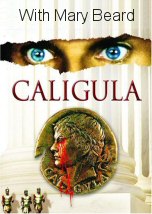
Caligula

   2013    History
Two thousand years ago one of history's most notorious individuals was born. Professor Mary Beard embarks on an investigative journey to explore the life and times of Gaius Julius Caesar Augustus Germanicus - better known to us as Caligula. Caligula has now become known as Rome's most capricious tyrant, and the stories told about him are some of the most extraordinary told about any Roman emperor. He was said to have made his horse a consul, proclaimed himself a living God, and indulged in scandalous orgies - even with his own three sisters - and that's before you mention building vast bridges across land and sea, prostituting senators' wives and killing half the Roman elite seemingly on a whim. All that in just four short years in power before a violent and speedy assassination in a back alley of his own palace at just 28-years-old." But how much of his story is true? Travelling across the Roman world - from Germany and Capri in the bay of Naples to the astonishing luxury of his life in imperial Rome - Mary attempts to peel away the myths. Some stories are difficult to get to the bottom of as they were written by hacks long after his death, but there is plenty of surviving evidence where the 'real' Caligula can be glimpsed. Such as in the extraordinary luxury of his private yachts outside Rome; in the designs he chose for his coins when he became Emperor; in an eye-witness account of Caligula's withering humour written in 41AD; the trial documents covering the mysterious death of his father when he was just seven-years-old; and even in a record of his imperial slaves - from the palace spy to his personal trainer. Piecing together the evidence, Mary puts Caligula back into the context of his times to reveal an astonishing story of murder, intrigue and dynastic family power. Above all, she explains why Caligula has ended up with such a seemingly unredeemable reputation. In the process, she reveals a more intriguing portrait of not just the monster, but the man.
One Voice in the Cosmic Fugue

   1980    Science
Sagan discusses the story of the Heike crab and artificial selection of crabs resembling samurai warriors, as an opening into a larger discussion of evolution through natural selection (and the pitfalls of intelligent design). Among the topics are the development of life on the Cosmic Calendar and the Cambrian explosion; the function of DNA in growth; genetic replication, repairs, and mutation; the common biochemistry of terrestrial organisms; the creation of the molecules of life in the Miller-Urey experiment; and speculation on alien life (such as life in Jupiter's clouds). In the Cosmos Update ten years later, Sagan remarks on RNA also controlling chemical reactions and reproducing itself and the different roles of comets (potentially carrying organic molecules or causing the Cretaceous–Paleogene extinction event).
Series: Cosmos

Race For Satellites

   2005    Technology
During 1953-1958, as the Cold War intensifies, Korolev is asked to build a rocket capable of carrying a five-ton warhead to America - he designs and constructs the R-7 Semyorka, and is later allowed to use it to launch the first satellite, Sputnik 1. Meanwhile, von Braun struggles to persuade the US government to allow him to launch his own satellite - after Sputnik's launch and the failure of the US Navy to launch a Vanguard satellite, he is finally allowed to launch the first American satellite, Explorer 1.
Series: Space Race

The Story of India: The Meeting of Two Oceans

   2007    History
Michael Wood charts the coming of Islam to the subcontinent and one of the greatest ages of world civilisation: the Mughals. He visits Sufi shrines in Old Delhi, desert fortresses in Rajasthan and the cities of Lahore and Agra, where he offers a new theory on the design of the Taj Mahal. He also looks at the life of Akbar, a Muslim emperor who decreed that no one religion could hold the ultimate truth, but whose dream of unity ended in civil war.
Series: The Story of India

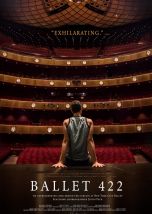
Ballet 422

   2014    Art
Cinematographer and documentarian Jody Lee Lipes crafts an intimate, fly-on-the-wall documentary offering a rare peek into the highly-guarded world of professional ballet. The film shadows Justin Peck, the 25-year old choreographer of the New York City Ballet, as he undertakes the Herculean task of creating the company's 422nd original piece while simultaneously fulfilling his role as a Corps de Ballet member. Lipes chronicles Peck's creative process from its embryonic stages to its highly anticipated premiere, quietly observing as he balances a roster of musicians, designers, and dancers from this famed institution. Ballet 422 is a powerful celebration of the skill and endurance of Peck and his fellow NYCB dancers-as well as those who remain hidden in the wings.

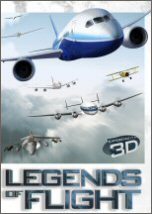
Legends of Flight

   2010    Technology    3D    HD
A film that will not only delight and entertain the aviation enthusiast but also educate and inspired renewed interest in aviation by the traveling public, the media and young people who may ultimately aspire to a career in aviation. It dramatized the design challenged, the financial risks and the many lessons learned from a century of aviation trial and error, bringing us to the dawn of a new era of revolutionary aircraft, the 787 Dreamliner and the A380". The film will focus on the 787 to facilitate audience understanding of the dynamic design differences between the two latest aircraft technologies. Search aviation history for the ultimate flying experience with some of today's greatest pilots. See how the airplanes of the 20th century helped influence the radical new design of 21st century aircraft. See how high tech manufacturers around the world use modern technology to coordinate the design and construction of new aircraft. Fly in the cockpit with chief test pilot, Mike Carriker, as he takes the new 787 Dreamliner on its first test flight.