


Last Watched

"House"  Sort by

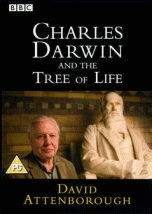
Charles Darwin and the Tree of Life

   2009    Science
David Attenborough asks three key questions: how and why did Darwin come up with his theory of evolution? Why do we think he was right? And why is it more important now than ever before? David starts his journey in Darwin's home at Down House in Kent, where Darwin worried and puzzled over the origins of life. David goes back to his roots in Leicestershire, where he hunted for fossils as a child, and where another schoolboy unearthed a significant find in the 1950s. And he revisits Cambridge University, where both he and Darwin studied, and where many years later the DNA double helix was discovered, providing the foundations for genetics. At the end of his journey in the Natural History Museum in London, David concludes that Darwin's great insight revolutionised the way in which we see the world. We now understand why there are so many different species, and why they are distributed in the way they are. But above all, Darwin has shown us that we are not set apart from the natural world, and do not have dominion over it. We are subject to its laws and processes, as are all other animals on earth to which, indeed, we are related.
Heaven and Hell

   1980    Science
Sagan discusses comets and asteroids as planetary impactors, giving recent examples of the Tunguska event and a lunar impact described by Canterbury monks in 1178. It moves to a description of the environment of Venus, from the previous fantastic theories of people such as Immanuel Velikovsky to the information gained by the Venera landers and its implications for Earth's greenhouse effect. The Cosmos Update highlights the connection to global warming.
Series: Cosmos

The Lost Pyramids of Caral

   2002    History
The magnificent ancient city of pyramids at Caral in Peru is a thousand years older than the earliest known civilisation in the Americas and, at 2,627 BC, is as old as the pyramids of Egypt. Many now believe it is the fabled missing link of archaeology - a 'mother city'. If so, then these extraordinary findings could finally answer one of the great questions of archaeology: why did humans become civilised?" For over a century, archaeologists have been searching for what they call a mother city. Civilisation began in only six areas of the world: Egypt, Mesopotamia, India, China, Peru and Central America. In each of these regions people moved from small family units to build cities of thousands of people. They crossed the historic divide, one of the great moments in human history. Why? To find the answer archaeologists needed to find a mother city - the first stage of city-building. Caral, is so much older than anything else in South America that it is a clear candidate to be the mother city. It also is in pristine condition. Nothing has been built on it at all. Instead laid out before the world is an elaborate complex of pyramids, temples, an amphitheatre and ordinary houses. Scientists developed a number of theories. Some said it was because of the development of trade, others that it was irrigation. Some even today believe it was all because of aliens. Gradually an uneasy consensus emerged. The key force common to all civilisations was warfare. Crucially, there is not the faintest trace of warfare at Caral; no battlements, no weapons, no mutilated bodies. Instead, Ruth's findings suggest it was a gentle society, built on commerce and pleasure. In one of the pyramids they uncovered beautiful flutes made from condor and pelican bones. They have also found evidence of a culture that took drugs and perhaps aphrodisiacs. Most stunning of all, they have found the remains of a baby, lovingly wrapped and buried with a precious necklace made of stone beads.

The Cities

   2011    Culture
Humans are so clever they’ve built their own habitat, designed to keep wild nature out. Yet as we discover the urban environment is totally dependant on the natural world. Over the three years of filming for Human Planet, the teams have spent time with over seventy different communities in countries across the planet. Despite seeing many different ways of living, there are some aspects of family life that remain the same whether you live in a tree house in West Papua, or a brick house in Bolton. These similarities became very clear when the urban team went to film on a rubbish dump in Kenya. Here on the Kibarani dump on the outskirts of Mombasa, Ali, Ashe and their family live and survive amongst the rubbish, and even here, just like anywhere on the planet, everything stops for a nice cup of tea!
Series: Human Planet

Colonizing Space

   2008    Technology
Space colonization is no longer the fodder of science fiction, it is becoming a reality. Examine the efforts underway to establish a human colony on Mars, including how they plan to grow food, recycle wastewater and introduce greenhouse gases to revive the red planet and make it more habitable for humans. Cutting-edge computer graphics are used to bring the universe down to earth to show what life would be like on Mars, and to imagine what kind of life forms might evolve in alien atmospheres.
Series: The Universe

Earth: Venus Evil Twin

   2015    Science
There is a hellish planet in our solar system; covered in thick dense clouds and roasted by colossal temperatures. It will be inevitable that the Earth will someday not only be like Venus, but actually put it to shame. A billion years from now, Earth's oceans will boil off, triggering a runaway greenhouse effect, and the temperature will be so high, its all surface will melt. In the distance future, Earth could be the evil twin of Venus. To understand how our world will be destroyed we need to look at what happened to Venus.
Series: How the Universe Works Season 4
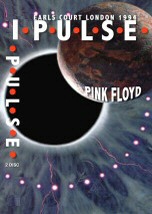
P.U.L.S.E

P.U.L.S.E

2006  Art
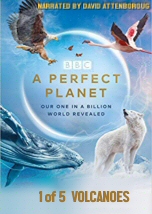
A Perfect Planet

A Perfect Planet

2021  Nature
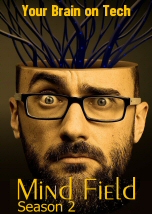
Mind Field Season 2

Mind Field Season 2

2018  Technology
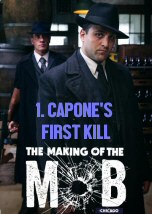
The Making of the Mob

The Making of the Mob

2016  History
Long Way Home

Long Way Home

2025  Culture