


Last Watched

"Telescope"  Sort by

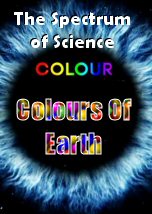
Colours Of Earth

   2015    Science
In this episode, Helen seeks out the colours that turned planet Earth multicoloured. To investigate the essence of sunlight Helen travels to California to visit the largest solar telescope in the world. She discovers how the most vivid blue is formed from sulfur atoms deep within the Earth's crust and why the presence of red ochre is a key sign of life. In gold, she discovers why this most precious of metals shouldn't even exist on the surface of the planet and in white, Helen travels to one of the hottest places on Earth to explore the role salt and water played in shaping planet Earth.
Series: Colour The Spectrum of Science

Hiding in the Light

   2014    Science
This episode explores the wave theory of light as studied by mankind, noting that light has played an important role in scientific progress, with such early experiments from over 2000 years ago involving the camera obscura by the Chinese philosopher Mozi. Tyson describes the work of the 11th century Arabic scientist Ibn al-Haytham, considered to be one of the first to postulate on the nature of light and optics leading to the concept of the telescope, as well as one of the first researchers to use the scientific method. Tyson proceeds to discuss the nature of light as discovered by mankind. Work by Isaac Newton using diffraction through prisms demonstrated that light was composed of the visible spectrum, while findings of William Herschel in the 19th century showed that light also consisted of infrared rays. Joseph von Fraunhofer would later come to discover that by magnifying the spectrum of visible light, gaps in the spectrum would be observed. These Fraunhofer lines would later be determined to be caused by the absorption of light by electrons in moving between atomic orbitals when it passed through atoms, with each atom having a characteristic signature due to the quantum nature of these orbitals. This since has led to the core of astronomical spectroscopy, allowing astronomers to make observations about the composition of stars, planets, and other stellar features through the spectral lines, as well as observing the motion and expansion of the universe, and the existence of dark matter.
Series: Cosmos: A Spacetime Odyssey
Becoming Martian

Becoming Martian

2021  Technology
Dinosaur Planet

Dinosaur Planet

2003  Science
Space Race

Space Race

2005  Technology
Oceans

Oceans

2009  Nature
Coldplay Live

Coldplay Live

2012  Art
Chemistry

Chemistry

2010  Science