





Last Watched

"DEA"  Sort by

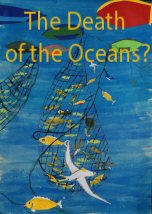
The Death of the Oceans

   2010    Nature
Sir David Attenborough reveals the findings of one of the most ambitious scientific studies of our time - an investigation into what is happening to our oceans. He looks at whether it is too late to save their remarkable biodiversity. Attenborough explores some of the ways in which we are affecting marine life - from over-fishing to the acidification of sea water. The film also uncovers the disturbing story of how shipping noise is deafening whales and dolphins, affecting their survival in the future.
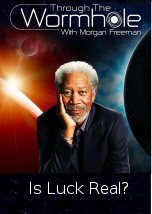
Are We All Bigots

   2015    Culture
If you had less than one second to make a life-or-death decision to shoot a man who might be armed with a lethal weapon, what would you do? Would the ethnicity of the man affect your decision? Are you sure? The outcome – whatever your race – will surprise you. Brain imaging studies are showing that negative cultural stereotypes hijack everyone’s subconscious decision-making. But some science says we can overcome bigotry through exposure, self-awareness and flexible social networks… and, most controversially of all, ultra-violent video games!
Series: Through the Wormhole Season 6

Treasures of the Gods

   2014    Culture
Researchers discuss mythic ancient treasure and curses including King Solomon's Ring, lost Aztec treasure, and the Omphalos.
Series: Ancient Aliens

Ancient Aliens Debunked: Anunnaki

       History
The word Anunnaki means "princely seed" or "princely blood". The idea is that the Anunnaki were direct creations of Anu, who was regarded as the father and king of the gods. Ancient Aliens: "In the ancient texts of Sumeria we have descriptions of these being descending from the sky called the Anunnaki. The term Anunnaki means 'those who from the heavens came."
Series: Ancient Aliens

The Big Freeze

   1993    Nature
As almost all animal inhabitants of Antarctica are forced to migrate north, the sea underneath the frozen ice still provides a home to many specially adapted fish whose cells are protected from freezing through an 'antifreeze' liquid. Many of them feed on the faeces of other animals. The most notable larger animal that does not migrate north is perhaps the Weddell Seal, which can be found as close as 1300 kilometres to the pole. Groups of seals tear holes into the ice to dive for food and come up to breathe. The females come back to the ice to give birth. This episode also describes primitive plant life such as lichen, which can still be found on the continent in winter, even in the extremely dry and permanently frozen valleys conditions under which dead animals can lie frozen for many centuries without decomposing. It details the life of the Emperor Penguin, 'the only birds to lay their eggs directly on ice'. While other animals retreat, Emperors migrate not just to the ice, but into the Antarctic continent. The females lay eggs which are incubated by the males under the harshest conditions on Earth (huddling closely together for warmth), while the females return to the sea.
Series: Life in the Freezer

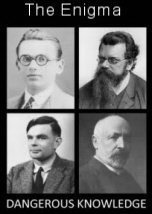
Dangerous Knowledge: The Enigma

   2007    Science
brilliant mathematicians whose genius has profoundly affected us, but which tragically drove them insane and eventually led to them all committing suicide. Kurt Gödel, the introverted confidant of Einstein, proved that there would always be problems which were outside human logic. His life ended in a sanatorium where he starved himself to death. Finally, Alan Turing, the great Bletchley Park code breaker, father of computer science and homosexual, died trying to prove that some things are fundamentally unprovable.
Series: Dangerous knowledge
The Hunt

The Hunt

2015  Nature
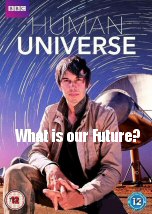
Human universe

Human universe

2014  Technology
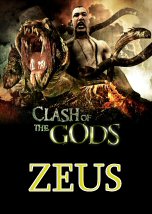
Clash of the Gods

Clash of the Gods

2009  History
History of the Eagles

History of the Eagles

2013  History
Leaving Neverland

Leaving Neverland

2019  Culture
The Last Dance

The Last Dance

2020  Culture