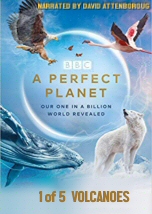
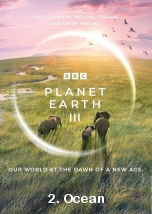
This second episode is a captivating exploration of the ocean's wonders and mysteries. It reveals how a significant part of our planet remains unexplored, primarily due to its vast water coverage. The film emphasizes the extraordinary discoveries awaiting every journey below the water's surface, with over a thousand new species identified annually. Home to 80% of all animal life on Earth, the ocean's diverse habitats host a range of surprising behaviors and life-and-death struggles, often hidden beneath a serene exterior. The shallow tropical seas, appearing as paradises, are actually arenas of intense survival battles. Predatory lionfish, with their patient hunting tactics, and clown frogfish, using a unique fishing rod-like dorsal fin as a lure, demonstrate the ocean's complex food web. The documentary also explores the kelp forests off the North American coast, revealing their role as nurseries for young horn sharks. Amidst these underwater forests lurk giant sea bass, wolf-eels, and various sharks like houndsharks and broadnose sevengills, posing significant threats to the smaller inhabitants. The episode takes viewers to the twilight and midnight zones of the ocean, unveiling alien-like creatures such as the siphonophore, glass squid, and gulper eel, adapted to the extreme conditions of deep waters. The journey concludes with the moving story of the pearl octopus, whose devotion to her eggs in the challenging deep-sea environment is both heartwarming and heartbreaking. This episode is not only a showcase of the ocean's diverse inhabitants but also a reminder of the urgent need to understand and protect this vast, mysterious, and vital part of our planet.
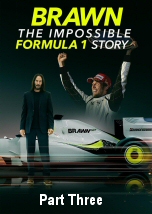
The third part of the series begins with the excitement of Button's initial victories, highlighting his talent and skill on the tracks. However, as the season progresses, the focus shifts to the growing tension between Button and Barrichello. This tension is fueled by the internal struggle for leadership in the team and the drivers' championship. These rivalries affect performance on the track. Another key point is the management of the Brawn GP team, facing financial and technical challenges while seeking to maintain its competitive edge against rivals like Red Bull and McLaren. We discover the psychological aspect of racing, showing how the pressure of the championship affects Button, leading him to make mistakes and question his abilities. At the same time, Barrichello's resurgence is observed, showing determination and experience to take advantage of his opportunities. Finally, the evolution of the Brawn GP team is addressed, from its triumphs to moments of uncertainty, culminating in a season that is both a success story and a testimony to the unpredictable nature of Formula 1.
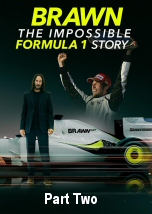
The second part of the series describes how Honda withdrew from Formula 1 and how Ross Brawn and Nick Fry took control to form Brawn GP. It explains the team's financial struggles, their ingenious interpretation of the rules to develop an innovative double diffuser, and the subsequent controversies and legal battles with other teams over the legality of this innovation. The rivalry between Jenson Button, the team's lead driver, and his teammate Rubens Barrichello is emphasized. The climax of the film is Button's victory in Monaco, highlighting both the driver's triumph and the team's success under extreme pressure. As the season progresses, other teams begin to catch up to Brawn GP, increasing the pressure on Button to maintain his championship lead. The documentary concludes with Brawn GP, pressured by financial needs, signing an agreement with Ecclestone, apparently betraying FOTA (Formula One Teams Association) and creating significant internal conflict. This twist highlights the complex power dynamics and ethical challenges within the world of F1.
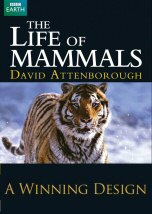
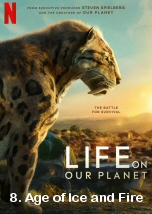
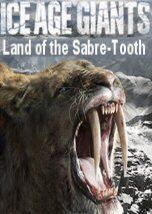
The final episode begins with a description of the extreme cold conditions that characterized the beginning of the Holocene period, and how species like the bison and the wolf adapted to survive in these hostile environments. We will witness the majesty of the woolly mammoth and the fierce cave lion, with a vivid reconstruction of their struggles for survival. We'll see the impact of climate change during this period, from the expansion of the deserts to the transformation of the tropical rainforests of Africa into grasslands, deeply affecting primates and other animals. It highlights how these changes forced primates to adapt to life on the ground, facing new challenges and predators. A crucial turn occurred with the emergence of humans as dominant predators and their influence on the extinction of large mammals. The documentary describes humanity's transition from hunter-gatherers to farmers, a change that radically altered the landscape and biodiversity of the planet. Finally, it poses a reflection on the current challenges of climate change and the sixth mass extinction, inviting viewers to consider humanity's crucial role in shaping the future of the Earth.
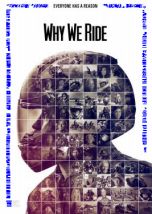
This documentary tells the touching story of David Holmes, Daniel Radcliffe's stunt double in the successful 'Harry Potter' movies, whose work has captivated millions of viewers around the world. The narrative delves into the deep friendship between Radcliffe and Holmes, exploring how it strengthens and evolves following a tragic accident during filming that left Holmes paralyzed. Through an emotional journey of overcoming and resilience, the documentary offers a unique perspective on the challenges and human connection in the world of cinema, inviting viewers to discover a story of friendship and perseverance in adverse times.
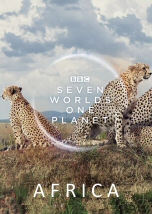
The last episode of the series showcases Africa, home to the greatest wildlife gatherings on earth and vast ecosystems. It delves into the lives of intelligent chimpanzees using tools in Ivory Coast, and the diverse cichlid fish in the Great Rift Valley's lakes. The film also explores the survival strategies of animals in the Namib Desert, including the brown hyena and the aardvark. But even in this land of plenty, wildlife faces huge challenges. Crucially, it is addressed the impact of climate change and human activities, highlighting the plight of endangered species like the northern white rhinoceros and the decreasing populations of elephants and cheetahs due to poaching. However, it also offers hope, illustrating successful conservation efforts like the recovery of the mountain gorilla population in Virunga National Park. The documentary is a vivid reminder of the richness of African wildlife and the urgent need for conservation efforts to preserve our planet's biodiversity.

















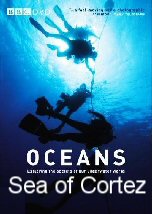


The shallow tropical seas, appearing as paradises, are actually arenas of intense survival battles. Predatory lionfish, with their patient hunting tactics, and clown frogfish, using a unique fishing rod-like dorsal fin as a lure, demonstrate the ocean's complex food web. The documentary also explores the kelp forests off the North American coast, revealing their role as nurseries for young horn sharks. Amidst these underwater forests lurk giant sea bass, wolf-eels, and various sharks like houndsharks and broadnose sevengills, posing significant threats to the smaller inhabitants. The episode takes viewers to the twilight and midnight zones of the ocean, unveiling alien-like creatures such as the siphonophore, glass squid, and gulper eel, adapted to the extreme conditions of deep waters. The journey concludes with the moving story of the pearl octopus, whose devotion to her eggs in the challenging deep-sea environment is both heartwarming and heartbreaking.
This episode is not only a showcase of the ocean's diverse inhabitants but also a reminder of the urgent need to understand and protect this vast, mysterious, and vital part of our planet.