The most innovative area of human motion lies not on Earth, but with the exploration of space. Space is the most hostile environment we know. Navigating it involves crossing unprecedented distances. It's the greatest engineering challenge humanity has ever undertaken. Meet the pioneers who've dreamed of reaching other worlds, pushing the boundaries of space exploration, and the private space entrepreneurs jostling to offer the tantalizing prospect of cheap, frequent travel beyond the atmosphere into Earth orbit.
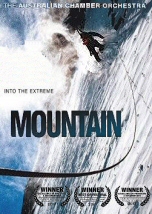
Jaw-dropping exploration of our obsessions with high places and how they have come to capture our imagination. Only three centuries ago, climbing a mountain would have been considered close to lunacy. The idea scarcely existed that wild landscapes might hold any sort of attraction. Peaks were places of peril, not beauty. Why, then, are we now drawn to mountains? Filmed by the world's leading high-altitude cinematographers, narrated by William Dafoe and set to a specially curated musical performance by the Australian Chamber Orchestra, Mountain captures the fierce beauty of some of the world's most treacherous landscapes and the awe they inspire.
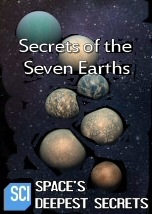
We are living in a new golden age of exploration. Planet hunters are searching far beyond our solar system and they are actually finding new worlds orbiting other suns. Thousands of these alien worlds have already been found, but this is the story of perhaps the greatest discovery yet, a star 40 light-years away with seven Earth-sized planets: Trappist-1. This new discovery of seven alien Earth-like planets in a faraway solar system is a major milestone in our hunt for extraterrestrial life, and experts investigate the secrets of Trappist -1's mysterious worlds to reveal if we're truly alone in the universe.
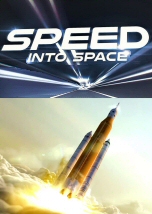
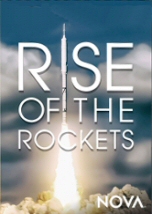
New technologies are making rockets cheaper and more powerful than ever before. As companies like SpaceX and Virgin Galactic make space more accessible, and NASA returns to crewed spaceflight, a new era of space exploration may be on the horizon.
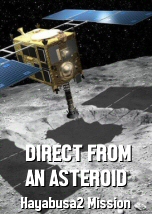
The Hayabusa2 spacecraft has just completed one of the most intricate procedures in space exploration. The first mission to deliver rovers onto an asteroid has now descended to its surface for a sample, before returning back to Earth in 2020.
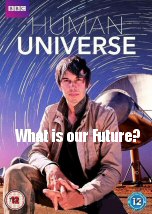
Professor Brian Cox concludes his exploration of our place in the universe by asking what next for the ape that went to space. Our future is far from certain. In Florida, Brian joins the latest efforts to protect Earth from potential catastrophic events. He joins a team of Nasa astronauts who are training for a future mission to an asteroid - should we ever discover one coming our way - under 30 feet of water in a submerged laboratory that simulates space. It is just one example of how, for our long-term survival, space exploration may well be vital. It is a view shared by Apollo 16 astronaut Charlie Duke, who tells Brian what it was like to escape the confines of the planet. It is a dream that both Nasa and now commercial companies share as they race to get humans back into deep space. But space travel, like every leap our civilisation has ever made, requires energy. Here too, scientists are hard at work attempting to safeguard our future. At the National Ignition Facility in California, Brian witnesses the world's most successful fusion experiment in action. He believes that if their mission succeeds, our civilisation will have unlocked a way to the stars that will not destroy the planet in the process. Brian concludes by returning to the top of the world in Svalbard, where he gains access to our civilisation's greatest treasure, locked away in a vault buried deep in the permafrost.







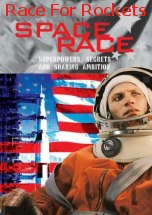











Meet the pioneers who've dreamed of reaching other worlds, pushing the boundaries of space exploration, and the private space entrepreneurs jostling to offer the tantalizing prospect of cheap, frequent travel beyond the atmosphere into Earth orbit.