
Last Watched

"Plant"  Sort by

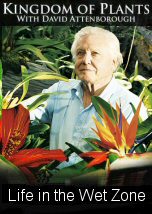
Kingdom of Plants Life in the Wet Zone

   2012    Nature
Written and presented by David Attenborough, who said: 'One of the most wonderful things about filming plants is that you can reveal hidden aspects of their lives, you can capture the moment as one plant strangles another, and as they burst into flower. But whilst time-lapse photography allows you to see things that no human being has ever seen before". David begins his journey inside the magnificent Palm House, a unique global rainforest in London. Here, he explores the extraordinary plants that are so well adapted to wet and humid environments and unravels the intimate relationships between wet zone plants and the animals that depend on them. It was in the wet zones of the world that plants first moved on to land and in the Waterlily House David reveals how flowers first evolved some 140 million years ago. Watching a kaleidoscope of breath-taking time-lapses of these most primitive of flowers swelling and blooming in 3D, he is able to piece together the very first evolutionary steps that plants took to employ a wealth of insects to carry their precious pollen for the first time. David discovers clues to answer a question that even had Charles Darwin stumped: how did flowering plants evolve so fast to go on to colonise the entire planet so successfully?
Series: Kingdom of Plants
Off the Scale

   2012    Science
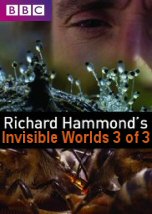
The human eye can see extraordinary detail, but the eye of a needle held at arm's length is pretty much at the limit of our vision. Anything smaller is simply invisible, at least to the naked eye. But what if we could see this hidden world all around us in greater detail and magnification than ever before? How different would our familiar surroundings then seem? Richard Hammond explores the astonishing miniature universe all around us, revealing that small is not only beautiful, it can also be very, very powerful. From seeing the microscopic changes to ice crystals that can trigger an avalanche to watching in horror the invisible aftermath of a sneeze on a commuter train and learning how the surface of an ordinary-looking plant hides an astounding secret that will make walking on the moon safer, Richard harnesses cutting-edge technologies to transport the viewer into a spectacular micro realm.
Series: Invisible Worlds

Fukushima Is Nuclear Power Safe

   2011    Technology
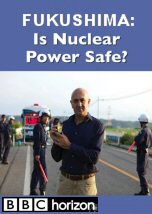
Professor Jim Al-Khalili sets out to discover whether nuclear power is safe. He begins in Japan, at the former Fukushima nuclear plant, where he meets some of the tens of thousands of people who have been evacuated from the exclusion zone. He travels to an abandoned village just outside the zone to witness a nuclear clean-up operation. Jim draws on the latest scientific findings from Japan and from the previous explosion at Chernobyl to understand how dangerous the release of radiation is likely to be and what that means for our trust in nuclear power.

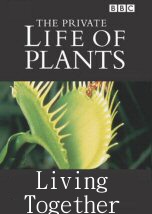
The Private Life of Plants Living Together

   1995    Nature
The fifth programme explores the alliances formed between the animal and plant worlds. Attenborough dives into Australia's Great Barrier Reef and contrasts the nocturnal feeding of coral, on microscopic creatures, with its daytime diet of algae. Some acacias are protected by ants, which will defend their refuge from any predator. Besides accommodation, the guards are rewarded with nectar and, from certain species, protein for their larvae as well. Fungi feed on plants but can also provide essential nutriment to saplings (Mycorrhiza). The connection is never broken throughout a tree's life and a quarter of the sugars and starches produced in its leaves is channelled back to its fungal partners. Meanwhile, fungi that feed on dead wood leave a hollow trunk, which also benefits the tree. Orchids enjoy a similar affiliation. Lichens are the product of a relationship between fungi and a photosynthetic associate, usually algae. They are extremely slow-growing, and a graveyard is the perfect location to discover their exact longevity. Mistletoe is a hemiparasite that obtains its moisture from a host tree, while using own leaves to manufacture food. Its seeds are deposited on another by the mistletoe tyrannulet, following digestion of the fruit. The dodder (Cuscuta) is also parasitic, generally favouring nettles, and siphons its nourishment through periodic 'plugs' along its stem. The rafflesia has no stem or leaves and only emerges from its host in order to bloom — and it produces the largest single flower: one metre across.
Series: The Private Life of Plants

Playing with Nuclear Fire

   2014    Technology
Playing with Nuclear Fire' - In March 2011, the Tohoku earthquake in Japan created a tsunami that killed some 16,000 people and crippled the Fukushima Daiichi nuclear power plant. In the aftermath, the government and TEPCO, the plant's operator, withheld information about the extent of the damage. Three years later, citizens and the international community are left wondering if Japan really does have the situation under control, as the government is insisting, or if the danger is far greater than anyone is willing to admit. 'No Man Left Behind' - It's estimated that over a quarter million vets from recent wars have sought treatment for PTSD. Despite these statistics, veterans often face an uphill battle to get treatment, receiving inadequate attention and, most dangerously, overprescribed narcotics and other pharmaceuticals. Ryan Duffy meets veterans struggling with mental illness and addiction.
Series: Vice

CyberWar Threat

   2015    Technology
The global cyberwar is heating up and the stakes are no longer limited to the virtual world of computers. Now, thanks in part to secret documents released by Edward Snowden, the true scale of the National Security Agency's scope and power is coming to light. Besides spending billions of dollars to ingest and analyze the worlds' electronic communications, the NSA has set out to dominate a new battlefield—cyberspace. We examine the science and technology behind cyber warfare and asks if we are already in the midst of a deadly new arms race". Already, highly sophisticated, stealthy computer programs such as the notorious Stuxnet worm can take over and even destroy the control systems that regulate everything from food factories to gas pipelines, power plants, and chemical facilities—even our cars. While the destruction of Iranian centrifuges may have delayed Iran’s bomb program and forestalled an Israeli attack, the attack has opened a Pandora's Box, and now America's own critical infrastructure is vulnerable to retaliation and attack. With leading defense experts and investigative journalists who have probed the murky realm of criminal and strategic hacking, NOVA examines the chilling new reality of cyberwar in which no nation or individual is safe from attack.
Life In Cold Blood

Life In Cold Blood

2008  Nature
Dinosaur Planet

Dinosaur Planet

2003  Science
Prehistoric Planet

Prehistoric Planet

2022  Science
The Last Dance

The Last Dance

2020  Culture
Life Story

Life Story

2014  Nature
The Art of Germany

The Art of Germany

2010  Art
Sonic Highways

Sonic Highways

2014  Art