









Last Watched

"The Sun"  Sort by

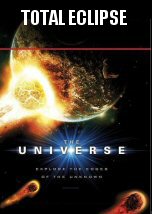
Total Eclipse

   2010    Science
Once they were dreaded and thought to be dragons eating the sun--but modern science has dispelled mythology and we now look forward to total Solar Eclipses as one of the most spectacular phenomena in the heavens. Explore the complex movements of Earth, Moon and Sun that produce these unusual events and hear details why we may be the only intelligent beings in the known Universe to witness eclipses like we see on Earth. Man-made eclipses also figure into the science in the form of instruments called "coronagraphs." They blot out the sun and reveal its corona, uncovering secrets which, while enlightening, also warn of a disaster that could make our advanced technology crash and burn. Finally, travel into deep space, where the tiny eclipses caused by planets circling distant stars is now beginning to reveal hundreds more stars where "exoplanets" exist... perhaps even those in habitable zones like the Earth.
Series: The Universe
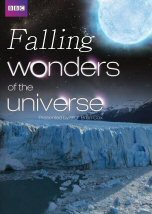
Falling

   2011    Science
Professor Brian Cox takes on the story of the force that sculpts the entire universe - gravity. Gravity seems so familiar, and yet it is one of the strangest and most surprising forces in the universe. Starting with a zero gravity flight, Brian experiences the feeling of total weightlessness, and considers how much of an effect gravity has had on the world around us. But gravity also acts over much greater distances. It is the great orchestrator of the cosmos. It dictates our orbit around the sun, our relationship with the other planets in our solar system, and even the way in which our solar system orbits our galaxy. Yet the paradox of gravity is that it is actually a relatively weak force. Brian takes a face distorting trip in a centrifuge to explain how it is that gravity achieves its great power, before looking at the role it plays in one of the most extraordinary phenomena in the universe - a neutron star. Although it is just a few kilometres across, it is so dense that its gravity is 100, 000 million times as strong as on Earth. Over the centuries our quest to understand gravity has allowed us to understand some of the true wonders of the universe, and Brian reveals that it is scientists' continuing search for answers that inspires his own sense of wonder.
Series: Wonders of the Universe

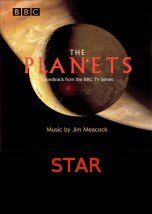
Star

   2000    Science
Travel to heart of the Sun, our star, a cauldron of superheated gases that writhe and contort along immense magnetic field lines. Discover how even life itself is forged in the heart of stars. We are made of stardust.
Series: The Planets

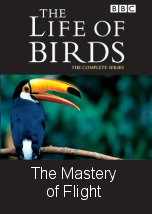
The Mastery of Flight

   1998    Nature
The second programme deals with the mechanics of flight. Getting into the air is by far the most exhausting of a bird's activities, and Sir Attenborough observes shearwaters in Japan that have taken to climbing trees to give them a good jumping-off point. The albatross is so large that it can only launch itself after a run-up to create a flow of air over its wings. A combination of aerodynamics and upward air currents (or thermals), together with the act of flapping or gliding is what keeps a bird aloft. Landing requires less energy but a greater degree of skill, particularly for a big bird, such as a swan. Weight is kept to a minimum by having a beak made of keratin instead of bone, a light frame, and a coat of feathers, which is maintained fastidiously. The peregrine falcon holds the record for being fastest in the air, diving at speeds of over 300 km/h. Conversely, the barn owl owes its predatory success to flying slowly, while the kestrel spots its quarry by hovering. However, the true specialists in this regard are the hummingbirds, whose wings beat at the rate of 25 times a second. The habits of migratory birds are explored. After stocking up with food during the brief summer of the north, such species will set off on huge journeys southwards. Some, such as snow geese, travel continuously, using both the stars and the sun for navigation. They are contrasted with hawks and vultures, which glide overland on warm air, and therefore have to stop overnight.
Series: The Life of Birds

Jupiter: Destroyer or Savior

   2014    Science
Beneath Jupiter's swirling clouds lie our solar system's deepest secrets: from its violent youth, through the birth of life to the death of the sun. Now, scientists are unlocking these secrets and discovering that every living thing exists thanks to Jupiter.
Series: How the Universe Works

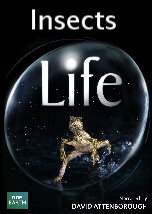
Life: Insects

   2009    Nature
There are 200 million insects for each of us. They are the most successful animal group ever. Their key is an armoured covering that takes on almost any shape. Darwin's stag beetle fights in the tree tops with huge curved jaws. The camera flies with millions of monarch butterflies which migrate 2000 miles, navigating by the sun. Super slow motion shows a bombardier beetle firing boiling liquid at enemies through a rotating nozzle. A honey bee army stings a raiding bear into submission. Grass cutter ants march like a Roman army, harvesting grass they cannot actually eat. They cultivate a fungus that breaks the grass down for them. Their giant colony is the closest thing in nature to the complexity of a human city.
Series: Life
Cooked

Cooked

2016  Culture
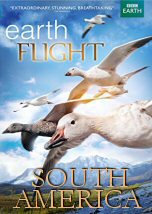
Earthflight

Earthflight

2012  Nature
Chef's Table

Chef's Table

2017  Art
Life of a Universe

Life of a Universe

2017  Science
Life

Life

2009  Nature