In July 2022, the James Webb Space Telescope (JWST) unveiled its first breathtaking images, offering an unprecedented level of detail of stars, galaxies, and planets. But for scientists, these images were just the start of an exciting journey to uncover the universe's secrets. This documentary follows Chris Lintott as he embarks on a road trip to meet the researchers who have been eagerly analyzing JWST's data, revealing groundbreaking discoveries about exoplanet atmospheres, the outer planets of our solar system, and the earliest galaxies in the cosmos. To mark the second anniversary of JWST's first images, Chris, along with presenters Maggie Aderin-Pocock and George Dransfield, revisits these scientists to explore the telescope's successes and challenges. From new jet streams on Jupiter to quirks on Uranus and Neptune, and insights into the ancient universe, the documentary showcases the remarkable findings made possible by JWST. Additionally, resident astronomer Pete Lawrence guides viewers on how to observe the night sky's wonders, aligning their stargazing with the telescope's targets. This captivating journey into space science promises to inspire and intrigue.
A chillingly realistic scenario unfolds: what would happen if a massive asteroid were hurtling toward Earth—and we only had months to prepare? This gripping special plunges viewers into the very real threat of cosmic collisions, combining cutting-edge science, expert analysis, and stunning visualizations. Follow the urgent efforts of scientists racing to detect and deflect potential impacts, with exclusive access to astronomers monitoring the skies. More than just a documentary, it's a wake-up call from the cosmos—a thrilling journey into one of the most dramatic `what if’ scenarios humanity could face.
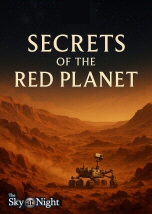
Groundbreaking missions and the latest research are finally uncovering the long-hidden secrets of Mars. From ancient water flows to possible traces of life, scientists are piecing together the planet's dramatic past. As powerful new technology scans its surface and atmosphere, experts confront extraordinary questions: Did Mars once support life? And could humanity one day make the Red Planet its second home? A stunning exploration into the evolving mysteries of our nearest planetary neighbor.
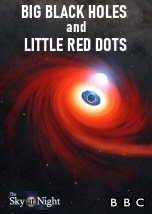
Professor Brian Cox joins Chris Lintott and the team to investigate one of the most intriguing new mysteries in modern astronomy. Observations from the James Webb Space Telescope have revealed hundreds of compact, extraordinarily bright objects known as “little red dots”, appearing less than a billion years after the Big Bang. Many may hide rapidly growing supermassive black holes, raising a profound question: how could such enormous objects have formed so early in cosmic history? The journey begins with the strange physics of black holes themselves, from event horizons and singularities to the supermassive black hole at the centre of the Milky Way and the gigantic black hole in the galaxy M87. With cosmologist Emma Chapman and Professor Sadegh Khochfar, the programme explores radical explanations for these ancient monsters, including primordial black holes born soon after the Big Bang and massive black holes formed directly from collapsing clouds of gas, bypassing stars altogether. Cutting-edge computer simulations recreate the first billion years of the universe and reveal how the earliest galaxies and black holes may have emerged within the cosmic web. These discoveries are forcing astronomers to reconsider not only how supermassive black holes grow, but how galaxies and the early universe itself evolved.













To mark the second anniversary of JWST's first images, Chris, along with presenters Maggie Aderin-Pocock and George Dransfield, revisits these scientists to explore the telescope's successes and challenges. From new jet streams on Jupiter to quirks on Uranus and Neptune, and insights into the ancient universe, the documentary showcases the remarkable findings made possible by JWST. Additionally, resident astronomer Pete Lawrence guides viewers on how to observe the night sky's wonders, aligning their stargazing with the telescope's targets. This captivating journey into space science promises to inspire and intrigue.